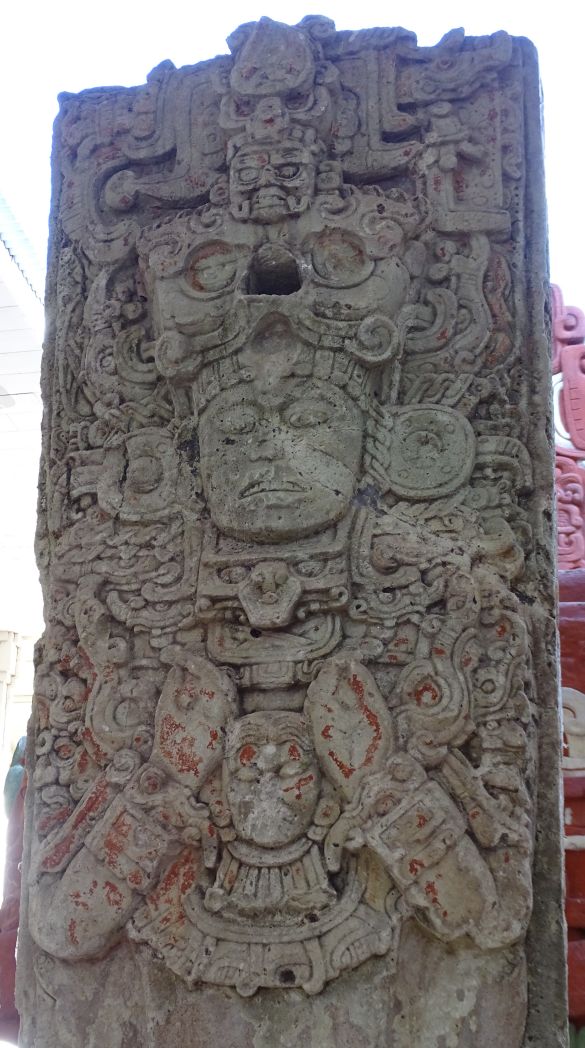
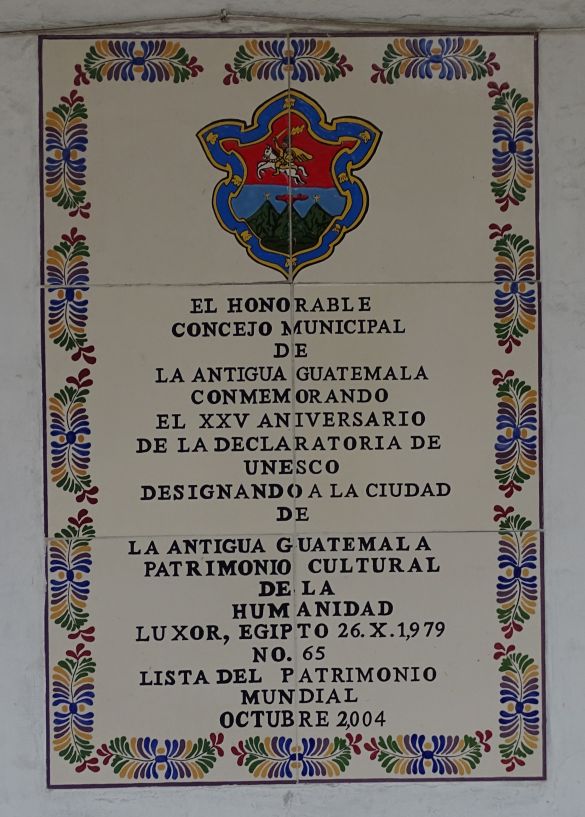
Honduras, Copán: Campo de Pelota

De ruimte waarvan we denken dat het bestemd was voor
een balspel bij de Maya’s, het Campo de Pelota, vinden
veel mensen aantrekkelijk.
Daar waar je in Chitchen Itza een soort van hoepel ziet
die nog het meest doet denken aan een gekantelde
basketball hoepel, zie je in Parque Arqueológico Copán
6 koppen van ara’s (macaw) hangen.

We lopen terug naar de ingang en tijdens dat deel
van ons bezoek maak ik de volgende foto’s.

DSC00901HondurasCopánCampoDePelota
DSC00898HondurasParqueArqueológicoCopánCampoDePelota

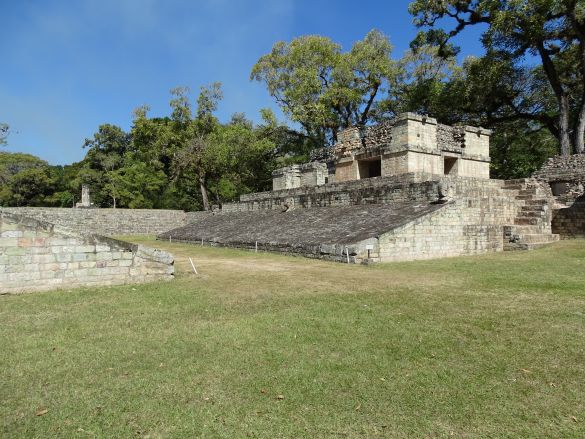
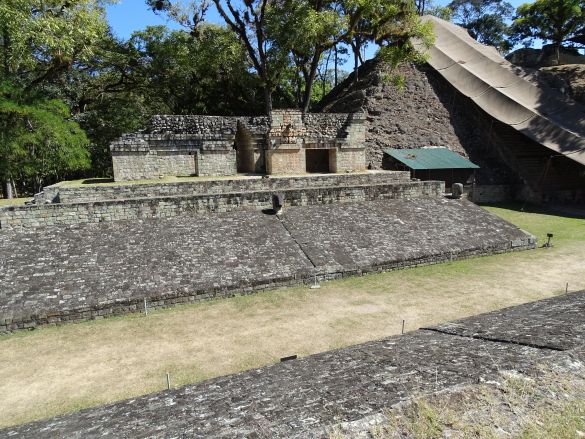
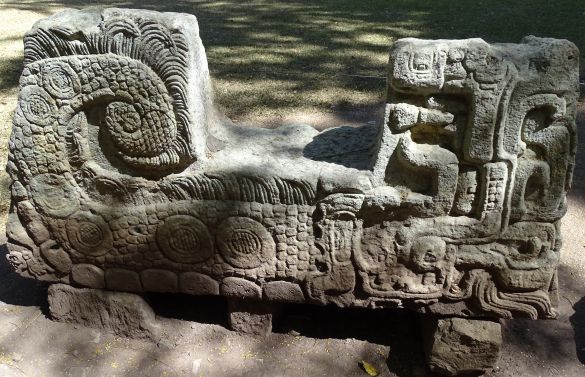
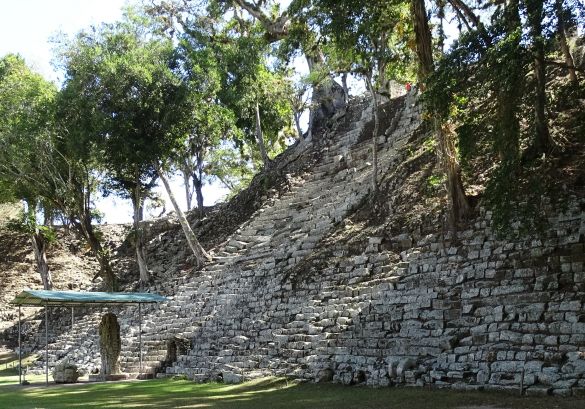
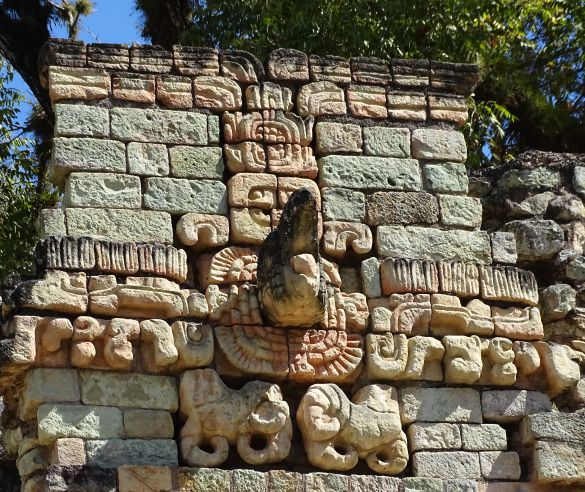
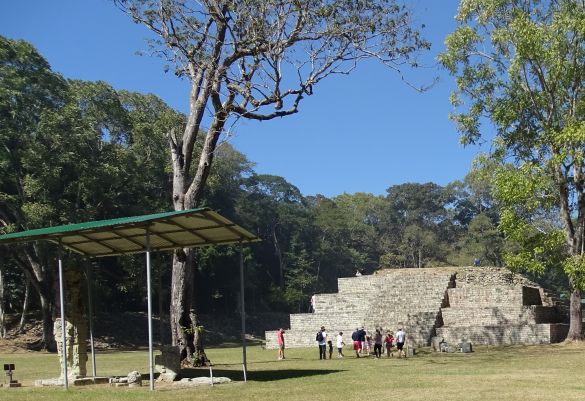
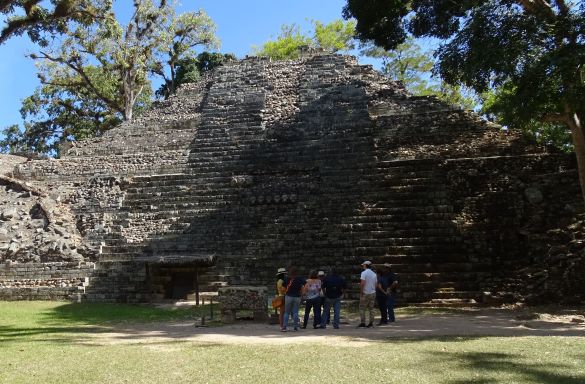
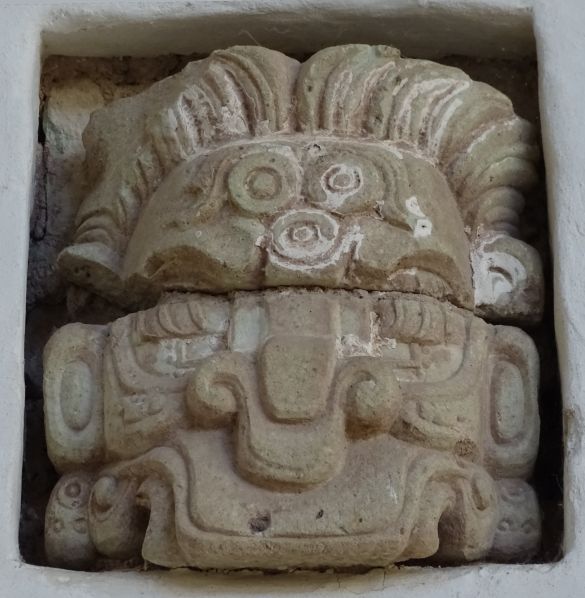
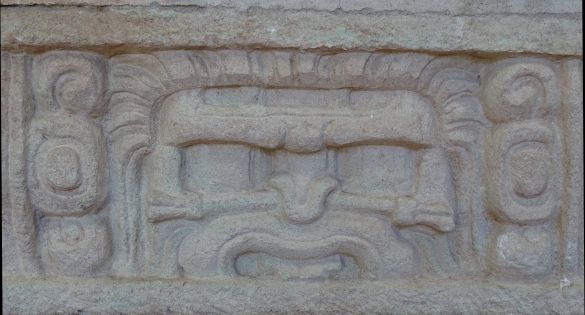
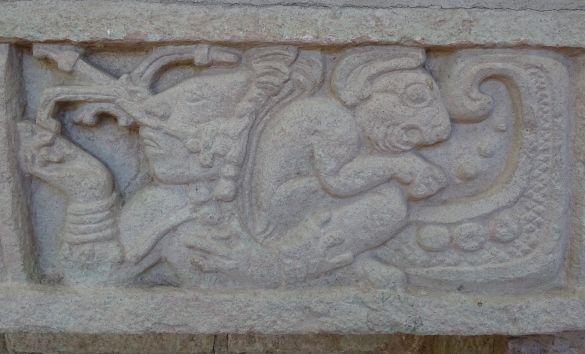
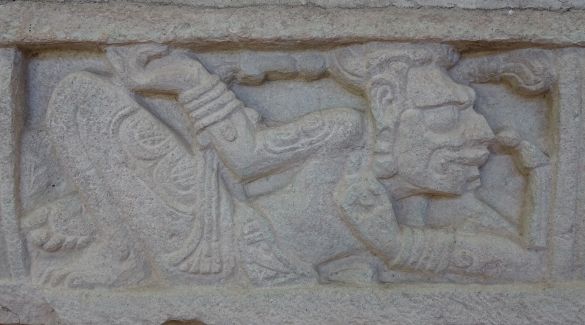
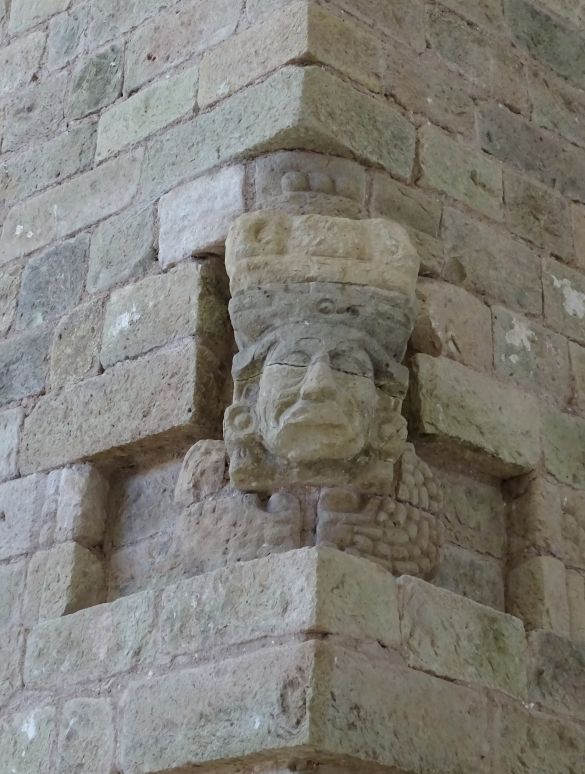
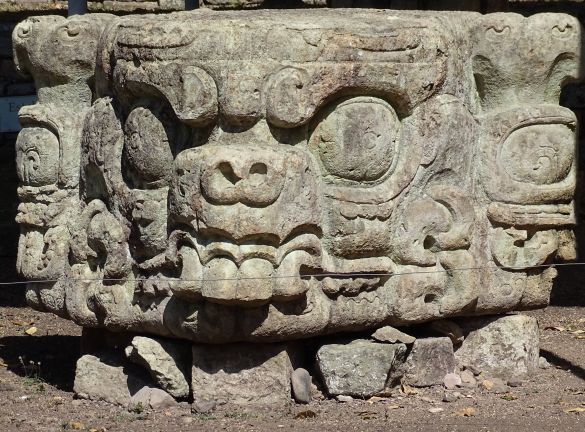
Dit is het Campo de Pelota of Structure 10L-10, AD 738, in Copán. Bovenaan de schuine zijdes zijn aan iedere kant drie koppen van ara´s te zien.


DSC00899HondurasParqueArqueológicoCopánCampoDePelotaMacaw

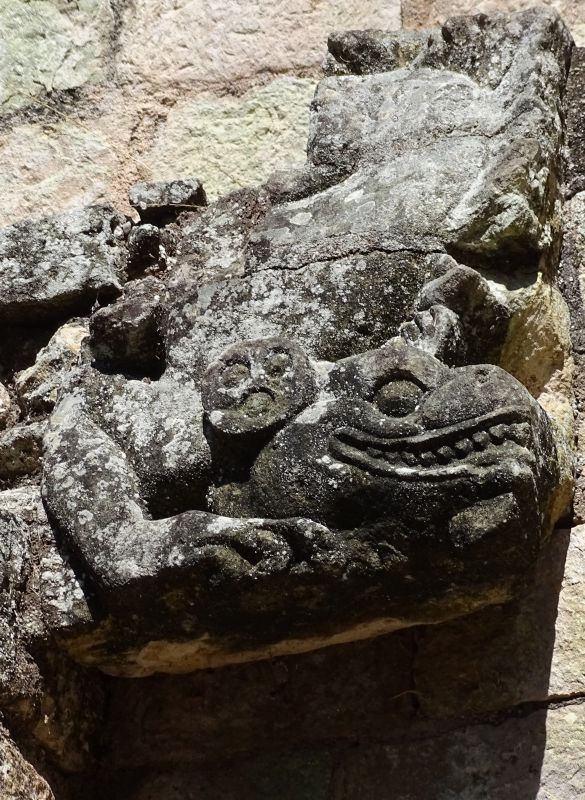
Dit is een van die koppen van de ara (papegaai).


DSC00900HondurasParqueArqueológicoCopánCampoDePelota


DSC00903HondurasParqueArqueológicoCopánCampoDePelota

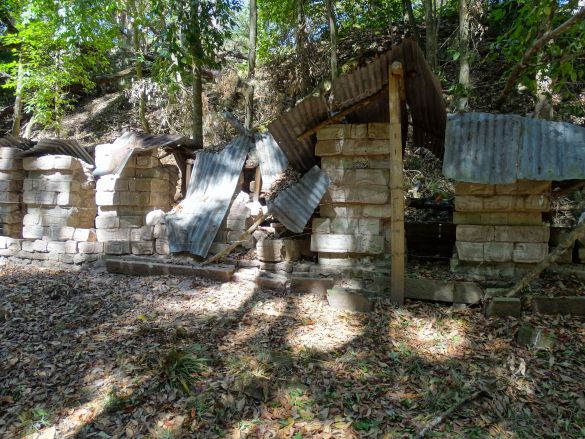
Je mag niet overal opklimmen maar hier wel. Tussen de kleine ‘huisjes’ kun je schuin omlaag naar de ruimte van het balspel kijken.


DSC00894HondurasParqueArqueológicoCopán


DSC00895HondurasParqueArqueológicoCopán


DSC00896HondurasParqueArqueológicoCopán


DSC00897HondurasParqueArqueológicoCopán


DSC00902HondurasParqueArqueológicoCopánMacaw


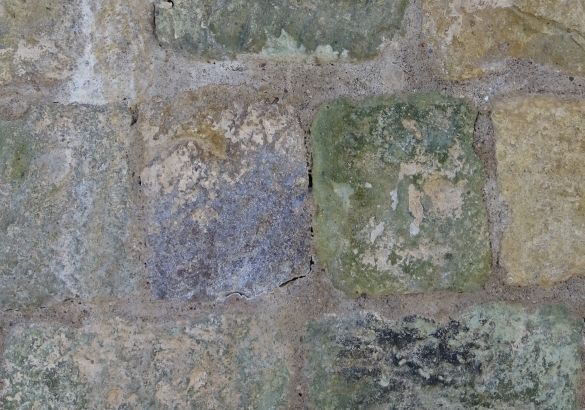
DSC00904HondurasParqueArqueológicoCopánKleurverschillenInDeSteen

De kleurverschillen in de stenen vielen op.


DSC00905HondurasParqueArqueológicoCopán

Een laatste blik op dat deel van het park dat wij bezochten.


Vervolg wandeling Copán

Het was warm, op 30 december 2018.
De indrukken van de eerste helft van de wandeling waren
overweldigend. Daardoor trad bij mij de vermoeidheid wel op.

DSC00873HondurasParqueArqueológicoCopánVeldVoorBalspel

Het hoogteverschil tussen het begin van het bezoek en de acropolis is best groot. Hier kijken we terug op het veld voor het balspel (Campo de Pelota).


DSC00874HondurasParqueArqueológicoCopánLinkerdeelBallGame

Bijna hetzelfde beeld. Nu zie je rechts nog net het linkerdeel van de gebouwen aan het veld.


DSC00875HondurasParqueArqueológicoCopánKoffie

Ik vermoed dat dit koffie is. In ieder geval gewoon mooi.


DSC00876HondurasParqueArqueológicoCopán


DSC00877HondurasParqueArqueológicoCopánAcropolis


DSC00878HondurasParqueArqueológicoCopán


DSC00880HondurasParqueArqueológicoCopán

Ergens tussen deze piramides is ook de mogelijkheid om delen van de ondergronds liggende tempel Rosalila te bekijken. Daar hebben wij geen gebruik van gemaakt. Als je dat wilt zien moet je wel bij de kaartverkoop, gelijk aan de parkeerplaats, daarvoor kaartjes kopen. Op het terrein kan dat niet meer.


DSC00881HondurasParqueArqueológicoCopánRoyalResidence

Buiten de piramides zijn er ook een groep huizen van notabelen te zien (of wat daar van over is natuurlijk).


DSC00882HondurasParqueArqueológicoCopánPiramideMetAltaarQ

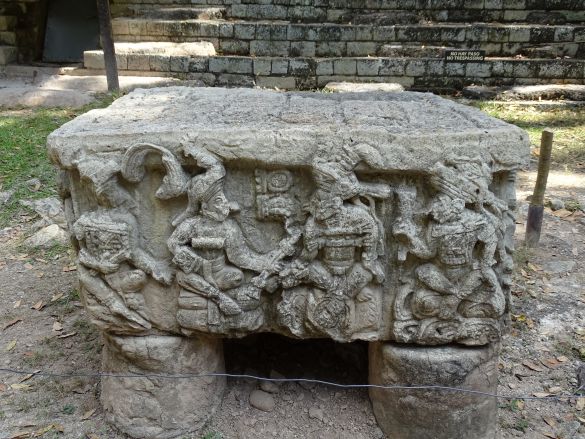
Dit is de piramide waarvoor altaar Q te zien is (links van de bezoekers). Dat wil zeggen een replica van Altaar Q. Het origineel is in het museum te zien.


DSC00884HondurasParqueArqueológicoCopán

Decoratie (?) van de piramide.


DSC00886HondurasParqueArqueológicoCopánAltarQ

Altaar Q is zo bijzonder omdat het een dynastie van heersers toont.


DSC00885HondurasParqueArqueológicoCopánAltarQ

Altaar Q (replica).


DSC00887HondurasParqueArqueológicoCopán

Grappig. Misschien mag je dat niet zeggen maar dat vind ik gewoon.


DSC00888HondurasParqueArqueológicoCopán


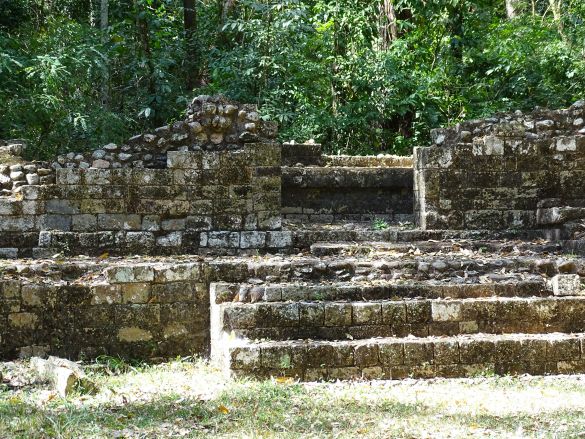
DSC00889HondurasParqueArqueológicoCopánResidences

Residences.


DSC00890HondurasParqueArqueológicoCopánResidences
DSC00891HondurasParqueArqueológicoCopánResidences
DSC00892HondurasParqueArqueológicoCopánResidences


DSC00893HondurasParqueArqueológicoCopánStukjesLegpuzzel01

Grote driedimensionale puzzels.

DSC00893HondurasParqueArqueológicoCopánStukjesLegpuzzel02

Detail.


Een wandeling met een wereldwonder

Nadat ik het museum in Copán bezocht had (Museo de la Escultura de Copán)
gingen we een dag later het park bezoeken (Parque Arqueológico Copán).
Op het eerste deel van de wandeling bekijken we ook een klein wereldwonder.
Want dat is de Hieroglyphic Stairway.

Stel je voor, een ‘kleine’ piramide van zo’n 30 meter hoog.
Tegen die piramide ligt een trap.
De stenen van de treden bestaan uit blokken natuursteen
die bewerkt zijn tot hiërogliefen.
Het is de grootste tekst in Midden-Amerika.
Het beschrijft de geschiedenis van het koningshuis van de
Maya-stad Copán.

DSC00854ParqueArqueológicoCopánGrupoPrincipal

Tussen de bomen vinden we een plattegrond van de site. Dertig december 2018 is een warme dag met felle zon. Er staan eigenlijk twee groepen met archeologische resten op de kaart: de Grupo Principal en Las Sepulturas . Wij bezoeken de Grupo Principal.


DSC00856HondurasCopánArasInDeBomen02

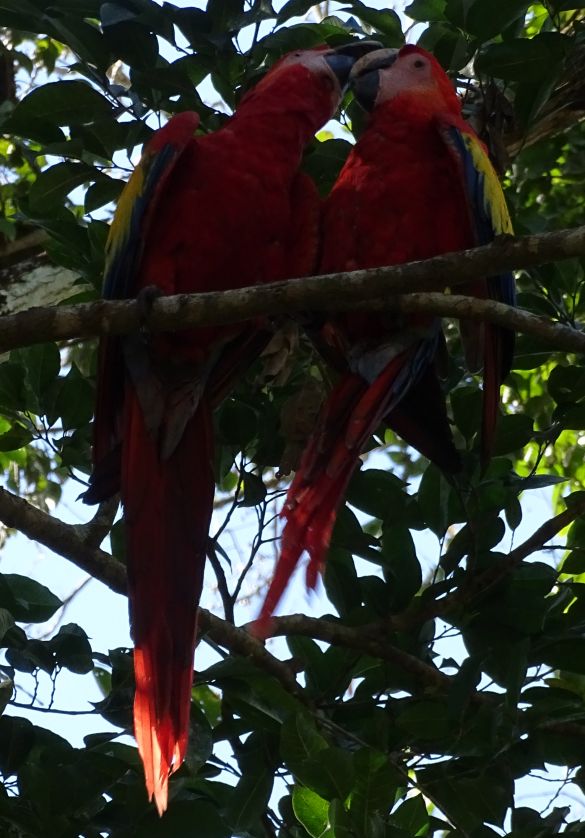
De ara’s (macaw) verwelkomen de bezoekers samen met een heleboel andere vogels. Maar de ara’s springen er uit door hun fantastische kleuren en hun gedrag.


DSC00856HondurasCopánArasInDeBomen01


DSC00858HondurasParqueArqueológicoCopán


DSC00859HondurasParqueArqueológicoCopán

Ze kroelen wat af. Blijkbaar geen last van corona of social distancing.


DSC00860HondurasParqueArqueológicoCopánHetWasErWarm

Als je het bos verlaat kom je op een grote vlakte. Je ziet al een paar steles onder afdakjes en ook meteen een kleine piramide.


DSC00861HondurasParqueArqueológicoCopánStelaC

Stele C. Sommige steles die je in situ ziet zijn replica’s. De originelen staan in het museum dat ik eerder bezocht. Maar dat is niet voor alle steles het geval. Dat heeft zo zijn voors en tegens. Wat buiten staat heeft veel meer last van de elementen. Maar wat op zijn originele plaats staat, vertelt een breder verhaal. Realiseer je, je leert heel veel van een dergelijk bezoek, dat veel van de steles niet meer rechtop stonden toen ze werden (her)ontdekt. Als archeoloog moeten moeilijke keuzes gemaakt worden.


DSC00862HondurasParqueArqueológicoCopánhierogliefen

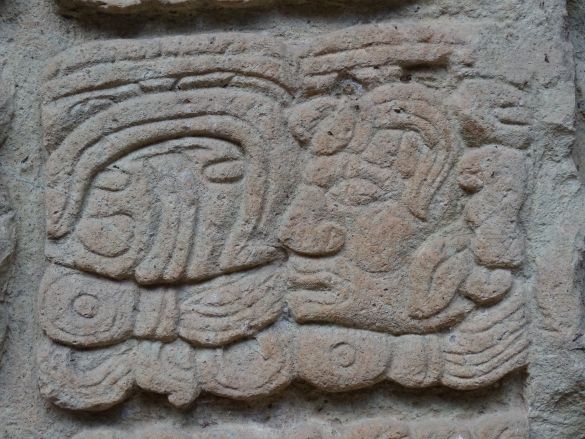
De hierogliefen van de Maya’s zijn heel anders dan die van de Egyptenaren.Dat is logisch maar mijn indruk is dat ze nog moeilijker te ontcijferen en lezen zijn. Dit is een detail van Stele C. Op deze en de vorige foto zie je een typische rode kleur op het beeld.

DSC00863HondurasParqueArqueológicoCopán


DSC00864HondurasParqueArqueológicoCopánStelaAWaxaklajunUbaahK'awiilReplicaInSitu

Stela A met de beeltenis van Waxaklajun Ubaah K’awiil.


DSC00865HondurasParqueArqueológicoCopán

In close-up.


DSC00866HondurasCopánLinksIngangVeldBalspelZeiloverkappingTrapMetHierobliefen

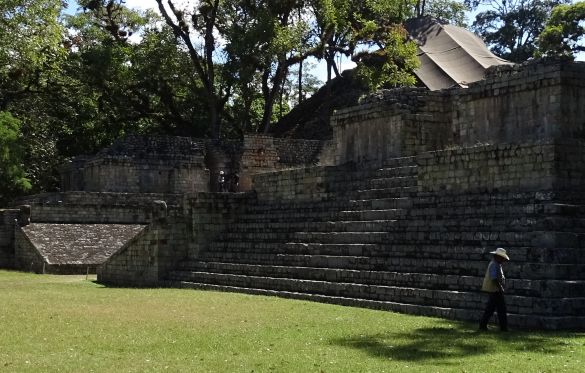
Op deze foto zie je links, bij die schuine kant, het veld waar het balspel gespeeld werd. Op de achtergrond (rechts) zie je een overkapping van doek. Daaronder bevindt zich het wereldwonder, de Hieroglyphic Stairway.


DSC00867HondurasCopánPiramideVraagteken

Die enorme berg stenen is een piramide. Dus die vorm is niet altijd even intact en mooi als die in Gizeh.

DSC00868HondurasParqueArqueológicoCopánBallCourt

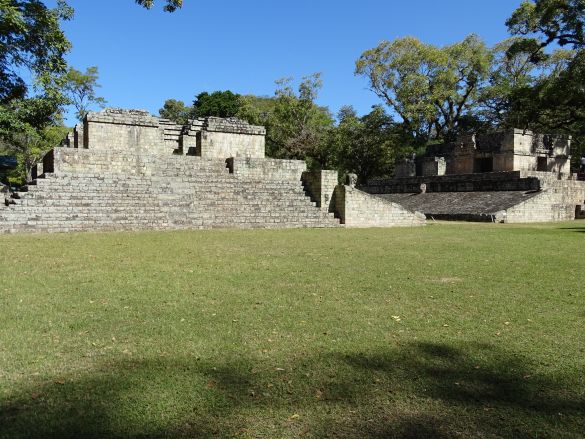
Dit is het veld voor het balspel van de andere kant.


DSC00869HondurasParqueArqueológicoCopánStelaN

Dit is Stela N, deze staat voor de Hieroglyphic Stairway.


DSC00872HondurasParqueArqueológicoCopánHieroglyphicStairwayArtistImpression

Dit is dan een artist impression van de Hieroglyphic Stairway. Dus een tekenaar heeft zich voorgesteld hoe drie trap er uit moet hebben gezien. Je ziet de piramide waar de trap tegen aan ligt en op de voorgrond Stele N.


Het is op deze plaats dat een belangrijk voorwerp lag begraven.
Nu wordt het de ‘Cornerstone of Copán’ genoemd.
In een van mijn eerdere berichten was de originele steen en een tekening
van de bovenkant te zien.
Hier in het veld wordt er nog even op het bestaan van die steen gewezen.

DSC00872HondurasParqueArqueológicoCopánHieroglyphicStairwayCornerstoneOfCopánText


Cornerstone of Copán


This disk was carved of a limestone boulder and served as a crypt’s tombstone.
Two seated rulers occupy a cloverleaf space, which symbolizes a portal to the underworld.
On the left is the first ruler in the dynasty K’inich Yax K’uk’Mo and the figura on the right is his son, the second in the line of royal succession.
When archaeologists unearthed the stone beneath the Hieroglyphic Stairway in 1992, they dubbed it the ‘Cornerstone of Copán’ because it established the city-state as a royal ceremonial center.

Maar dan nu even de Hieroglyphic Stairway:

DSC00870HondurasParqueArqueológicoCopánHieroglyphicStairway

Honduras, Copán, Hieroglyphic Stairway.

DSC00872HondurasParqueArqueológicoCopánHieroglyphicStairwayText


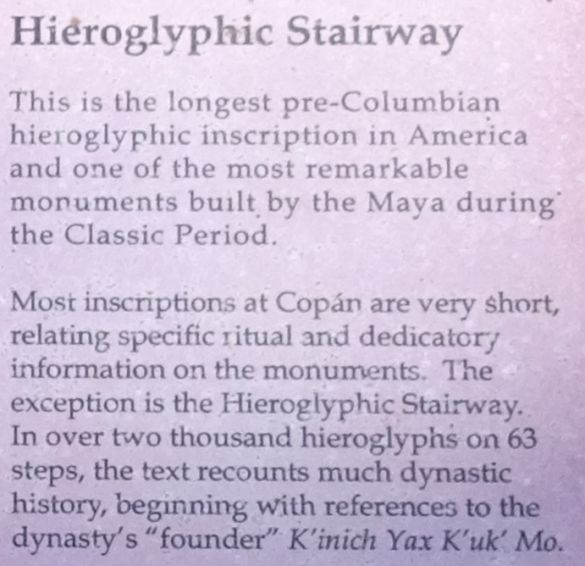
Hieroglyphic Stairway


This is the longest pre-Columbian hieroglyphic inscription in America and one of the most remarkable monuments built by the Maya during the Classic Period.
Most inscriptions at Copán are very short, relating specific ritual and dedicatory information on the monuments.
The exception is the Hieroglyphic Stairway.
In over two thousand hieroglyphs on 63 steps, the text recounts much dynastic history, beginning with references to the dynasty’s “founder” K’inich Yax K’uk’Mo.

DSC00870HondurasParqueArqueológicoCopánHieroglyphicStairway02

Om een idee te geven van de conditie van de treden en wat je moet doen om de trap in elkaar te zetten (alleen een paar van de laagste treden stonden nog op hun plaats), wat je moet doen om iedere blok te ontcijferen en dan om het te lezen.


Proberen deze archeologische vondsten te beschermen is niet eenvoudig.
Daarom was ook daar een tekst aan gewijd:

Conservation of the Hieroglyphic Stairway


History of Interventions


Since 1999 the Instituto Hondureno de Antropologia e Historia (IHAH) and the Getty Conservation Institure (GCI) have been collaborating to establish a long-term conservation strategy for the stairway in order to ensure its preservation.
In recent decades, the deterioration of the hieroglyphs on the stair risers has been a major cause of concern because it directly impacts the ability to view the relief carving and read the stone text.
The 8th century CE inscription is the lonhest from ancient Mesoamerica and provides a unique historical account of four centuries of the Copán dynasty.


The Stairway was rediscovered and excavated ar the end of the 19th century, with only the lower 15 steps found in their orihinal position.
The rest of the stairway steps were reconstructed in 1937 – 1940 using original fallen blocks which had been placed on the plaza.
Beginning in the 1970’s, the public was no longer allowed to walk on the Stairway and a variety of conservation treatments started to be carried out on the stone surfaces.
The protective canvas shelter was first installed in 1985 and has been periodically replaced as needed.’


Conservation assessment


This joint project consists of three major areas of study conducted by conservators and scientists.
Archival research to locate written and photographic documentation was carried out and detailed surface conditions of each block were recorded digitally in order to evaluate past and current conditions.
Biological specimens taken from the stone surfaces were identified, and stone and mortar from the site were analysed in the laboratory to define their characteristics ans assist in identifying causes of deterioration of the constituent materials of the Stairway.
Environmental monitoring equipement was installed to determine how the current stone surface condition is related to present climate data for the site and environmental conditions such as temperature and moisture on and below the Stairway blocks.


Conservation Strategy


After obtaining and testing lovally available materials, in situ conservation treatment trials are being carries out in selected areas of the Stairway to determine which treatment and maintenance methods are most appropriate for the Stairway.
The condition assessment and the treatment trials being carried out enable one (study?) to establish a long-term conservation and maintenance strategy for the Stairway which aims at mitigating the factors contributing to the deterioration of the stone.
A strategy involves a vombination of direct measures, such as treatment and maintenance of individual blocks, and indirect ones, such as improvements to the shelter design and periodic monitoring of the stone condition.
Only through such constant care will the preservation of the Stairway be ensured.

Centrale dorpsplein van Copán

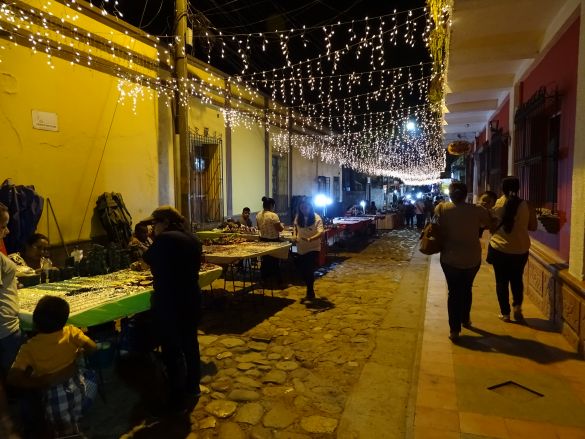
Tijdens een avondwandeling maakte ik een paar foto’s.
Het was 29 december 2018, het dorp was versierd en verlicht.
Het weer was goed. Wat wil je nog meer?

De timing van de foto’s is een beetje vreemd.
Maar het makkelijke excuus is dat we in een rare tijd leven.

DSC00845HondurasCopán20181229Avondmarkt

Avondmarkt.


DSC00846HondurasCopán20181229OpDeHoekBijHetHotel

Op de hoek van het hotel en naast het marktgebouw.


DSC00847HondurasCopán20181229EntranceMuseoRegionalDeArqueologiaMayaAanHetDorpsplein

Links is de ingang van het Museo Regional de Arqueologia Maya. Het ligt aan het centrale dorpsplein.


DSC00848HondurasCopán20181229EntranceMuseoRegionalDeArqueologiaMayaAndStatueAanHetDorpsplein

Bij de ingang staat deze replica.


DSC00849HondurasCopán20181229KerkAanHetDorpsplein

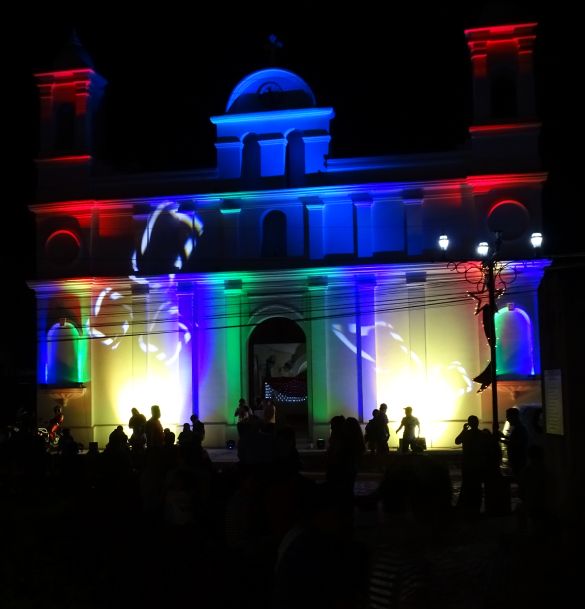
De kerk aan het centrale dorpsplein met lichtshow.


DSC00850HondurasCopán20181229Kerststal

De kerststal mag niet ontbreken.


DSC00851HondurasCopán20181229VersieringEnBezoekersDorpsplein

Er waren veel mensen op de been. Het was er gezellig.


DSC00852HondurasCopán20181229KerkAanHetDorpsplein

DSC00853HondurasCopán20181229

Tijd om te gaan slapen.


Een laatste blik met een Pawahtuun, Bacab en Macaw

Als ik op twitter kijk naar Copán dan schrik ik ook.
In het dorp Copán Ruinas zijn waarschijnlijk maar
beperkte medische voorzieningen en corona is er ook.
Honduras is een erg arm land en Copán leeft van
de archeologische vondsten die er te zien zijn
van de Maya.

Toen wij er waren, begin 2019, was het er ook niet goed.
Onder druk van jaren met tegenvallende oogsten
had er net een soort van migratie plaatsgevonden.
Een groot deel van de mensen die het er moeten hebben
van het bewerken van hun eigen stukje land en dat van de
grootgrondbezitters, was op drift geraakt in Midden Amerika.
Sommige onderweg naar de US, andere naar een grote stad in
de buurt of naar familie die het op dat moment misschien
wat beter hadden.

Maar in het stadje, met toeristen en goed weer scheen het
redelijk te gaan.
Van wat ik er zag maakte ik foto’s en die kun je hier zien.
Zoals al weer het achtste deel met voorwerpen uit het
Museo de la Escultura de Copán.
Het laatste deel, de volgende dag gaan we de ruïnes bezoeken.

DSC00837HondurasCopánMuseoDeLaEsculturaDeCopánTemple22InteriorDoorAndBench

Schedel, afkomstig van tempel 22: Temple 22 – Interior door and bench. Dit is een van de steunen van de bank in de vorm van een schedel. Men noemt deze figuur een Bacab.


Temple 22 is popularly known as ‘The temple of the Meditation’.
We have displayed here the elaborate doorway sculptures from the inner room.
Temple 22 was constructed as a sacred mountain.
The front doorway was transformed into the mouth of the cave or earth monster.
Surrounding the dark interior door, this lively cosmogram transformed the room.
Two figures known as Bacabs crouch on skulls at the edges of the earth.
They are a lifting a sky dragon, with small figures representing the constellations being carried across the sky in S-shaped clouds.
The bench inscription of 9.14.3.6.8 (ad 715), records the 1 K’atun (20 year) anniversary of Ruler 13’s accession.
It is believed that Waxaklajun Ubaah K’awiil built Temple 22 for this event.

DSC00840HondurasCopánMuseoDeLaEsculturaDeCopánTemple11OldManPawahtuunHead

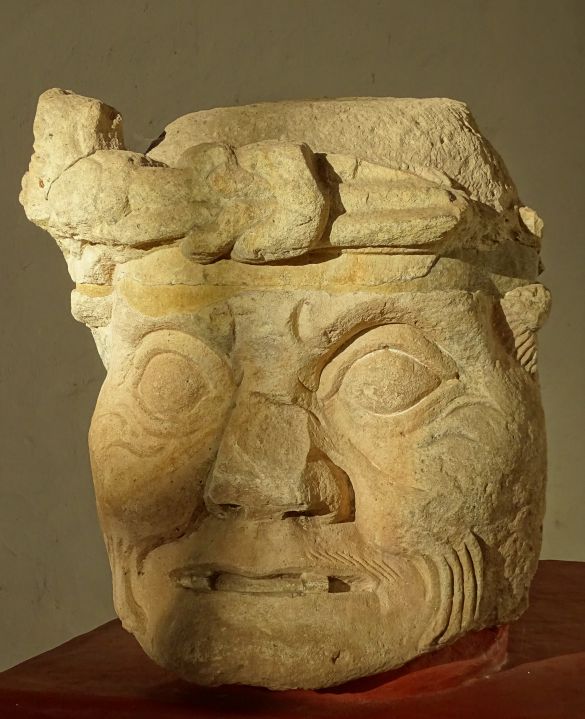
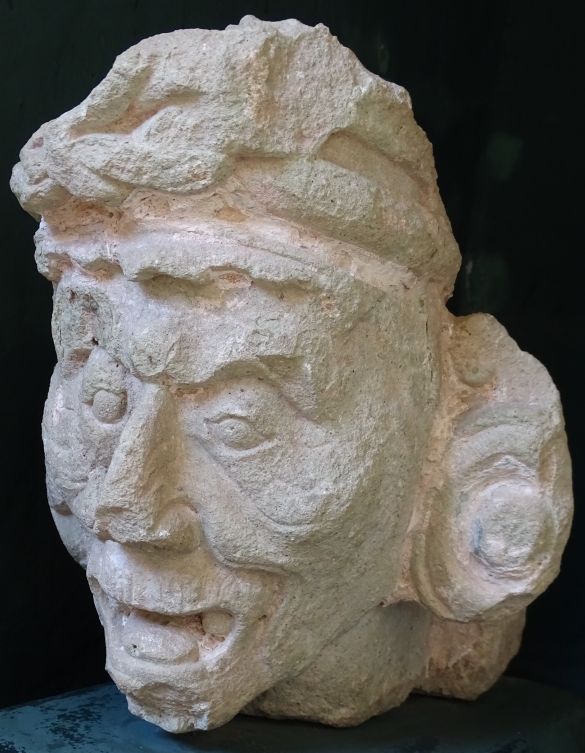
Dit is de publiekslieveling. Een beeld van een oude man. Dergelijke beelden worden Pawahtuun genoemd. De Pawahtuuns ondersteunde de wereld die werd weergegeven als een krokodil. Boven de krokodil hielden de Bacabs de vier punten van de hemel omhoog.


The Maya believed that old deities called Pawahtuuns held up the surface of the earth.
The earth they imagined to be the body of a crocodile floating on the surface of a large body of water.
Above them, youthful Bacabs supported the four corners of the sky.
Here you see everybody’s favorite, the toothless ‘old man of Copán’.
It is the head of one of the two giant Pawahtuuns from either end of Temple 11.
These towering figures once held an enormous mosaic crocodile that stretched across the temple façade.
The headdress is a knotted waterlily, a symbol of fertility.
If reassembled, the Pawahtuuns would represent the largest sculpted human figures found in Copán.

DSC00842HondurasCopánMuseoDeLaEsculturaDeCopánStructure10BallcourtFaçadeReconstruction

Een kop van een ara (macaw) als onderdeel van de gevel van een balspelveld.


Voor mensen die in deze tijd van corona de voetbal missen
is het misschien een interessante toelichting op het mogelijk
ontstaan van dit spel.

Rubber ballgames have been played by indigenous people throughout Mesoamerica since the second millennium BC and probably spawned the development of modern games using bouncing balls, such as soccer.
Eyewitness accounts at the time of the Spanish Conquest and native writing from the 16th century are the only written explanations we have to give us an understanding of how the game may have been played in ancient times.
Judging from the form of the courts, each site seems to have had it’s own rules and preferences.


In general, the game was played in a I-shaped alley between two sloping benches with a solid rubber ball weighing around 8 pounds.
The contest was of a gladiatorial nature, with the loser being sacrificed in particularly important games.
Bench markers were positioned for scoring purposes; in the case of Copán they were six upright macaw heads (see the exhibition on the first floor).
The symbolism underlying the game tied it to the ‘death and rebirth’ of the sun, moon, heavenly bodies, and the agricultural cycle.
The purpose of the ballgame contest was to perpetuate these natural phenomena by symbolically defeating the forces of evil.


Maya creation myths include a story about twins who descended to the underworld and defeated the Lords of Xibalba (‘the place of fright’).
A ballgame is one of several ways they were tested against the forces of death, disease, darkness and famine.
The sun’s imposter, Vucub-Caquix (Seven Macaw) is defeated by the twins as part of their adventures at the beginning of time.
The screeching macaws landing around the Copán ball court façade mat be depictions of this mythical creature.


Maize motifs sprout from the roofs because the game was important in the cycle of life.
Also, Maya creation myths explain that people of this creation were formed from maize dough.
The sun and maize are in a constant cycle of life, death and rebirth.

DSC00844HondurasCopánMuseoDeLaEsculturaDeCopánBarbaraWFashTheCopanSculptureMuseumAncientMayArtistryInStuccoAndStone

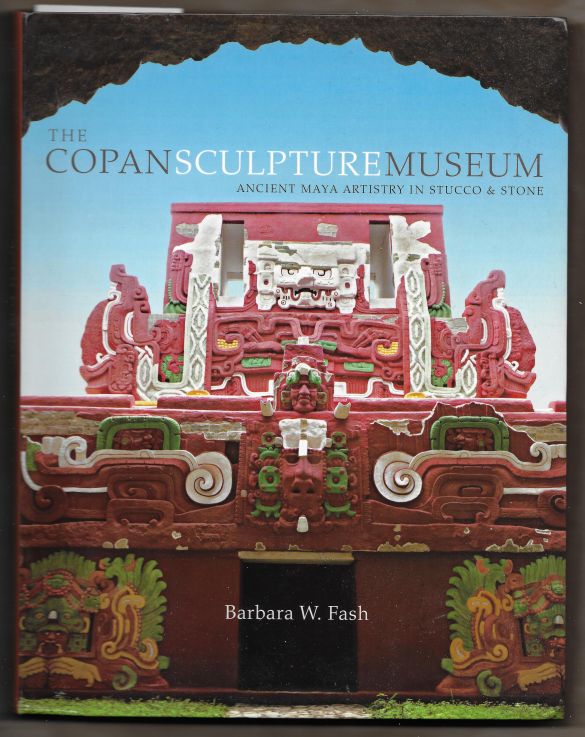
Het kantoor waar je de toegangskaarten kocht had ook een soort van souvenirwinkel. Buiten op het terrein waren er nog een paar. Maar in het museum was een kleine opstelling om het boek van Barbara W. Fash te kopen. Ze is een van de archeologen die bij de opgraving en totstandkoming van het museum betrokken was.


HondurasCopánMuseoDeLaEsculturaDeCopánBarbaraWFashTheCopanSculptureMuseumAncientMayArtistryInStuccoAndStone

Met de hulp van de suppoosten en de medewerking van een eigenaar van een souvenirwinkel (als geldwisselaar) kocht ik dit boek: Barbara W. Fash – The Copán Sculpture Museum – Ancient Maya artistry in stucco & stone.


Het boek uit 2001 beschrijft de avonturen van de Maya’s en hun onderzoekers.

De Maya leefden in Copán tussen 1400 voor Christus en ergens in de
negende eeuw na Christus.
Ricardo Agurcia Fasquelle is de Hondurese archeoloog die de tempel
Rosalila ontdekte en het zijn naam gaf.

In 1980 is Copán benoemd tot een World Heritage Site door UNESCO.
Bill en Barbara Fash en een team van archeologen, studenten, enz, begon
in 1984 met een eerste poging om brokstukken van beelden opnieuw
in elkaar te zetten tot een complete gevel.
In 1985 begon het Copán Mosaics Project dat zich richtte op het veld
en omringende structuren van het balspel.
In 1988 werd het project verbreed tot de hele acropolis van Copán.
In 1991 begon de architect Angela M. Stassano aan het ontwerp van het museum.
Tussen 1993 en 1996 werd het museum gerealiseerd.

Vijf pareltjes uit Copán

Weer door het museum van Copán te kunnen lopen
aan de hand van mijn foto’s is super.
Tegelijk is het moeilijk.
toen ik er was heb ik niet altijd alle begeleidende teksten
gelezen. Nu doe ik dat wel.
Dan tik ik ze uit om ze op te nemen in mijn blog.
Vaak is dat dan een reden om de foto nog eens beter te bekijken
of om het boek er nog eens bij te pakken.

Vijf pareltjes.

DSC00831HondurasCopánMuseoDeLaEsculturaDeCopánReconstructionOfStructure22APopolNah

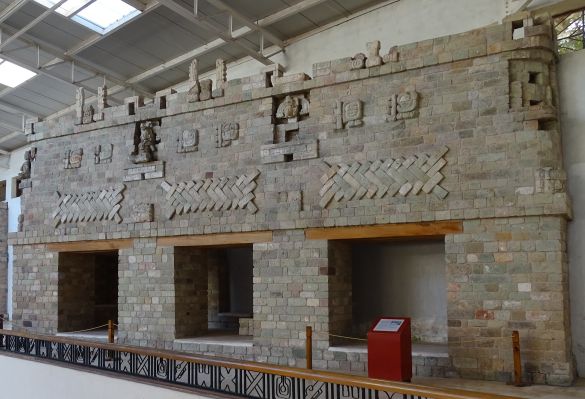
Honduras, Copán, Museo de la Escultura de Copán, Reconstruction of Structure 22A: Popol Nah.


Public buildings called ‘Popol Nah’, which means mat house in Yucatan Mayan and ‘Popol Otot’ in Cholan Mayan were placed for community gatherings and council.
Some buildings with this same function are still in use today in rural Maya communities of Yucatan.
Copán’s structure 22a was an addition to the Acropolis on the west side of structure 22, during the reign of the 14th ruler, K’ahk’ Joplaj Chan K’awiil.
The woven mats translate as ‘pop’ (these were Maya symbols of authority and community).
The mats are coupled with nine niche figures and glyphic place names that designated this structure as the community or council house, ‘Popol Nah’.


Here governors from the nine named divisions of the Copán region gathered to confer on political and religious issues.
Community groups performed dances and feasted.
Each residential division may have had their own smaller versions of the ‘popol nah’.
One Mayan term for governors was ‘holpop’ meaning ‘he at the head of the mat’.


A glyph that is read ‘9 Ajaw’ repeats in pairs around the buildings façade.
It probably has the dual meaning of ‘9 Ajaw’ the day of the period ending when the structure was dedicated (9.15.15.0.0 9 Ajaw 18 Xul: AD 746), and ‘9 Lords’ referring to the nine division governors comparing them to the ‘nine lords of the night’ found in many inscriptions.
Near the roof are flower symbols reading ‘sac nic te’il’ meaning ‘sacred with flower’ a metaphor for the soul.
Serpents (seen in profile at the top) are the flower stamens (meeldraden).
‘Sac nic te’il’ is known to be another name for the community houses.
It perhaps means something like ‘soul of the community’.

DSC00832HondurasCopánMuseoDeLaEsculturaDeCopánReconstructionOfStructure22APopolNah


DSC00833HondurasCopánMuseoDeLaEsculturaDeCopánStructure9M-195MaskWovenMatAndHeads

Honduras, Copán, Museo de la Escultura de Copán, Structure 9M-195: Mask, woven mat and heads.


The living quarters 150 meters west of group 9N-8 in Las Sepulturas displayed another sculpted façade.
Large grotesque masks were repeated eight times around the main structure.
‘Kan’ signs in the foreheads of the masks signify yellow or precious.
Other sculptures scattered around the nearby plazas such as the woven mat, bird, and the jaguar heads tell us about social, political or religious functions of other buildings in this area.

DSC00835HondurasCopánMuseoDeLaEsculturaDeCopánStructure9M-195MaskWovenMatAndHeads


DSC00836HondurasCopánMuseoDeLaEsculturaDeCopánStructure9M-195MaskWovenMatAndHeads

Honduras, Copán, Museo de la Escultura de Copán, Structure 9M-195: Mask, woven mat and heads.


Reconstruction of Structure 8N-66 South

Dat is geen titel die mensen uitnodigt om een stuk te lezen.
Jona Lendering zou zeggen: Geschiedenis is geen amusement,
leuk voor een vrijblijvend stukje in een tijdschrift of een item op TV.
Nee, het is serieus.
Daarom maar even deze vreemde titel.
Het goede nieuws is: je kunt ook zonder dat je alle finesses
begrijpt, genieten van mooie voorwerpen uit de geschiedenis en
misschien iedere keer weer een klein stukje informatie oppikken
van het verhaal achter de voorwerpen.
Zo kun je het langzaam keren begrijpen.

Terwijl ik in Copán door het museum liep (Museo de la escultura
de Copán) heb ik vooral genoten van wat er allemaal te zien was.
Er was heel veel te zien.
Originele voorwerpen, replica’s, soms het origineel en een replica.
Steeds nieuw, overweldigend en ongelofelijk interessant.
Als ik vandaag de foto’s die ik toen maakte opnieuw zou kunnen
maken, zouden velen er anders uit zien. Met de kennis van nu…..

DSC00815HondurasCopánMuseoDeLaEsculturaDeCopánFaçadeMotifs(WarriorSeatedFigureTemple26)

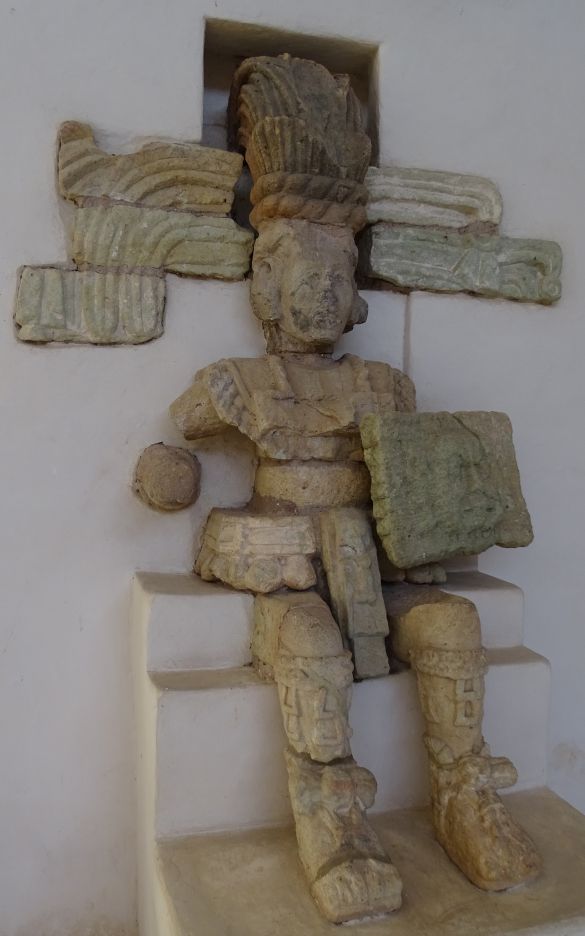
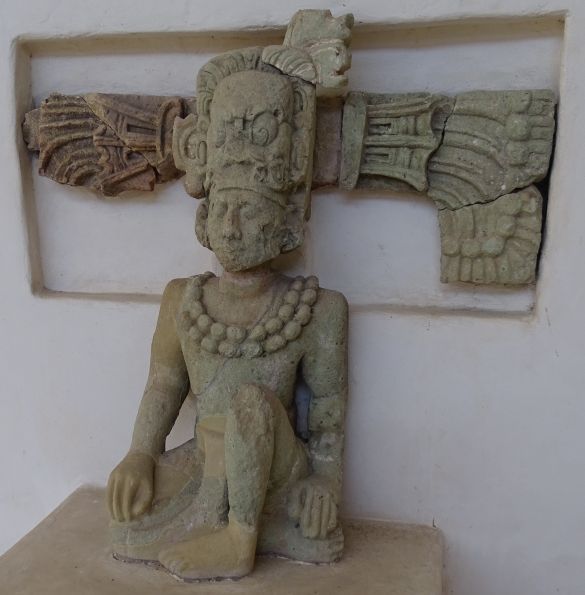
Een aantal motieven uit een muur van Tempel 26 waren er te zien: een strijder en een zittende figuur. Dit is die fantastische zittende figuur.

Situated at the top of the Hieroglyphic Stairway, Temple 26 had completely collapsed by the 19th century when the stairway was uncovered.
Recent excavation and sculpture analysis have led to a better understanding of the themes displayed on this late Classic building.
It was commissioned after the loss of the 13th ruler, Waxaklajun Ubaah K’awiil who was taken in battle and sacrificed by neighboring Quirigua.
The structure as a whole celebrates the important events in the dynastic history of Copán.


Images of hearts, rectangular shields, and ancestral rulers as warriors, repeating in groups of six each (together with the masks from the previous panel), created a complex of symbols meant to reinforce the powerful warfare role of the ruling dynasty.
The six small, seated figures have not been identified.

DSC00816HondurasCopánMuseoDeLaEsculturaDeCopánFaçadeMotifs(WarriorSeatedFigureTemple26)

Honduras, Copán, Museo de la escultura de Copán: Tempel 26.


DSC00818HondurasCopánMuseoDeLaEsculturaDeCopánRoslilaReplica

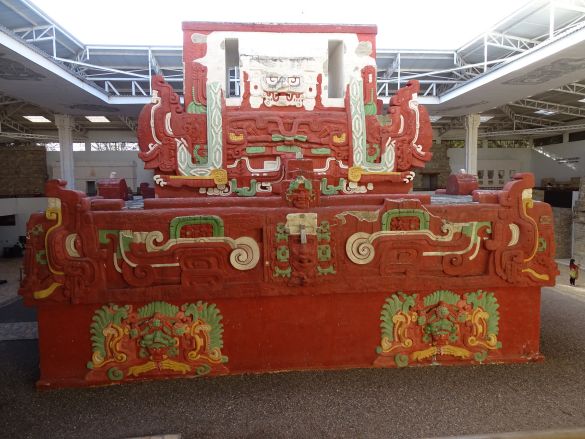
Het museum is gebouwd rond de replica van de tempel met de naam Rosalila. Dat Maya’s tempels ‘begroeven’ onder een nieuwe tempel is misschien de grootste vondst in Copán. Het origineel is niet helemaal uitgegraven. Een deel is op de site te zien. Maar hier in het museum is een replica te zien. Je kunt er omheen en zelfs in lopen. Deze foto geeft ook een beeld van het museum. Let ook eens op de schilderingen tegen het plafond (grijs). Op die manier brengt men thema’s nog eens extra in beeld die op en in de opgegraven gebouwen te zien zijn.


DSC00821HondurasCopánMuseoDeLaEsculturaDeCopánSkybandBenchStructure8N-66Central

Een van de elementen is een ‘skyband’ uitgevoerd in de vorm van een bank.


A Series of symbols for the sun, moon and planets, grouped together in a long frame are called a skyband.
Skyband frames are found at sites throughout Mesoamerica, and serve to put the scene they surround in a heavenly context.
The beautifully carved bench you see here is from the interior room of the larger central structure.
It is the only known full-figure depiction of a skyband in the Maya area.


There are two mythical birds at either end.
They carry the carved images of the celestial bodies.
The figures are from left to right, the graceful image of the moon deity, the sun both by day anf by night and the planet Venus.
In between are repeating masks of the Milky Way.
These figures parade across the heavenly frame and transform this bench into a seat of power.

DSC00822HondurasCopánMuseoDeLaEsculturaDeCopánSkybandBenchStructure8N-66Central

Op onze atlassen of ook op schilderijen kom je ook voorstellingen tegen waarbij de zon of de maan een rol spelen. Maar ook wolken of engeltjes. Kleine ondersteunende afbeeldingen die de context van de grote voorstelling ondersteunen of verklaren. Maya’s deden dat blijkbaar ook en hier zijn ze in de vorm van een bank om op te zitten uitgebeeld.


DSC00823HondurasCopánMuseoDeLaEsculturaDeCopánSkybandBenchStructure8N-66Central

Skyband, bench Structure 8N-66 Central.


DSC00825HondurasCopánMuseoDeLaEsculturaDeCopánReconstructionOfStructure8n-66South


DSC00826HondurasCopánMuseoDeLaEsculturaDeCopánReconstructionOfStructure8n-66South

Reconstruction of Structure 8N-66 South.


A paved roadway (sache in Mayan) connected the residential areas of Las Sepilturas with the Principal Group.
The eastern end of the road ended at a group made up of several structures with sculpted façades.
It would be another one of the nine places named on Structure 22A, the Popol Nah.
Two buildings were excavated in 1990.
The smaller of the two buildings revealed some of the most beautiful mosaic sculpture known from Copán.


Youthful maize deities were repeated around the façade and delicate maize foliation sprouted from the roof.
Cave niches on the moulding housed the patron deity, an old K’atun lord.
Flanking the doorway were masks with waterlily vegetation and maize sprouting from its head.
They show the fertility and subsistence theme important to the rulers and their nobles.

DSC00827HondurasCopánMuseoDeLaEsculturaDeCopánReconstructionOfStructure8n-66South


Museo de la Escultura de Copán: echt spectaculair

Vandaag weer drie bijzondere voorwerpen.
Ik liep door het museum en had me tevoren niet geïnformeerd.
ik wist niet hoe bijzonder de dingen waren die ik er zag.
Neem ‘Structure 16’.
Die naam zegt niet zo veel voor ons.
Maar het gaat om een grote piramide met een trap.
Die piramide is zo speciaal omdat hij de grootste is in Copán.
Onder aan de trappen waren drie platforms.

DSC00810Structure16StepsWithOutsetPlatformsOfSkulls

Dit is de voorkant van zo’n platform. Mij trokken de schedels meteen. Structure 16: Steps with outset platforms of skulls.


Het bord bij deze reconstructie zegt het als volgt:

Two of the three outset platforms from the west staircase of Structure 16 are shown restored.
The lowermost is a T-shape formed by skeletal heads and a huge Tlaloc mask.


The central platform was framed by an ancestral sub disk, a rectangular feature with four serpent heads coming out of its corners.
Usually a sun or moon sign is in the center.
Here there is a figure of K’inich Yax Ku’k’ Mo’ as the sun deity, surrounded by rope.
We believe this structure commemorates past rulers and their power as warriors.

DSC00811HondurasCopánStructure16StepsWithOutsetPlatformsOfSkullsKInichYaxKukMo


DSC00813HondurasCopánMuseoDeLaEsculturaDeCopánStelaP

Als je in zo’n museum bent en je weet niet of je er nog een keer komt, dan kun je kiezen uit twee: of je maakt de foto (ook al is die tegen het licht in genomen) of je maakt hem niet. U kent de keuze. Dit is Stele P.


Stela P


Stela P is from the West Court of the Acropolis near the northwest corner of Structure 16.
Carved on the front is a portrait of the 11th ruler K’ahk’ Uti’ Chan, who reigned from AD 578 to AD 628.
He is dressed in the royal costume of K’inich Yax K’uk’ Mo’, the first ruler of the Copán dynasty.
The stela’s dedication date is 9.910.0.0 2 Ajaw 13 Pop or March 21, AD 623.
It was erected when ‘Rosalila’ was still in use and its replacement in the Museum is in accord with where it likely stood in front of ‘Rosalila’.

Die datumnotatie ‘9.910.0.0 2 Ajaw 13 Pop’ is fascinerend.
Eens opzoeken of er ergens iets over te vinden is.

DSC00814HondurasCopánMuseoDeLaEsculturaDeCopánRosalila

Terwijl ik de trap oploop naar de eerste verdieping, maak ik deze foto van de replica van Rosalila.


Rastrojon: Reconstruction of Structure 6N-10

Denk niet dat ik een kenner ben van de Maya-cultuur.
Absoluut niet.
We waren alleen in de gelukkige omstandigheid dat we in 2019
Copán in Honduras konden bezoeken.
Daarvan doe ik verslag in een serie blog-berichten.
Het ene voorwerp maakt meer indruk dan het andere.
Maar samenvattend is het wel een cultuurschok.
Wat je te zien krijgt is net zo onwerelds als de tempels in Egypte,
de paleizen in India of de graven van Chinese keizers.

Voorbereid was ik eigenlijk niet op Copán.
Maar de Maya/cultuur is voor ons zo complex, zo ondoorgrondelijk,
dat een duik in het diepe een goede manier is om er kennis van
te nemen.
Ik had natuurlijk al eerder midden/Amerikaanse kunst gezien,
bijvoorbeeld de collectie van Dora en Paul Janssen.
Maar hier gaat het minder om vazen of amuletten, hier gaat het om
gebouwen, soms enorme gebouwen die samen een bestuurlijk/religieus
centrum vormen. in het geval van Copán voor 13 heersers.
Van de 5e tot de 9e eeuw was dit een van de grote Maya-steden.

Ik liep een beetje verdwaasd rond in het op een voetbalstadion lijkend
museum (Museo de la Escultura de Copán).
Daar maakte ik drie foto’s van een reconstructie van een huis
dat een eindje buiten de archeologische site voor toeristen lag maar
ingestort was.
De plaats heet Rastrojon.

DSC00804HondurasCopánMuseoDeLaEsculturaDeCopánRastrojonReconstructionOfStructure6N-10

Deze foto geeft een beeld van de reconstructie in het museum.


Reconstruction of structure 6N-10

Rastrojon’s Structure 10 was distinguished by the superb quality, quantity and variety of its sculptures.
Many of its symbolic elements were associated with the culture of the large city of Teotihuacan in the highlands of Mexico.
Here the front side is reconstructed in two segments due to its extreme height.
You van observe the collapsed remains of the building and a partial reconstruction of the similar south façade at the site in northeastern hills at the Copán Valley, which is open to the public.


The building’s central theme calls forth the spirit of a revered royal ancestor from inside a sacred hill symbolized by the open mouth of a supernatural puma (koj), a mythological being with great antiquity in ancient Mesoamerica.
The supernatural feline (kat-achtige) with heavy-lidded mountain (witz) eyes and earflares with k’an cross symbols (“precious”) dominates the central portion on the façade.
These elements have been translated as the name of the hill – k’an koj witz (“precious puma hill”), where the building stood.
Serpents emanate from its mouth, while butterfly wings elevate its extremities.
The person emerging on the undulating tongue of the puma’s mouth is believed to be Ruler 12 wearing a turban decorated with twisted strands and crowned with the “Mexican year sign”, both these symbols allude to his power as a great warrior.


Flanking the door are niches that name the building.
They contain smaller sections of the supernatural puma with k’in (sun) symbols on its earrings and Teotihuacan storm god-style eye goggles.
Eccentric flints stand along the upper terrace and a large, open puma mouth forms the roof crest with another warrior figure inside.


When Structure-10 collapsed the exterior façade sculptures fell to the ground along with the other wall stones and the interior ceiling vault.
For four years the Proyecto Arqueológico Rastrojon Copán team carefully recorded the exact position of each fallen fragment to determine which sculptural element fell together.
Then followed three years of detailed analysis in the laboratory to reconstruct the façades original form in 2014 as you see it here.

Deze tekst (zoals wel vaker) komt van het bordje bij
deze reconstructie. De Engelse tekst had al het een en ander geleden.
Dus hier en daar heb ik, soms met behulp van de Spaanse tekst,
de tekst gereconstrueerd.

DSC00805HondurasCopánMuseoDeLaEsculturaDeCopánReconstructieRosalila

Het museum is helemaal rond de reconstructie van de tempel Rosalila gebouwd. Logisch dat je daar af en toe door wordt afgeleid.


DSC00806HondurasCopánMuseoDeLaEsculturaDeCopánRastrojonReconstructionOfStructure6N-10

Detail van de onderste laag van de Reconstruction of Structure 6N-10.


DSC00807HondurasCopánMuseoDeLaEsculturaDeCopánRastrojonReconstructionOfStructure6N-10Vooraanzicht

De centrale voorstelling die uitgebreid in de Engelse tekst wordt beschreven. Je ziet hier de figuur uit de bek van de puma kruipen. De figuur heeft een tulband op.


Drie zeer bijzondere voorwerpen uit Copán (Maya)

DSC00798HondurasCopánMuseoDeLaEsculturaDeCopánStelaAText

Om een idee te geven van de informatieverstrekking, het Engelstalige deel van een informatiebordje bij Stela A in het Museo de la Escultura de Copán.


Stela A, Great plaza


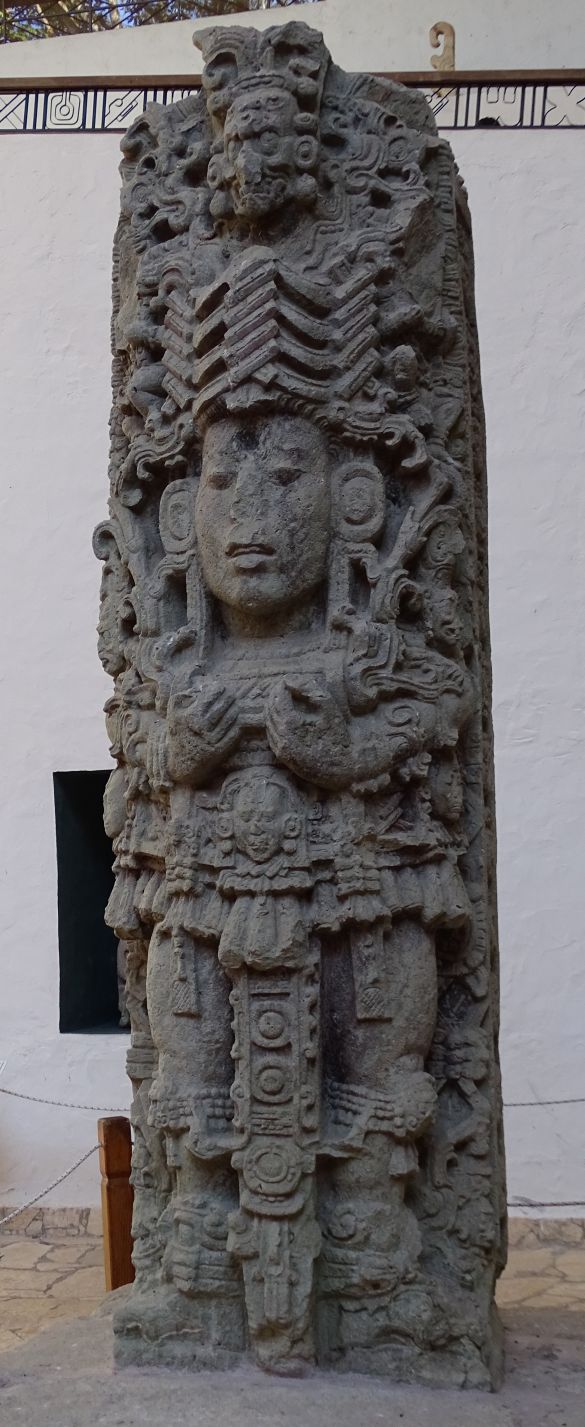
Perhaps the most popular stela in Copán, the elegant carving of stela A is one of the best examples of the beautiful sculptural style for which Copán is understandably famous.
Dedicated on 9.15.0.3.0.12 Ajaw 13 Mac or AD 731, it portrays the 13th ruler Waxaklajun Ub’aah K’awiil carrying a two-headed serpent bar that is symbolically giving birth to sun deities.


In his headdress is a woven mat design with four serpents in its corners.
This design is like the solar disk.
It represents Waxaklajun Ub’aah K’awiil’s central position in relation to the sun and the four directions.
Small figures that crouch at the feet and in the headdress of the ruler seem to represent the sub at different stages of its daily and yearly cycles.

DSC00797HondurasCopánMuseoDeLaEsculturaDeCopánStelaA

Stela A met een afbeelding van Waxaklajun Ub’aah K’awiil, de 13e heerser over Copán.


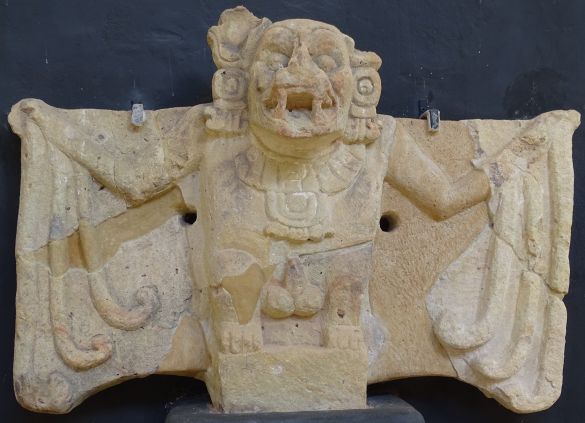
DSC00800HondurasCopánMuseoDeLaEsculturaDeCopánCamaZotzKillerBat

Cama Zotz (Killer Bat of dodelijke vleermuis).


Shown emerging from the four-lobed symbol, which represents the door to the Underworld, is the dreaded Cama Zotz.
This bat is associated with the Underworld, death, and sacrice.
There is a death sign shown on his chest.


The bat sculpture was found in the 1930’s, fallen from structure 20 on the east edge of the Acropolis.

DSC00801HondurasCopánMuseoDeLaEsculturaDeCopánFloorMarkerMotmot

Het originele voorwerp, gevangen in een soort badkuip van cement. Vloermarkeerpunt Motmot.


Van dit belangrijke voorwerp is een replica gemaakt.
Daar laat ik hier een en ander van zien waardoor
hopelijk we het origineel een klein beetje beter begrijpen.

DSC00802HondurasCopánMuseoDeLaEsculturaDeCopánFloorMarkerMotmotReplica01

Replica gemaakt door Jacinto A. Ramirez.


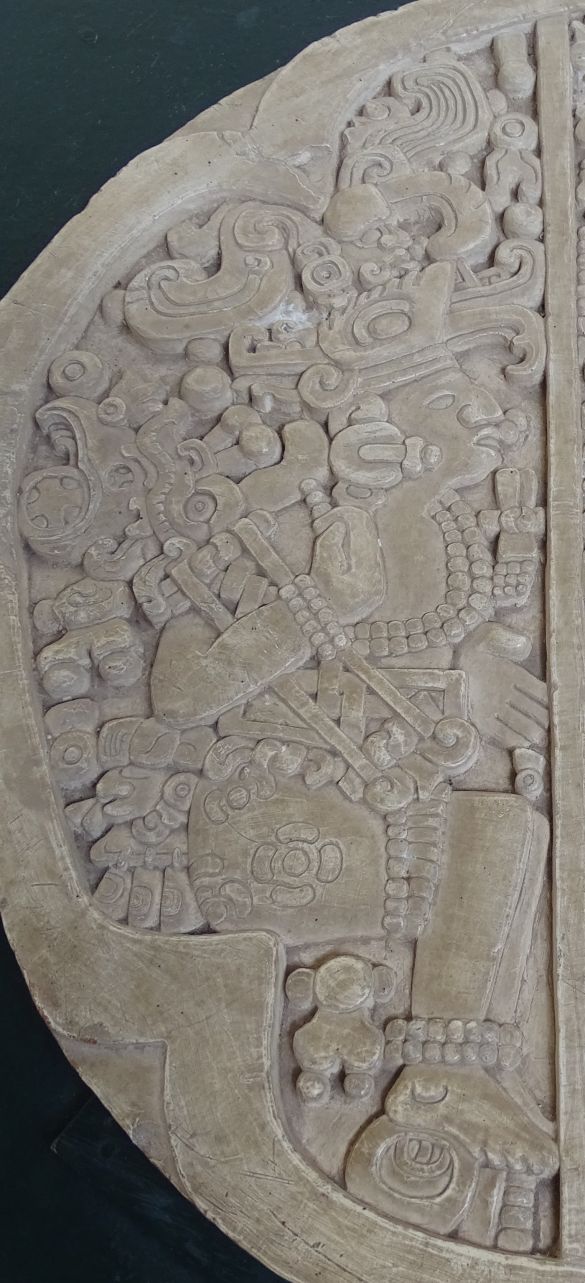
This disc was carved into a limestone boulder.
It served as the tombstone for a circular crypt found in 1993.
It is associated with an earlier temple nicknamed “Motmot” beneath the hieroglyphic Stairway.
Cemented into the stuco floor, it has been referred to as the cornerstone for the ancient city of Copán.
It gas the earliest hieroglyphic inscription known from the site, commemorating the important 9.0.0.0.0 period ending and the final closing of the tomb beneath.


Two seated rulers occupy opposite halves of the four-lobed outline, which symbolizes the open door to the underworld.
The ruler on the left is identified by the name glyph and the headdress as the first ruler in the dynasty, K’inich Yax K’uk’ Mo’.
The ruler on the right is the first ruler’s child, the second dynastic succession.

DSC00802HondurasCopánMuseoDeLaEsculturaDeCopánFloorMarkerMotmotReplica02K'inich Yax K'uk' Mo'

K’inich Yax K’uk’ Mo’, de eerste heerser van Copán.


DSC00802HondurasCopánMuseoDeLaEsculturaDeCopánFloorMarkerMotmotReplica03Hierogliefen

Voorbeeld van de Maya hierogliefen in Copán.


De Maya’s in Copán

In het oude Maya-denken staan tunnels of natuurlijke grotten voor de toegang tot de onderwereld, Xibalba.
De toegang tot een grot kan de symbolische vorm aannemen van een open mond of een slang of een krokodil.
De tunnel die toegang geeft aan het museum (Museo de la Escultura de Copán) is daarom bij de ingang voorzien van een hoofd.
De onderwereld is de plaats waar de doden leven, de voorouders maar ook de afschrikwekkende beesten, de demonen en de goden van de dood.
Hunahpu en Ixbalanqué, de heldentweeling uit de Maya-mythologie, moesten voor de goden van de onderwereld een aantal beproevingen doorstaan voor ze naar de hemel kunnen gaan.

Met bovenstaande tekst (in het Engels) eindigde mijn vorige
bericht over Copán.
De tekst stond te lezen in de tunnel die de toegang tot het museum vormt.
Daar in die tunnel pak ik de draad weer op.

DSC00779HondurasCopánMuseoDeLaEsculturaDeCopánViewAtTheEndOfTheTunnelTEXT

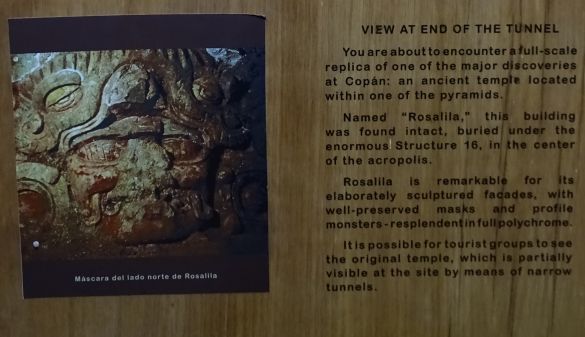
View at the end of the tunnel

You are about to encounter a full-scale replica of one of the major discoveries at Copán: an ancient temple located within one of the pyramids.
Named “Rosalila”, this building was found intact, buried under the enormous Structure 16, in the center of the acropolis.
Rosalila is remarkable for its elaborate sculptured facades, with well-preserved masks and profile monsters – resplendent in full polychrome.
It is possible for tourist groups to see the original temple, which is partially visible at the site by means of narrow tunnels.

Of in het Nederlands:

Zicht aan het einde van de tunnel.

Dadelijk aan het eind van de tunnel ontmoet je de replica op ware grootte
van een van de belangrijkste ontdekkingen in Copán:
een antieke tempel die zich in een van de piramides bevindt.
De tempel wordt “Rosalila” genoemd, het gebouw is intact gevonden
terwijl het begraven ligt onder de enorme ‘Structuur 16’,
in het centrum van de acropolis.
Rosalila is zo bijzonder door de gevels die uitgebreid zijn voorzien van beeldhouwwerk
met goed bewaarde maskers in schitterende veelkleurigheid.
Het is voor groepen bezoekers mogelijk om via smalle tunnels de originele tempel te zien
die deels zichtbaar is in de site.

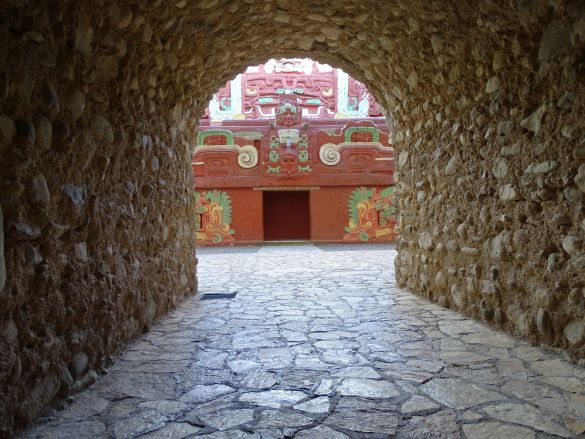
DSC00780HondurasCopánMuseoDeLaEsculturaDeCopánTheEndOfTheTunnel

Dit is dan het beeld als je door de tunnel loopt, het museum in. Het museum bevat heel veel beelden die op de bijbehorende site gevonden zijn. Die beelden zijn gerestaureerd en er zijn replica’s van vervaardigd. Die replica’s zie je op de site, de originelen hier in het museum. Het museum (Museo de la Escultura de Copán) is een soort voetbalveld. Boven de ‘grasmat’ is het plafond open maar de beelden die staan allemaal overkapt.


DSC00781HondurasCopánMuseoDeLaEsculturaDeCopánMuseumIndruk

Hier zie je de overkapping en het open plafond. Het is een prachtig complex.


DSC00782HondurasCopánMuseoDeLaEsculturaDeCopánRosalilaReplica01

Dit is een van de decoraties van de Rosalila-replica.


DSC00782HondurasCopánMuseoDeLaEsculturaDeCopánRosalilaReplica02

Dit is de helft van de vorige foto om meer details te kunnen tonen. Wat je hier ziet is wat we veel vaker zien: reliëfs. Afbeeldingen die langzaam uit de achtergrond naar voor komen. In de loop van de geschiedenis gaat dat steeds verder en komen de reliëf los van de achtergrond.


DSC00783HondurasCopánMuseoDeLaEsculturaDeCopánStelaPK'ahk'Uti'ChanDedicationDateMarch21628AD

Bij Rosalila staat een stele met daarop deze afbeelding. Stele P met de afbeelding van K’ahk’Uti’Chan. Op 21 maart 628 AD is dit beeld ingehuldigd.


Stela P is from the West Court of the Acropolis near the northwest corner of Structure 16.
Carved on the front is a portrait of the 11th ruler K’ahk’ Uti’ Chan, who reigned from AD 578 to AD628.
He is dressed in the royal costume of K’inich Yax K’uk’ Mo’, the first ruler of the Copán dynasty.
The stela’s dedication date is 9.9.10.0.0 2 Ajaw 13 Pop or March 21, AD 623.
It was erected while “Rosalila” was still in use and its placement in the museum is in accord with where it likely stood in front of “Rosalila”.

Je ziet in deze tekst dat men neutrale benamingen
voor de grote bouwwerken kiest.
Zo spreken ze van structuren.

De namen van de heersers zijn voor een leek wel even slikken.
Vreemde klankcombinaties en veel enkele aanhalingstekens.
Er is dus niets mis met mijn typen, dat hoort zo: K’inich Yax K’uk’ Mo’.

Bijzondere datumnotatie: 9.9.10.0.0 2 Ajaw 13 Pop.
Daar zit een hele studie achter.

DSC00786HondurasCopánMuseoDeLaEsculturaDeCopán

Museo de la Escultura de Copán.


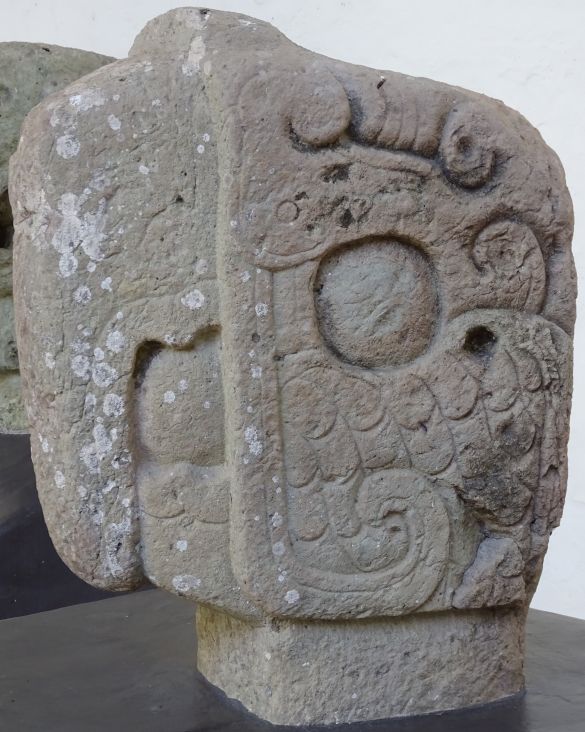
DSC00787HondurasCopánMuseoDeLaEsculturaDeCopánMacawHeadMarkersBallCourtI-II-III

Dit zijn de koppen van ara’s (papegaaien in het Engels macaw genaamd). Macaw head markers ball court I – II – III.


DSC00789HondurasCopánMuseoDeLaEsculturaDeCopánMacawHeadMarkersBallCourtI-II-III

Nog een voorbeeld.


The Copán ballcourt was rebuilt four times over a span of 300 years, beginning with the first ruler K’inich Yax K’uk Mo’ and ending with the 13th ruler, Waxaklajun Ubaah Káwiil.
Over time the ballcourt ecpanded and moved northward, but the bench markers were always macaw heads.
Displayed here are samples of the bench markers from each phase.
They are a fine example of a changing art style over time.
We may imagine that in the Copán version of the rubber ball game, the player or team who hit one of the bird heads was awarded special significance.
Among the ancient Maya, the scarlet macaw, with its fiery colors, symbolized the sun.

DSC00791HondurasCopánMuseoDeLaEsculturaDeCopánWaterBirdAndStreamsHijoleStructure

Water bird and streams, gevonden in de Hijole-structuur.


Water Bird and streams, “Hijole”-Structure

In 1987 a buried room and a demolished structure were found inside the northeast corner of the final version of structure 26.
Excavators were so surprised to find an unexpected room with elaborate sculptures buried inside, that the building was named “Hijole” (an exclamation of surprise).
Believed to have once adorned an earlier version of Temple 22, the water bird is awarded the price for the highest relief sculpture found in Copán.
Carved out of one rock, it is an extraordinary example of the nearly full-round quality of the facade sculpture at the height of Ruler 13’s reign.
The chest and belly of the bird take the form of a grotesque head that frequently occurs in Maya art and is sometimes referred to as a “personification head”.
The water streams on either side suggest the natural habitat of the bird.

DSC00792HondurasCopánMuseoDeLaEsculturaDeCopán

Museo de la Escultura de Copán.


DSC00793HondurasCopánMuseoDeLaEsculturaDeCopán

Museo de la Escultura de Copán.


DSC00794HondurasCopánMuseoDeLaEsculturaDeCopán

Museo de la Escultura de Copán.


DSC00795HondurasCopánMuseoDeLaEsculturaDeCopán

Museo de la Escultura de Copán.


DSC00796HondurasCopánMuseoDeLaEsculturaDeCopánRosalilaReplica

Copán: Rosalila-replica.


Er gaat nog veel meer volgen!

Honduras, Copán

Om 03:30 staan we op.
Om 04:00 uur worden we opgehaald door een busje.
Uiteindelijk stappen alles bij elkaar 13 toeristen
in het busje om naar Copán te rijden in Honduras.

De chauffeur is Spaans sprekend, wij niet.
Maar het wijst zichzelf allemaal wel uit.
Het is niet alleen de afstand maar ook de files onderweg
die er voor zorgen dat we om 11:30 uur in Copán zijn.
De grensovergang kost ook wat tijd.
Het is 29 december 2018, Copán, een kleine stad, bereidt
zich voor op de jaarwisseling.

Ik raak aan de praat met een Engelsman over migratie.
Dat is een fenomeen dat zich niet alleen in Europa voordoet.
En ook niet alleen van onze tijd.

DSC00768HondurasCopánKerstmarkt

In Copán is een kerstmarkt. Het is er gezellig druk. In de avond uitbundig verlicht.


DSC00769HondurasCopánRustig

De temperatuur is prima. Mensen blijven uit de zon.


DSC00770HondurasCopánMarktGebouw

Het is markt. Daarvoor is een gebouw. Het is vlak naast het hotel en bijna aan het centrale plein: Parque Central.


DSC00772HondurasCopán

De omgeving is heuvelachtig.


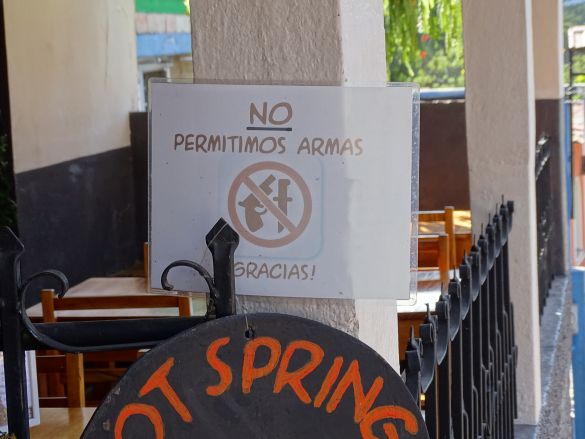
DSC00773HondurasCopánNoPermitimosArmas

Hier en daar zie je dat er meer is dan wat je aan de oppervlakte ziet: No permitimos armas (Wapens verboden).


DSC00774HondurasCopánParqueCentral

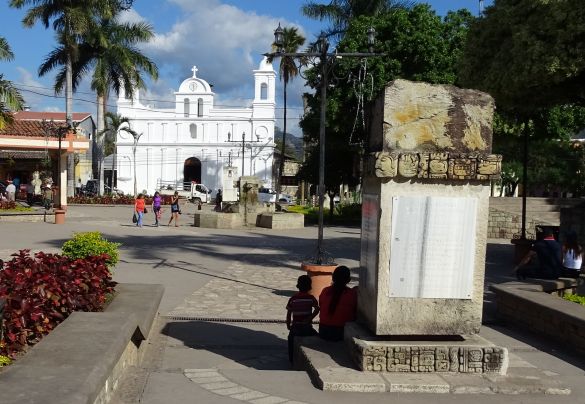
Parque Central. Het centrale plein met aan de ene kant een kerk. Verder wat restaurants, hotels, winkels en een museum. De inrichting bevat verwijzingen naar de Maya’s. We zijn hier om een Maya world Heritage Site te bezoeken maar ook in de stad en de omgeving zijn verschillende monumenten gevonden.


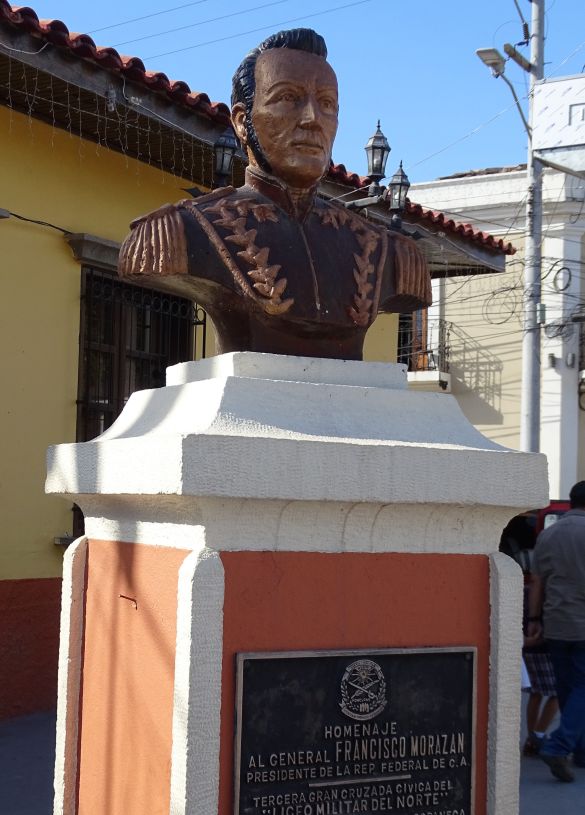
DSC00775HondurasCopánGeneralFranciscoMorazánQuesada

Misschien een beetje stereotype maar een standbeeld van een generaal. Een president van de Verenigde Staten van Centraal-Amerika (1830 – 1893). General Francisco Morazán Quesada. De Verenigde Staten van Centraal-Amerika bestaat niet meer als staatkundige eenheid. In de ontwikkeling van Centraal-Amerika zijn een tijd lang een aantal gebieden gezamenlijk opgetrokken die we nu de landen van Centraal Amerika noemen.


DSC00776HondurasLef

Even uit de zon.


DSC00777HondurasCopánMuseoDeLaEsculturaDeCopan

In de middag ben ik alleen naar het Museo de la Escultura de Copán gelopen en bezocht ik het museum.


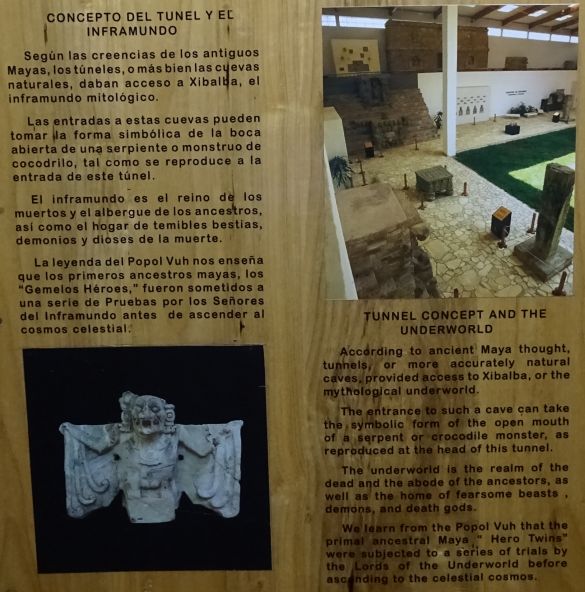
DSC00778HondurasCopánTunnelConceptAndTheUnderworldTEXT

Bij de ingang wordt de betekenis van de tunnel uitgelegd. Daar kom ik in een volgend bericht op terug.


According to ancient Maya thought, tunnels, or more accurately natural cavesprovided access ro Xibalba, or the mythological underworld.
The entrance to such a cave can take the symbolic form of the open mouth of a serpent or crocodile monster, as reproduced at the head of the tunnel.
The underworld is the realm of the dead and the abode of the ancestors, as well as the home of fearsome beasts, demons, and death gods.
We learn from the Popol Vuh that the primal ancestral Maya, “Hero Twins” were subjected to a series of trials by the Lords of the Underworld before ascending to the celestial cosmos.

Antigua: er zijn toeristen en er zijn toeristen

DSC00760GuatemalaAntiguaIglesiaYConventoDeSantaClara

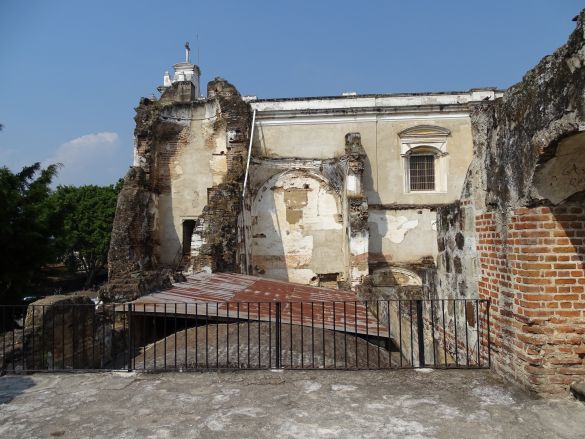
Na de kerk en de ruïnes van de Iglesia de San Francisco werd het tijd een eind te maken aan onze wandeling. Ons hotel zat in de buurt van Parque Central, dus dat was de richting van de wandeling terug. Onderweg kwamen we langs deze gevel: Iglesia y Convento de Santa Clara. Toepasselijk.


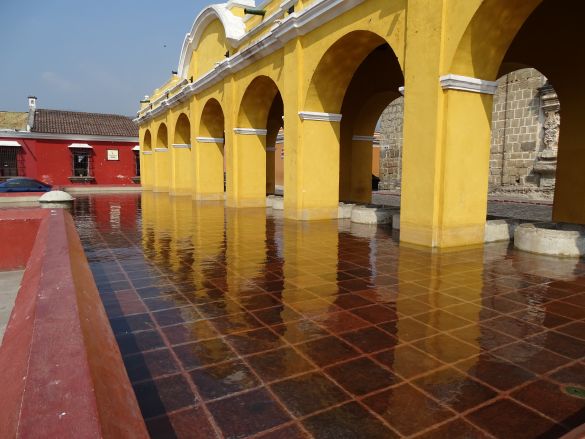
DSC00761GuatemalaAntiguaTanqueDeLaUnion

Tegenover deze gevel ligt dit voorbeeld van een wasplaats. Met water! Dit geeft een goed beeld hoe in het verleden, met de hand, de was werd gedaan.


DSC00762GuatemalaAntiguaDeWasbakkenTanqueDeLaUnion

Hier de wasbakken van Tanque de la Union.


DSC00763GuatemalaAntiguaZomaarEenStraatMetZonnewijzer

Een rustige straat. Ongeveer halverwege een huis met een zonnewijzer.


DSC00764GuatemalaAntiguaZonnewijzerAveMariaPur


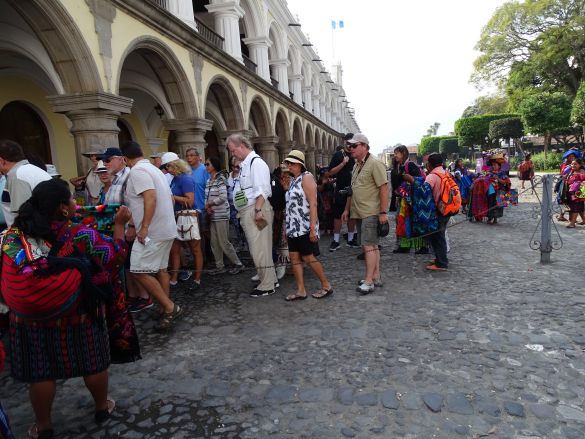
DSC00766GuatemalaAntiguaErZijnToeristenEnErZijnToeristen

Parque Central. Dan zijn er toeristen en er zijn toeristen. Fascinerend hoe mensen zich in een groep later wegzetten en in die groep blijven. Antigua is een plaats die aangedaan wordt door cruises (hoewel de zee toch een eindje weg is). Klein Martin Parr-momentje


DSC00767GuatemalaAntiguaVuilophaaldienst

Dit is misschien niet de typische toeristenfoto: vuilophaaldienst.


Het volgende bericht gaat over Honduras.
In Honduras bezochten we één plaats: Copán.

Antigua: San Francisco Church and Convent

De stad die in 1773 in Guatemala verwoest werd en nu
een World Heritage site is, was het bestuurlijk centrum
van Spanje in hun koloniën in Centraal- en Zuid-Amerika.
Daarmee is Antigua eigenlijk vooral als concept, als idee,
van belang en veel minder als materieel erfgoed.
Dat materieel erfgoed is er maar beperkt aanwezig.
Of dat voor Batavia (Jakarta) ook zo is weet ik niet, want daar
ben ik nooit geweest.

Wat er veel te zien is: de aanwezigheid van de christelijke zending.
In navolging van de ontdekkingsreizigers en kolonisten kwamen de
diverse christelijke ordes naar Amerika.
Dat is te zien aan de vele kerken en kloosters in Antigua.
Niet dat er nu nog veel religieuzen aanwezig zijn. Ik verwijs
naar kerken en kloosters die er in 1773 waren en waarvan de
restanten en ruïnes nu nog te zien zijn.

Een voorbeeld daarvan is de Franciscaanse kerk, met heiligdom, museum en
de ruïnes van een kloostercomplex. In 1525 werd begonnen aan de bouw.

DSC00743 GuatemalaAntiguaIglesiaDeSanFranciscoVanafHetKerkpleinGezien

Dit is het uitzicht vanaf het plein voor de kerk (Iglesia de San Francisco) naar de stad toe.


DSC00744 GuatemalaAntiguaIglesiaDeSanFranciscoJezusOpstandingUitDeDoden

De kerk is vandaag nog in gebruik. Er is een heiligdom en een tuin. In die tuin bijvoorbeeld deze opstanding/verrijzenis.


DSC00745 GuatemalaAntiguaIglesiaDeSanFranciscoHermanoPedroDeSanJoséDeBethancourt

Centraal in het heiligdom staat het graf van Hermano Pedro de San José de Bethancourt. Een Spaanse Franciscaan die in 1667 overleed en in 2002 heilig werd verklaard.


DSC00746 GuatemalaAntiguaIglesiaDeSanFrancisco

Iglesia de San Francisco. We hebben de kerk en het heiligdom bezocht maar de ruïnes vond ik toen het interessantst.


DSC00747GuatemalaAntiguaIglesiaDeSanFranciscoTextBarbaraAPrust

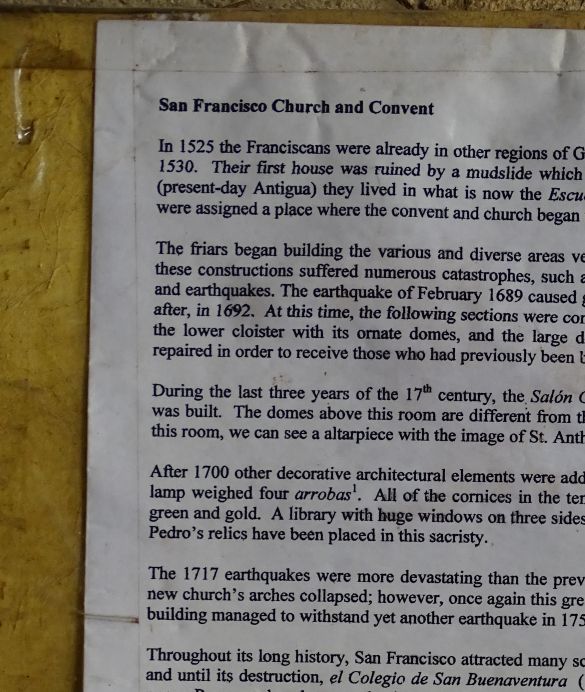
Dit is een deel van onderstaande beschrijving van de geschiedenis van het complex. De Engelse vertaling is van Barbara A. Prust.


San Francisco Church and Convent


In 1525 the Franciscans were already in other regions of Guatemala, but they remained in Almolonga until 1530.
Their first house was ruined by a mudslide which destroyed the entire city in 1541.

In Santiago (present-day Antigua) they lived in what is now the Escuela de Cristo (School of Christ), but soon after were assigned a place where the convent and church began to flourish.


The friars began building the various and divers areas very carefully.
During the subsequent centuries, these constructions suffered numerous catastrophes, such as electrical outages due to thunderstorms, fires and earthquakes.
The earthquake of February 1689 caused great devastation, but reconstruction began soon after, in 1691.
At this time, the following sections were completed: the sacristy (now part of the museum), the lower cloister with its ornate domes, and the large domes for burials.
In addition the crypts were repaired in order to receive those who had previously been buried in them, including brother Pedro.


During the last three years of the 17th century, the Salón General de los Estudios (General Study Room) was built.
The domes above this room are different from the others in the convent.
Today, in the back of this room, we can see a altarpiece with the image of St. Anthony.


After 1700 other decorative architectural elements were added.
It has been said that the main altar’s silver lamp weighed four arrobas (1 arrobas is a Spanish unit of measurement equal to 11,501 kg or 25,304 lbs).
All of the cornices in the temple were embellished with railings painted in green and gold.
A library with huge windows on three sides was built above the great sacristy.
St. Brother Pedro’s relics have been placed in this sacristy.


The 1717 earthquakes were more devastating than the previous ones.
The murals in the convent and the new church’s arches collapsed; however, once again this great convent was repaired and strengthened.
The building managed to withstand yet another earthquake in 1751, but its final destruction occurred in 1773.


Throughout its long history, San Francisco attracted many scholars and great artists.
Since the 17th century and until its destruction, el Colegio de San Buenaventura (St. Bonaventura School) had always remained open.
Renowned sculptors and painters such as Alonso de la Paz, Juan de Aguirre, and Tomás de Merlo, as well as other Franciscan artists, used to work in the Salón de Artes (The Art Room).
The Mexican artist, Cristóbal Villalpando, produced some huge paintings of the life of St. Francis for this convent, which are now on display in the Museo Colonial here in Antigua.
In addition the Franciscans possessed the second printing press brought to Guatemala.


In 1871 the friars rebuilt the Chapel of the Third Order, and in 1817 St. Brother Pedro’s tomb was placed where it remained until 1991.
The rest of the temple, as well as the convent, remained in ruins, becoming a play area for children and a home for a few families, until Antigua was declared a national monument and San Francisco consequently remained under the custody of a guardian.


In 1960, when this monument was turned over to the Franciscan Order, reconstruction with iron and concrete began, in spite of the many objections from historians, architects, structural engineers and other distinguished individuals.
The rest of the various constructions lie in ruins.
As you stroll through them and tour the museum, remember that you are stepping on the same ground where a saint once walked.

English translation by Barbara A. Prust

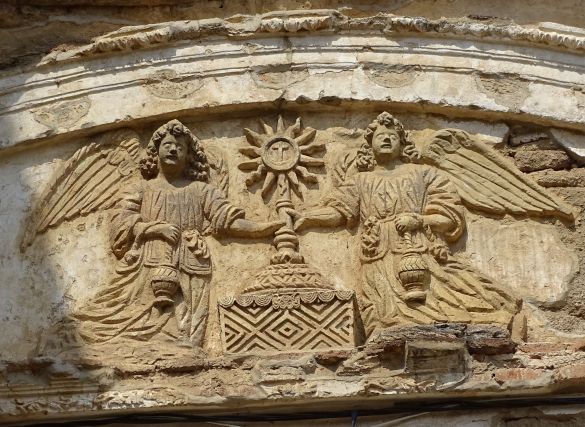
DSC00748GuatemalaAntiguaIglesiaDeSanFranciscoTau-teken

Zou daar het Tau-teken te zien zijn, in die stralenkrans?


DSC00749GuatemalaAntiguaIglesiaDeSanFranciscoRestenStucco

De kerk was in barokstijl. Dat is hier en daar nog te zien aan ornamenten.


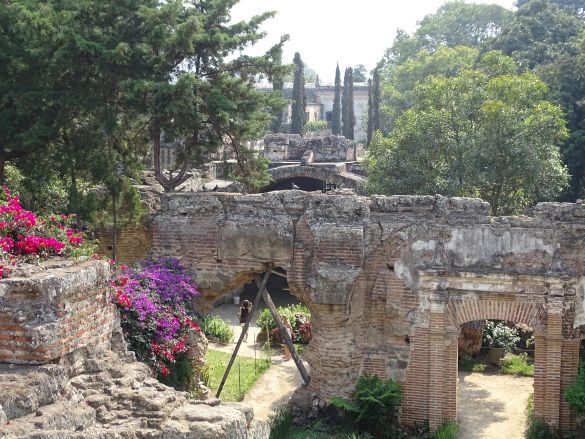
DSC00750GuatemalaAntiguaIglesiaDeSanFranciscoZichtOpDeGroteRuinMetRestantenVanEenKlooster

De ruïnes vormen een prachtige en vooral rustige omgeving.


DSC00751GuatemalaAntiguaIglesiaDeSanFrancisco

DSC00752GuatemalaAntiguaIglesiaDeSanFranciscoHoogteverschillen

Natuurlijk grenzen de kerk en de ruïnes aan woonwijken. Het hoogteverschil is opvallend.


DSC00753GuatemalaAntiguaIglesiaDeSanFrancisco
DSC00754GuatemalaAntiguaIglesiaDeSanFrancisco
DSC00755GuatemalaAntiguaIglesiaDeSanFrancisco
DSC00757GuatemalaAntiguaIglesiaDeSanFrancisco
DSC00758GuatemalaAntiguaIglesiaDeSanFranciscoBassin

Een basis van een fontein?


DSC00759GuatemalaAntiguaIglesiaDeSanFrancisco


Koffie in Antigua: all you need is a book

Okay, de timing is niet best.
De foto’s van vandaag zijn op 28 december 2018 gemaakt.
Vol in de kersttijd en wij zijn net een 40-daagse tocht
richting Pasen beginnen.
Dus dat sluit niet zo op elkaar aan maar het is toeval
dat dit korte bericht, vandaag gemaakt is.

DSC00742GuatemalaAntiguaBookshelfsInABar

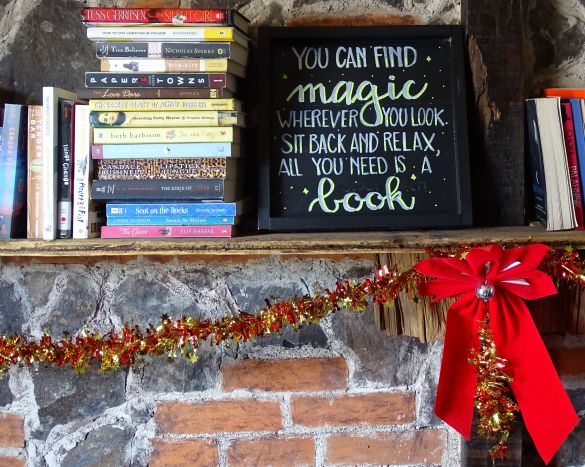
We gingen die dag onderweg naar een kerk (wat anders) en hadden trek in een drankje. We gingen een bar in en die bleek zich naast eten en drinken, ook te richten op boeken en het genot van lezen. er stonden meerdere boekenkasten als deze in de bar.


Maar deze boekenplank was toch het mooiste zicht in dit café.

DSC00741GuatemalaAntiguaYouCanFindMagicWhereverYouLookSitBackAndRelaxAllYouNeedIsABook

You can find magic wherever you look. Sit back and relax, all you need is a book.


Paseo de los Museos

Vooral bij de kunst uit Centraal-Amerika was het moeilijk
te bepalen waar je nu precies naar keek.
Er waren stukken waar een kaatje bij stond met een beperkte
beschrijving. Maar vaak stond er niets bij en was de opstelling
zo dat het idee gewekt wordt dat het om replica’s gaat.
Maar mooie ruimtes waren het zeker.

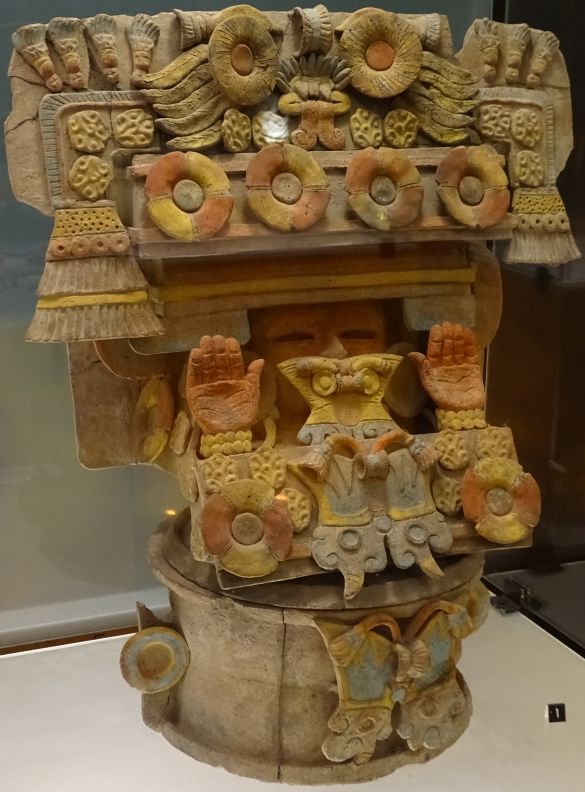
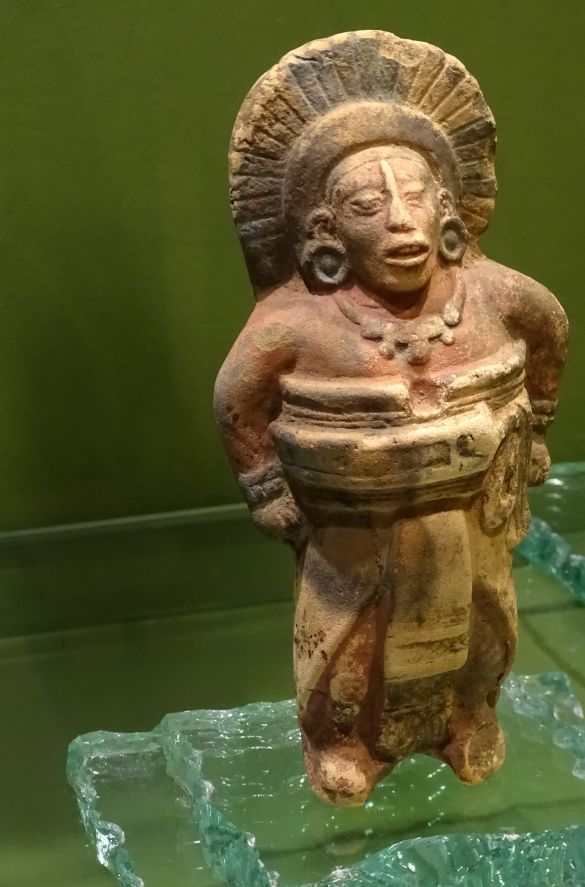
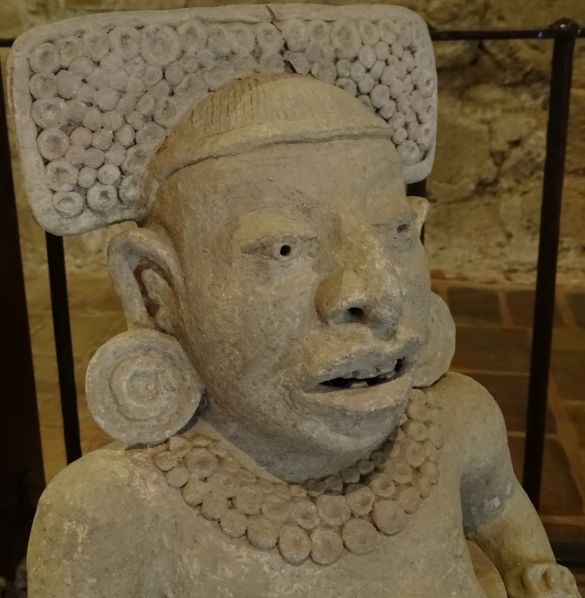
DSC00732GuatemalaAntiguaIncensarioMariposasEstiloTeotihuacanoCostaSurDeGuatemalaPeriodoClasicoTardio600-900dC

Guatemala, Antigua, Incensario Mariposas Estilo Teotihuacano, Costa sur de Guatemala, periodo clasico tardio, 600 – 900 AD. Wierookvat, vlinderstijl volgens Google Translate.


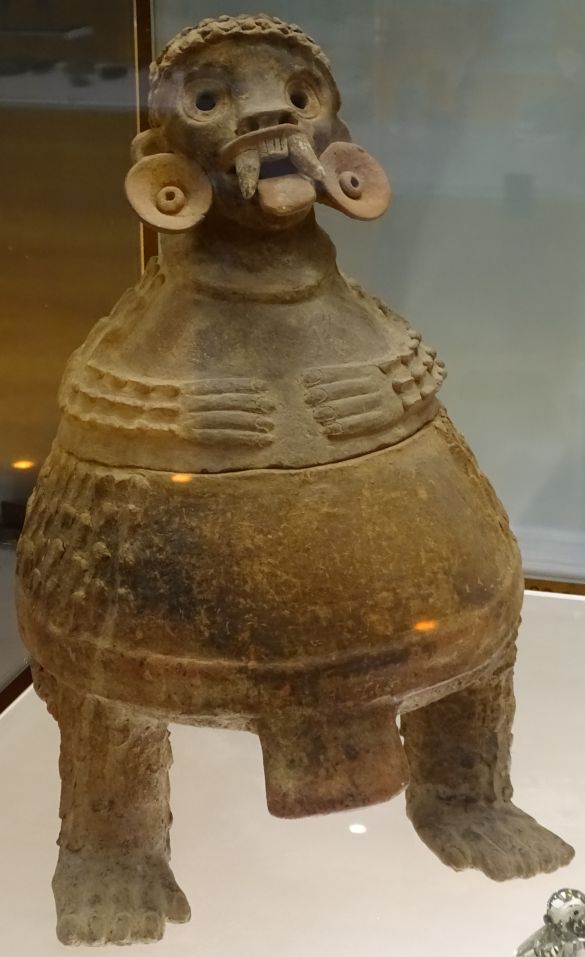
DSC00734GuatemalaAntiguaIncenseBurnerMonkeyGuatemalanSouthCoastClassicPeriod300-900AD

Guatemala, Antigua, Incense burner Monkey, Guatemalan south coast, classic period, 300 – 900 AD.


DSC00736GuatemalaAntiguaPaseoDeLosMuseos

Guatemala, Antigua, Paseo de los Museos.


DSC00737GuatemalaAntiguaPaseoDeLosMuseos

Guatemala, Antigua, Paseo de los Museos.


DSC00738GuatemalaAntiguaPaseoDeLosMuseos

Guatemala, Antigua, Paseo de los Museos.


DSC00740GuatemalaAntiguaPaseoDeLosMuseos
DSC00739GuatemalaAntiguaPaseoDeLosMuseos

Guatemala, Antigua, Paseo de los Museos.


Paseo de los Museos

Fotograferen viel niet mee.
Veel voorwerpen waren zo belicht dat het allemaal net niet ging.
Dat doet niets af van de prachtige omgeving waar ik meer foto’s had moeten maken.
Vandaag een paar foto’s uit het Colonial Museum (althans dat is
zo als ik het me herinner).

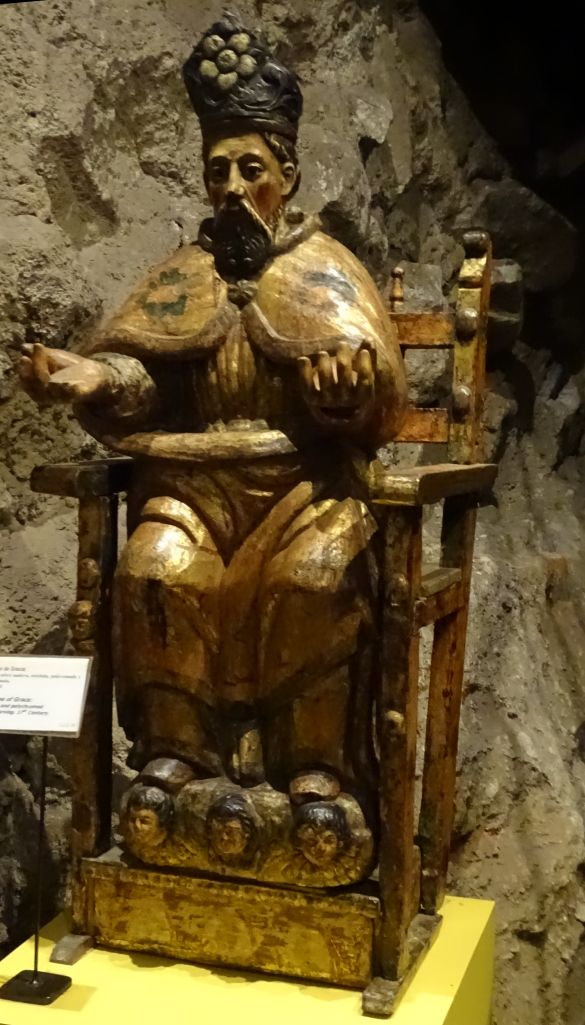
DSC00724TheColonialMuseumThroneOfGrace17thCenturyGildedAndPolychromedWoodcarving

Throne of Grace, 17th century. Gilded and polychromed woodcarving. Deze voorstelling had ik niet eerder ergens gezien.


DSC00726MysteryOfChrist'sBirth18thCentPolychromedWoodcarving

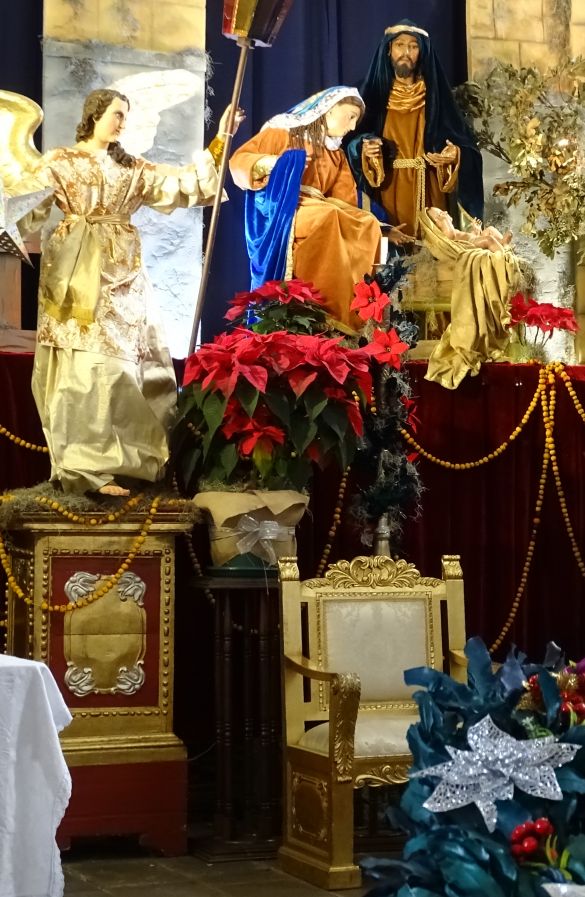
Mystery of Christ’s birth, 18th century. Polychromed woodcarving.


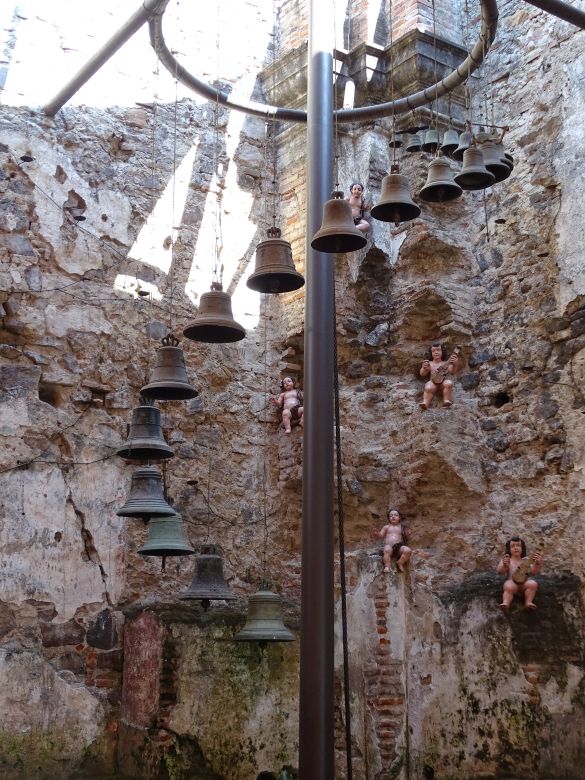
DSC00728AntiguaCasaSantaDomingoPaseoDeLosMuseosKlokkenstoel


DSC00729AntiguaCasaSantaDomingoPaseoDeLosMuseosLaatsteAvondmaal

Laatste Avondmaal.

DSC00729AntiguaCasaSantaDomingoPaseoDeLosMuseosLaatsteAvondmaalDetail

Detail.


DSC00730AntiguaCasaSantaDomingoPaseoDeLosMuseosMariaMetKind

Altaarstuk met Maria en kind.


DSC00730AntiguaCasaSantaDomingoPaseoDeLosMuseosMariaMetKindDetail

Detail.


DSC00731AntiguaCasaSantaDomingoPaseoDeLosMuseosCompleetBeeldVanAltaarstukMetMariaEnKind

Het hele altaarstuk.


Paseo de los Museos

In een van de ruïnes van de grotere kloostercomplexen in Antigua
is nu een 5-sterren hotel gevestigd met een serie van musea.
Het overtrof mijn verwachtingen.

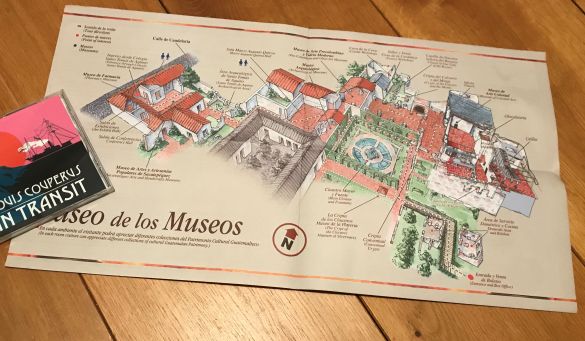
Scan027CasaSantoDomingoPaseoDeLosMuseosAntiguaGuatemala

Als bezoeker krijg je deze luxe plattegrond. Om je een idee te geven heb ik dit document op de foto gezet met een hoesje van een CD.

IMG_2617PlattegrondNaastCD

IMG_2618PlattegrondOpenGevouwen

Geopend ziet het er dan als hierboven uit.


Zelf beschrijft het museum zich als:

Museums Promenade
The Museums Promenade is a cultural route created by an agreement between the San Carlos de Guatemala University and the Casa Santo Domingo Hotel.
It is a route that makes it possible to visit the museums installed in what was the church and convent of Santo Domingo and the Santo Tomás de Aquino College.
During the time of the Spanish domination these places constituted one single unit.


Zo tref je daar The Colonial Museum, The Archeology Museum, The Museums of Pre-Colombian Art and Modern Glass en ten minste nog 3 musea aan.


Besides the successful integration of the colonial architectural vestiges with audacious contemporary concepts in important areas of the convent, the visit to significant places has been made accessible.
These places include the burial and vigil crypts among which the Calvary Crypt is outstanding because it has an extraordinary scene of the crucifixion made in polychrome stucco and dated 1683.

Het eerste museum die we bezochten was ‘The Museum of Silverware’.
De musea zijn niet heel erg groot, maar samen is het een prachtige
collectie met fascinerende werken.
De folder bevat wat opgeklopte marketing-taal maar als ik het niet
de moeite waard had gevonden zou ik er niet zo uitgebreid bij stil staan.

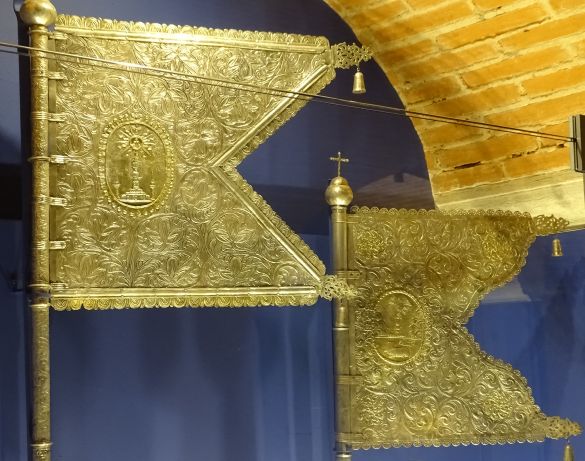
DSC00715 AntiguaCasaSantoDomingoPaseoDeLosMuseosProcessionFlagsSilver01

Zilveren processievlaggen. Als er iets op de musea is af te dingen is dat de informatie over de stukken beperkt is. Geen jaartal, geen vindplaats. Dat is erg jammer. Dat kun je nog accepteren als er bijvoorbeeld een catalogus verkrijgbaar is waar die informatie in is opgenomen, maar die heb ik het winkeltje niet gevonden.


DSC00715 AntiguaCasaSantoDomingoPaseoDeLosMuseosProcessionFlagsSilver02

Afbeelding van een monstrans op de vlag.


DSC00715 AntiguaCasaSantoDomingoPaseoDeLosMuseosProcessionFlagsSilver03

Met een bel op het uiteinde van de vlag.


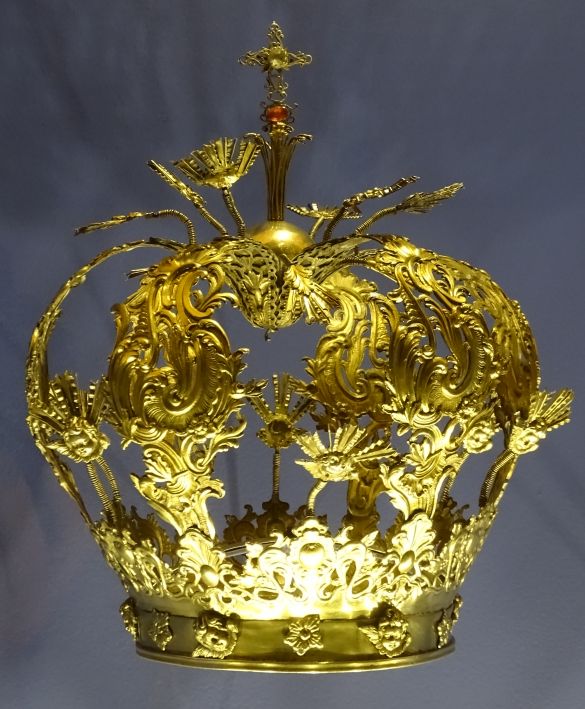
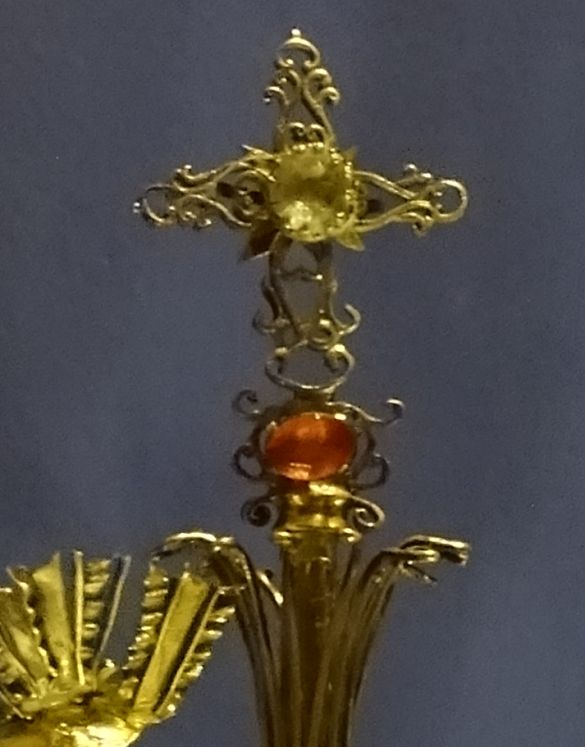
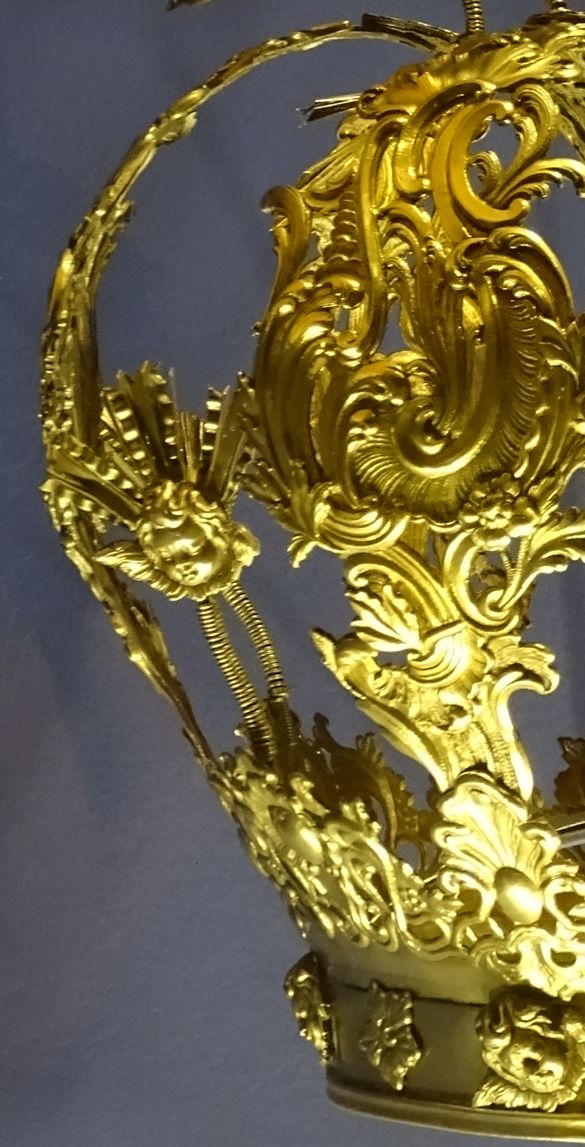
DSC00716 AntiguaCasaSantoDomingoPaseoDeLosMuseosCrown01

Een kroon. Bedoeld voor op een houten beeld, bijvoorbeeld.


Crowns
Some crowns are ornamented with precious stones, and gird the head of the saints as a symbol of royal dignity or nobility.
When they present two or three arcs they are called Imperial Crowns.
They may also have “shakers” as an ornament and symbol of divinity.


Wat hier bedoeld wordt met “shaker” is me niet helemaal duidelijk. Ik vermoed dat hier ‘scepter’ bedoeld wordt. Maar ben niet zeker.


Crowns also usually have a band-shaped piece that goes from side to side at the vase of the hoop, pierced in the centre to fit the image and be secured with a screw.
In general, silver crowns were gilded.

DSC00716 AntiguaCasaSantoDomingoPaseoDeLosMuseosCrown02

Met decoratie van (edel)stenen.


DSC00716 AntiguaCasaSantoDomingoPaseoDeLosMuseosCrown03


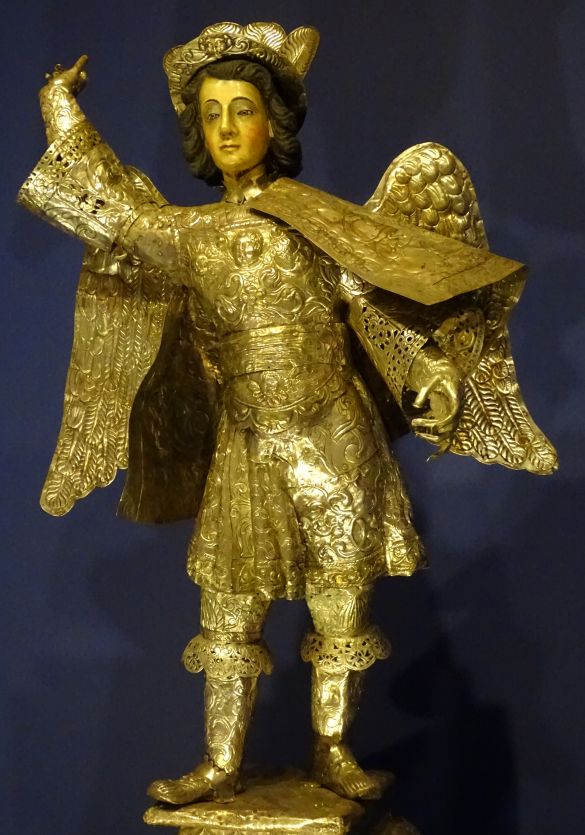
DSC00718 AntiguaCasaSantoDomingoPaseoDeLosMuseosSaintMichaelTheArchangel01

De aartsengel Michael. Saint Michael the Archangel.


St. Michael is one of the principal angels; his name was the war-cry of the good angels in the battle fought in heaven against the enemy and his followers.
Christian tradition gives to St. Michael four offices: to fight against Satan, to rescue the souls of the faithful from the power of the enemy, especially at the hour of death, to be the champion of God’s people and to bring men’s souls to judgement.


An attribute of this archangel is the Sun and the Moon on his chest or breastplate.
They symbolize that human nature pales before the power of God.

DSC00718 AntiguaCasaSantoDomingoPaseoDeLosMuseosSaintMichaelTheArchangel02SunAndMoon

Met op de borst voor de kijker links de Zon en rechts de Maan.


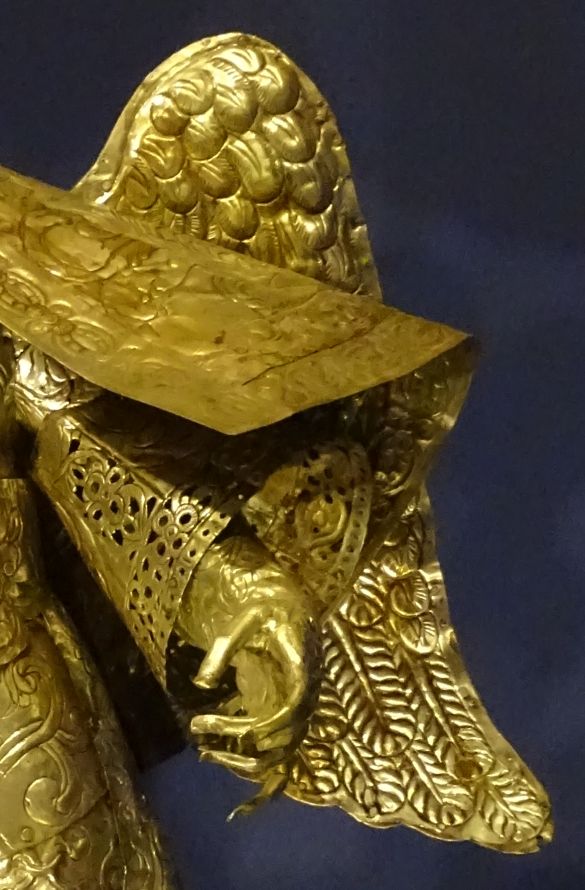
DSC00718 AntiguaCasaSantoDomingoPaseoDeLosMuseosSaintMichaelTheArchangel03WingAndArm

Detail van de vleugel en arm van de aartsengel.


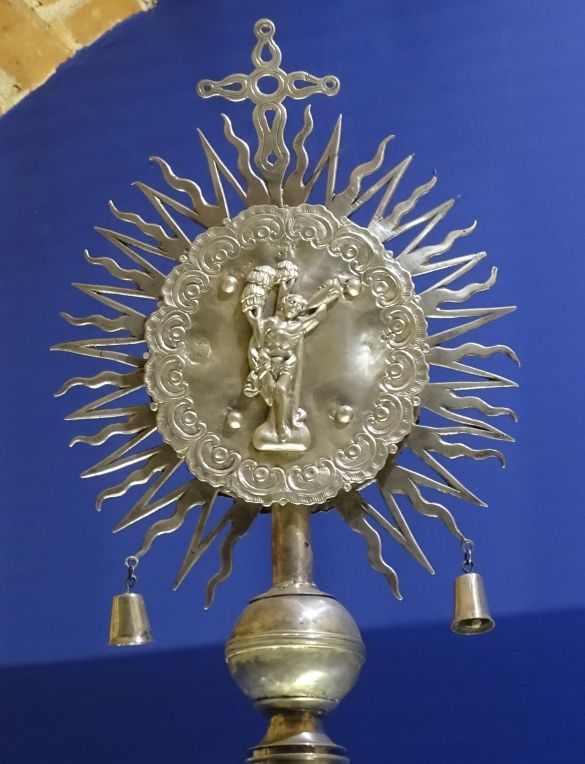
DSC00720 AntiguaCasaSantoDomingoPaseoDeLosMuseosProcessionalCross

Processiekruis. Zo’n voorwerp was eerder te zien, in gebruik, op de foto’s van ons verblijf in Chichicastenango.


Processional Monstrances and Processional Cross

The Catholic Christian Brotherhoods had their own shields which show their Patron Saint and its own symbols.
They have different shapes: round, oval-shaped sun with rays, etc.
In any case, they bear on one side the symbol that represents the group.


The shield is encased in a silver or wooden rod and is used during the processions organized by the brotherhood or “cofradia”.


The processional cross, is also placed at the end of a rod or pole.
It is carried as well during processions.

DSC00722AntiguaCasaSantoDomingoPaseoDeLosMuseosSilverAltarpiece01

Zilveren altaarstuk: ‘Altarpiece made from wood and plaques of embossed, carved and engraved silver.’


DSC00722AntiguaCasaSantaDomingoPaseoDeLosMuseosSilverAltarpiece02

Detail.


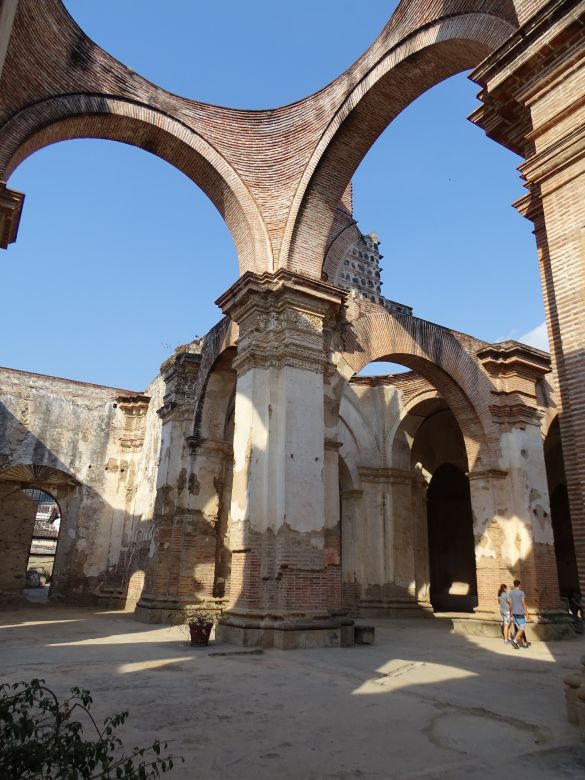
Antigua: Catedral de Santiago

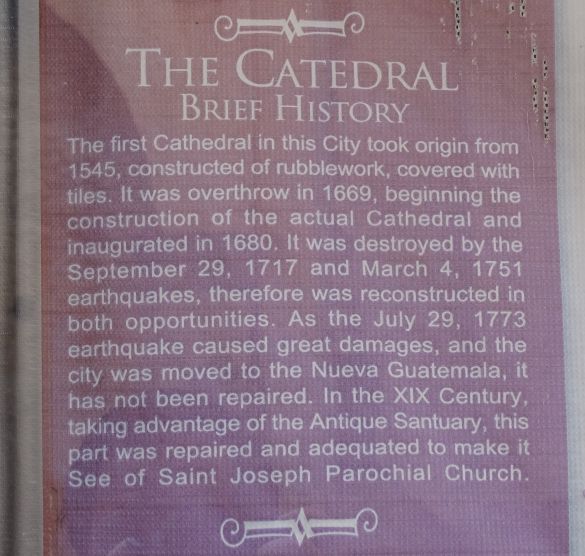
De grote kathedraal van Antigua is eigenlijk niet veel meer
dan een prachtige gevel, een paar muren en kolommen en een kelder.
Men is in 1545 begonnen met de bouw van een kathedraal.
In 1669 is die gesloopt om een nieuwe te bouwen.
Op 29 september 1717 en opnieuw op 4 maart 1751, werd schade
toegebracht door aardbevingen. In beide gevallen heeft
men de schade hersteld. De aardbeving van 29 juli 1773 deed
de bewoners van Antigua besluiten te verhuizen naar New Guatemala.
In de 19e eeuw zijn de restanten gebracht naar de huidige status
en wordt een klein deel weer gebruikt voor religieuze doeleinden.

Het einde van de wandeling brengt ons bij het koloniale centrum
van het Spaanse wereldrijk. Niet alleen de kathedraal, ook het
Palacio de los Capitanes Generales (het koloniale bestuurscentrum)
en het Palacio del Ayuntamiento (het gemeentehuis) bevinden zich
aan het centrale plein/park van Antigua.

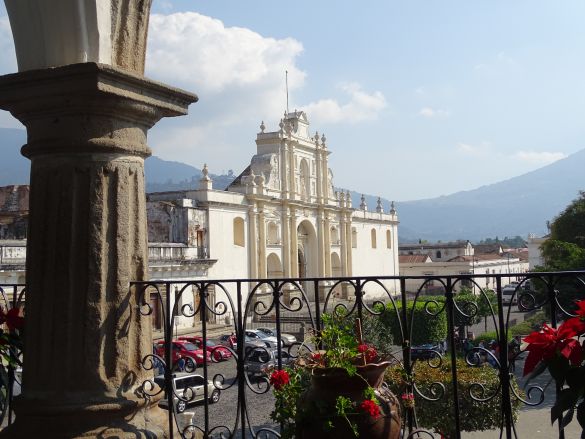
DSC00674AntiguaCatedralDeSantiagoVanafDeBovensteGallerijVanPalacioDelAyuntamiento

Het Palacio del Ayuntamiento beslaat de hele breedte van het park en daardoor ontstaat er een mooi evenwicht met het Palacio de los Capitanes Generales dat er tegenover ligt. Beide gebouwen hebben twee verdiepingen, beide aan de kant van het park hebben een galerij. Hier zie je het zicht vanaf de bovenste galerij van het Palacio del Ayuntamiento op de gevel van de Catedral de Santiago.


DSC00675AntiguaPalacioDelAyuntamientoBovenGallerij

De galerij van het Palacio del Ayuntamiento.


DSC00676Antigua

Antigua is druk met toeristen.


DSC00677OpDeTrappenVanAntiguaCatedralDeSantiago

Op de trappen van de Catedral de Santiago.


DSC00678AntiguaPalacioDeLosCapitanesGeneralesVanuitHetCentraleParkGezien

Het Palacio de los Capitanes Generales vanuit het park.


DSC00679AntiguaPalacioDeLosCapitanesGenerales

Het Palacio de los Capitanes Generales, het bestuurlijke hart van het Spaanse wereldrijk.


DSC00680AntiguaHeladosAlexander

Helados Alexander.


DSC00681AntiguaCatedralDeSantiago

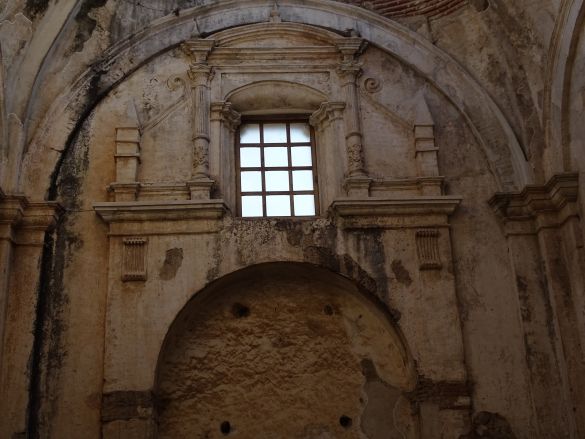
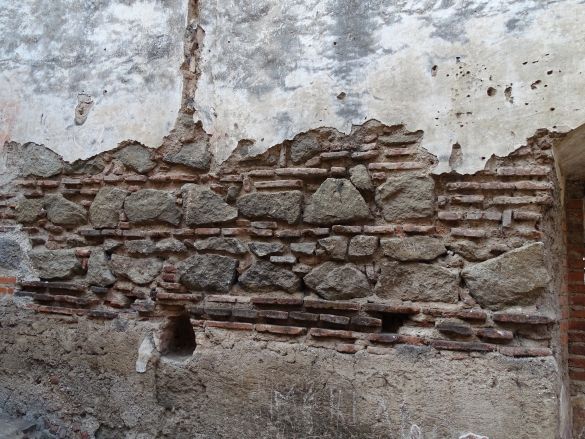
Zo ziet de Catedral de Santiago er aan de binnenkant uit. Op een aantal plaatsen zijn na de aardbevingen de barokke elementen gereproduceerd. Daarvan zie je in dit bericht een aantal voorbeelden.


DSC00682AntiguaCatedralDeSantiago
DSC00683AntiguaCatedralDeSantiagoBasisGebouwdVanaf1545VernieldIn1773Reproductions
DSC00684AntiguaCatedralDeSantiagoBasisGebouwdVanaf1545VernieldIn1773Reproductions
DSC00685AntiguaCatedralDeSantiago
DSC00686AntiguaCatedralDeSantiagoBasisGebouwdVanaf1545VernieldIn1773Reproductions
DSC00687AntiguaCatedralDeSantiagoBasisGebouwdVanaf1545VernieldIn1773Reproductions
DSC00688AntiguaCatedralDeSantiago

Maar waar de reproducties beginnen of eindigen is niet zo duidelijk.


DSC00689AntiguaCatedralDeSantiagoDeVluchtNaarEgypte

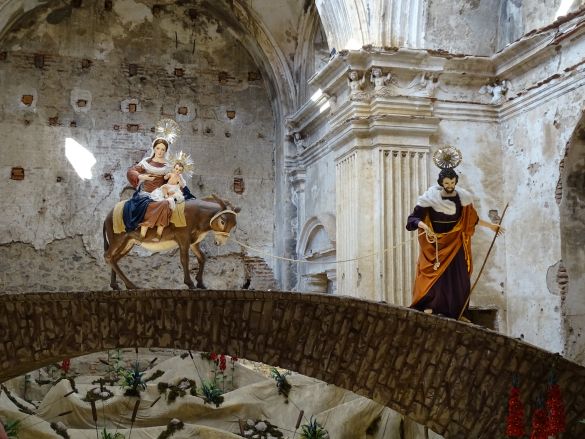
Met levensgrootte poppen werd ‘De vlucht naar Egypte’ uitgebeeld.

DSC00690AntiguaCatedralDeSantiagoDeVluchtNaarEgypte
DSC00691AntiguaCatedralDeSantiagoJozefOpDeVluchtNaarEgypte


DSC00692AntiguaCatedralDeSantiagoBasisGebouwdVanaf1545VernieldIn1773Reproductions
DSC00693AntiguaCatedralDeSantiagoBasisGebouwdVanaf1545VernieldIn1773Reproductions
DSC00694AntiguaCatedralDeSantiagoBasisGebouwdVanaf1545VernieldIn1773Reproductions
DSC00695AntiguaCatedralDeSantiagoBasisGebouwdVanaf1545VernieldIn1773Reproductions
DSC00696AntiguaCatedralDeSantiago
DSC00697AntiguaCatedralDeSantiagoBasisGebouwdVanaf1545VernieldIn1773Reproductions
DSC00698AntiguaCatedralDeSantiagoBasisGebouwdVanaf1545VernieldIn1773Reproductions
DSC00699AntiguaCatedralDeSantiago
DSC00700AntiguaCatedralDeSantiago
DSC00701AntiguaCatedralDeSantiago
DSC00702AntiguaCatedralDeSantiago
DSC00703AntiguaCatedralDeSantiago
DSC00704AntiguaCatedralDeSantiagoElProgresoDelHombreYLaTeoriaDelEstadioFinito

El progreso del Hombre y la teoria del estado finito naast een aantal delen van een encyclopedie voor zelfstudie.


DSC00705AntiguaCatedralDeSantiago
DSC00706AntiguaCatedralDeSantiago
DSC00707AntiguaCatedralDeSantiago
DSC00708AntiguaCatedralDeSantiago
DSC00709AntiguaCatedralDeSantiagoBasisGebouwdVanaf1545VernieldIn1773Reproductions
DSC00710AntiguaCatedralDeSantiago


DSC00713AntiguaCatedralDeSantiagoKerststal

De kerststal.


DSC00714AntiguaCatedralDeSantiagoLaBibliaCatólica

De Bijbel als het Periodiek systeem der elementen.


Scan028CatedralLaAntiguaGuatemalaNacimiento

De toegangskaarten of “Donacion: Turista”


Wandel mee, verder door Antigua

DSC00635AntiguaIglesiaElCarmen

De eerstvolgende kerk in de wandeling is wat er overgebleven is van de Iglesia El Carmen met de opvallende kolommen.


DSC00636AntiguaIglesiaElCarmen
DSC00637AntiguaIglesiaElCarmen
DSC00638AntiguaIglesiaElCarmen


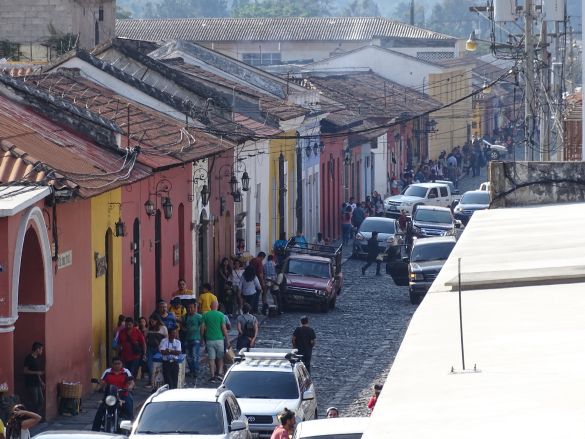
DSC00639AntiguaStraatbeeld

Het straatbeeld.


DSC00640Antigua

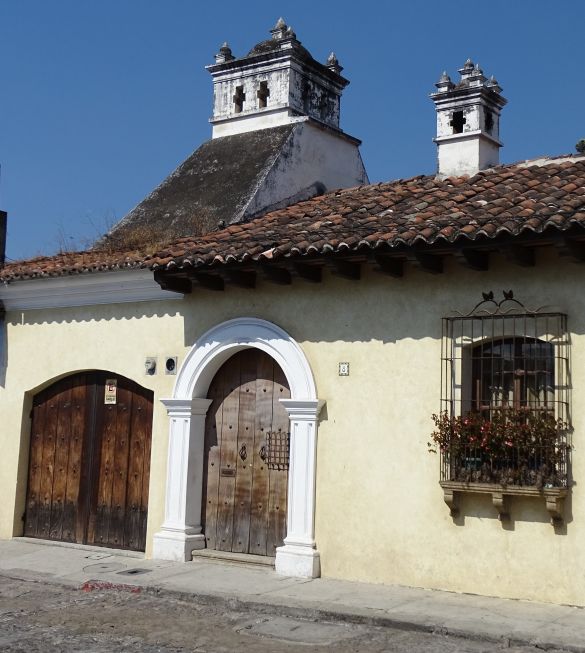
Typische ‘schoorsteentorens’.


DSC00642AntiguaConventoDeSantaTeresa

Convento de Santa Teresa.


DSC00643AntiguaZoDoeJeDatOpEenSmalleStoep

Zo doe je dat dus als de stoep wat smal is.


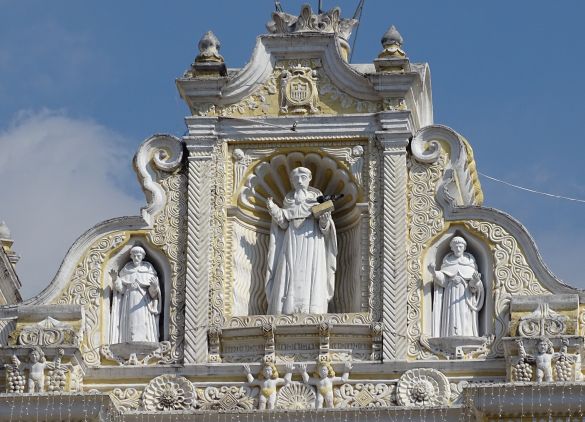
DSC00644AntiguaIglesiaDeNuestraSenoraDeLaMerced

Dan zie je opeens, aan de rechterkant de Iglesia de nuestra Senora de la Merced.


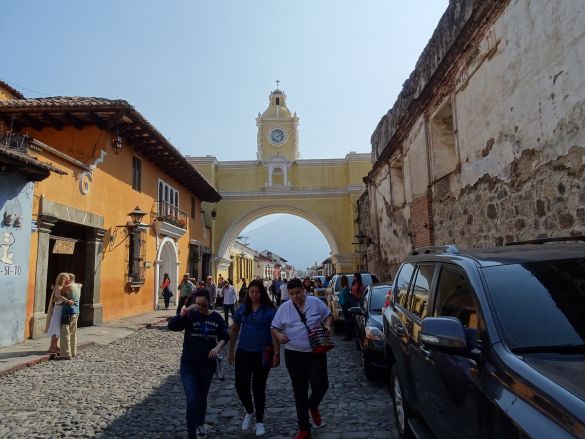
DSC00646KijkNaarLinksAntiguaArcoDeCatalina

Terwijl je aan de linkerkant de Arco de Catalina ziet.


DSC00647AntiguaIglesiaDeNuestraSenoraDeLaMercedLeukeManierOpReclameTeMakenVoorJeWinkel01

Een winkel trok op een leuke manier de aandacht.

DSC00647AntiguaIglesiaDeNuestraSenoraDeLaMercedLeukeManierOpReclameTeMakenVoorJeWinkel02


DSC00649AntiguaIglesiaDeNuestraSenoraDeLaMerced

De gevel van de Iglesia de nuestra Senora de la Merced. De kerk behoorde bij een klooster en ook die kun je bezoeken.


DSC00650AntiguaIglesiaDeNuestraSenoraDeLaMercedDeVerlichtingOntneemtDeelsHetZicht

De verlichting ontneemt een deel van je uitzicht op de witte reliëfs en beelden.


DSC00652AntiguaIglesiaDeNuestraSenoraDeLaMerced

Detail van de kerkdeur.


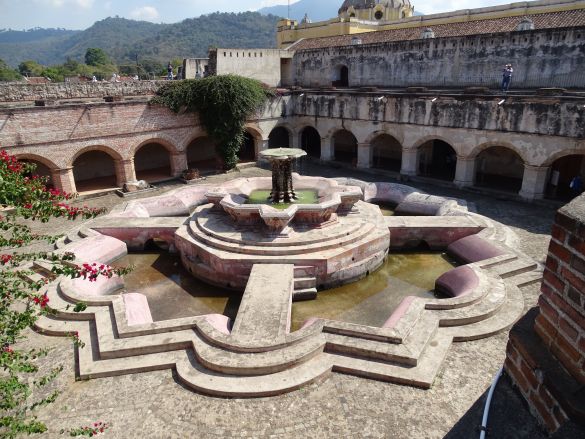
DSC00653AntiguaIglesiaDeNuestraSenoraDeLaMercedFontein

Op de binnenplaats van het klooster is een grote fontein.


DSC00654AntiguaIglesiaDeNuestraSenoraDeLaMerced


DSC00655AntiguaIglesiaDeNuestraSenoraDeLaMercedHetIsNietAltijdDuidelijkWatJePreciesZiet

Soms is niet helemaal duidelijk waar je naar kijkt maar levert het toch een interessante foto op.


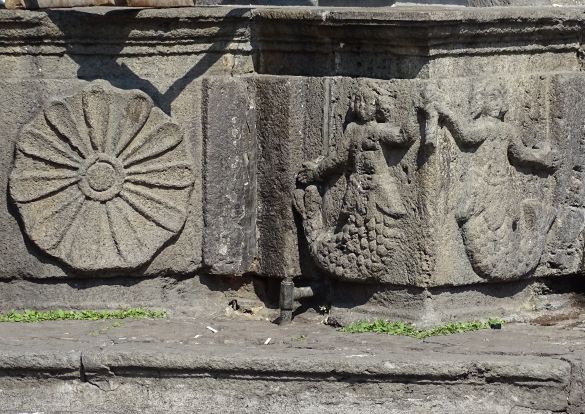
DSC00656AntiguaIglesiaDeNuestraSenoraDeLaMercedBasisFontein

Versiering aan de basis van de fontein.


DSC00657AntiguaIglesiaDeNuestraSenoraDeLaMerced

Van bovenaf is pas goed te zien hoe groot de fontein is.


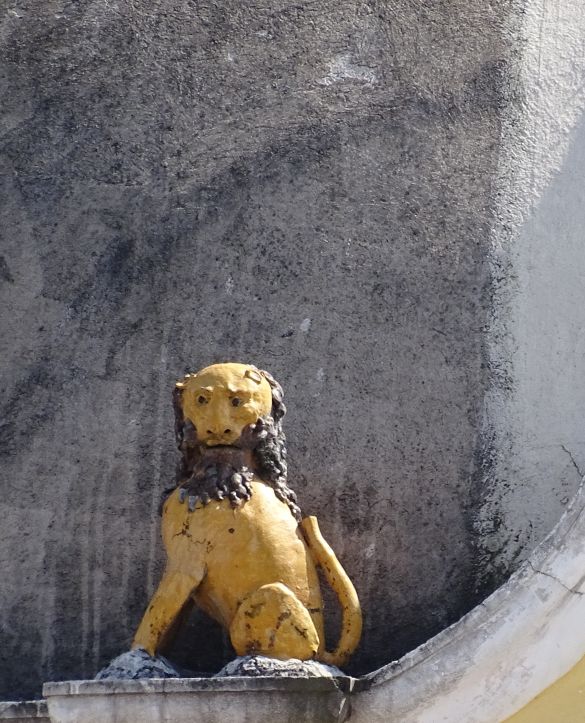
DSC00658AntiguaIglesiaDeNuestraSenoraDeLaMercedEenVanDeLeeuwenAanDeBasisVanDeKoepel

Aan de basis van de koepel van de Iglesia de nuestra Senora de la Merced zitten een aantal leuke leeuwen.


DSC00659AntiguaIglesiaDeNuestraSenoraDeLaMercedLeeuwenOpDeKoepel


DSC00660AntiguaIglesiaDeNuestraSenoraDeLaMercedDeKoepel

De koepel van de Iglesia de nuestra Senora de la Merced.


DSC00661AntiguaDeelVanEenBasisVanEenFontein

Op het plein voor de Iglesia de nuestra Senora de la Merced is nog een fontein. Een stuk kleiner. Dit is een detail van de versiering aan het bassin.


DSC00662AntiguaIglesiaDeNuestraSenoraDeLaMercedTopVanDeGevel

Top van de gevel van de Iglesia de nuestra Senora de la Merced.


DSC00663AntiguaWieIsDiePersoonMetEenDuifOpHetHoofd

Altijd leuk: een borstbeeld met een duif op het hoofd.


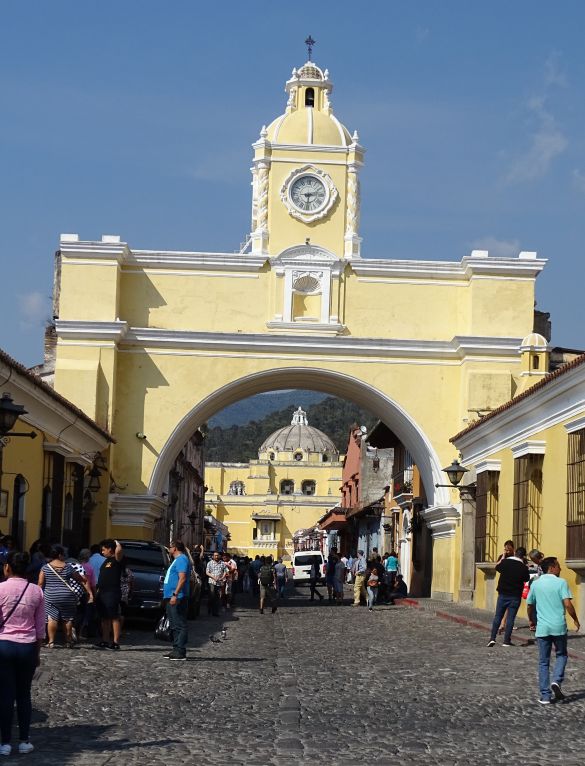
DSC00665AntiguaArcoDeCatalina

Bij de Arco de Catalina is het steeds druk.


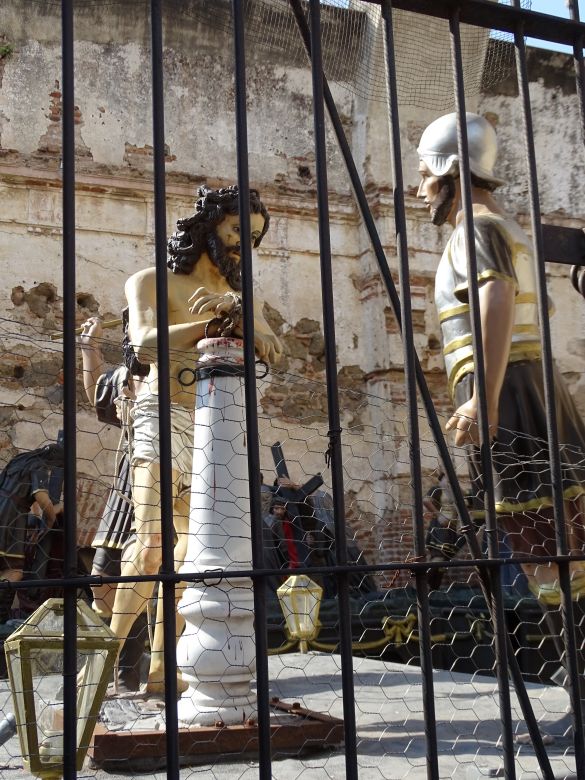
DSC00667AntiguaProcessiebeelden

De verbinding over de straat (de Arco de Catalina) is een restant van een klooster waarbij de nonnen de verbinding gebruikten om ongezien de straat over te steken. In restanten van een kerk in de buurt van deze verbinding staat processiebeelden opgesteld die gebruikt worden in aanloop van Pasen.


DSC00670AntiguaArcoDeCatalinaAndIglesiaDeNuestraSenoraDeLaMerced

De Arco de Catalina met in de verte de koepel van de Iglesia de nuestra Senora de la Merced.


DSC00671AntiguaUnescoWorldHeritageSite

Antigua is een Unesco World Heritage Site.


De wandeling is nog niet af.
Dus er volgt nog meer.
Inderdaad baseerden wij de wandeling losjes op wat de Lonely Planet
hier voor voorstelt.