India 24/25: Delhi, dag 6 – Humayun’s Tomb

Humayun’s Tomb is een uitgestrekt complex,
met talloze graven verspreid over het terrein.
Van de straat tot aan het grafmonument zelf
is een wandeling die je langs vele graven en door tuinen brengt.
Daardoor levert bijna iedere stap een nieuwe verrassing op.
Op 22 november 2024 was ik er voor de tweede keer.
De eerste keer was in 2016.
Toen kort na de renovatie in 2013/2014
door de Aga Khan Trust, de Duitse regering
en de Archaeological Survey of India.
Toen stroomde er op het hele terrein, door alle kanaaltjes, vijvers,
fonteinen en kunstmatige watervallen koel water.
Helaas was ik er nu in een ander seizoen
en overheerste de luchtvervuiling het beeld.
Maar het blijft een fantastische ervaring waarin
rust, architectonische schoonheid, de zon en de koelte van het water
elkaar afwisselen.
Natuurlijk maakte ik er foto’s:

DSC01438IndiaNewDelhiHumayun’sTombBuHalimaEnclosure TxtDSC01439IndiaNewDelhiHumayun’sTombBuHalimaEnclosure

Bu Halima enclosure.


DSC01440IndiaNewDelhiHumayun’sTombArabSeraiGateway1560-1561CE TxtDSC01441IndiaNewDelhiHumayun’sTombArabSaraiGateway1560-1561CE

Arab Sarai Gateway, 1560 – 1561 CE. Hier is serai niet gebruikt in de betekenis van een karavaanstop en handelspost maar in de betekenis van de poort naar de wijk waar de Arabische handwerklieden woonden terwijl ze werken aan de graftombe van Humayun.

DSC01442 01 IndiaNewDelhiHumayun’sTombArabSaraiGateway1560-1561CE TxtDSC01442 02 IndiaNewDelhiHumayun’sTombArabSaraiGateway1560-1561CE TxtDSC01443IndiaNewDelhiHumayun’sTombArabSaraiGateway1560-1561CE Luchtvervuiling

Tegenlicht en luchtvervuiling zijn geen goede combinatie voor een foto.


DSC01444IndiaNewDelhiHumayun’sTombDSC01445IndiaNewDelhiHumayun’sTomb1565-1572ADWestGate

West Gate. Nu de hoofdingang van Humayun’s Tumb complex.

DSC01446IndiaNewDelhiHumayun’sTomb1565-1572ADWestGate Txt


DSC01447IndiaNewDelhiHumayun’sTomb1565-1572ADWestGate

Humayun’s Tomb, 1565 – 1572 CE.

DSC01448IndiaNewDelhiHumayun’sTomb1565-1572AD TxtDSC01449IndiaNewDelhiHumayun’sTombWestGateDSC01450IndiaNewDelhiHumayun’sTomb WaterWay

Niet alle kanaaltjes bevatten die dag water. Het onderhoud van dez complexen vraagt veel mensen en veel geld.

DSC01451IndiaNewDelhiHumayun’sTomb1565-1572AD

Er was geen overstroming of regenbui. Er is veel water nodig om de bomen en het gras groen te houden.

DSC01452IndiaNewDelhiHumayun’sTomb1565-1572ADDSC01453IndiaNewDelhiHumayun’sTomb1565-1572ADDSC01454IndiaNewDelhiHumayun’sTomb1565-1572ADDSC01455IndiaNewDelhiHumayun’sTomb1565-1572ADDSC01456IndiaNewDelhiHumayun’sTomb1565-1572ADBarber'sTomb sign

Niet het graf van Barbur maar het graf van wellicht een hofbarbier.

DSC01457IndiaNewDelhiHumayun’sTomb1565-1572ADBarber'sTomb TxtDSC01458IndiaNewDelhiHumayun’sTomb1565-1572ADBarber'sTombDSC01459IndiaNewDelhiHumayun’sTomb1565-1572ADDSC01460IndiaNewDelhiHumayun’sTomb1565-1572AD

Het is goed te zien dat de kanaaltjes, de vijvers en de fonteinen een integraal onderdeel van het ontwerp van het grafcomplex waren.

DSC01461IndiaNewDelhiHumayun’sTomb1565-1572ADDSC01462IndiaNewDelhiHumayun’sTomb1565-1572ADDSC01463IndiaNewDelhiHumayun’sTomb1565-1572ADDSC01464IndiaNewDelhiHumayun’sTomb1565-1572AD platform

Tijd om het centrale gebouw van dichtbij te bekijken. Dit is de plint of het platform waarop het monument staat.

DSC01465IndiaNewDelhiHumayun’sTomb1565-1572AD PlatformPlinthDSC01466IndiaNewDelhiHumayun’sTomb1565-1572AD ToegangTotPlatform

Met dit soort trappen kun je dan op het platform komen.

DSC01467IndiaNewDelhiHumayun’sTomb1565-1572ADDSC01468IndiaNewDelhiHumayun’sTomb1565-1572AD

Ook vanaf het platform zie je de samenhang tussen het gebouw en de waterwegen.

DSC01469IndiaNewDelhiHumayun’sTomb1565-1572ADDSC01470IndiaNewDelhiHumayun’sTomb1565-1572AD

Symmetrie is een van de overheersende ontwerpprincipes.

DSC01471IndiaNewDelhiHumayun’sTomb1565-1572ADDSC01472IndiaNewDelhiHumayun’sTomb1565-1572ADDSC01473IndiaNewDelhiHumayun’sTomb1565-1572ADDSC01474IndiaNewDelhiHumayun’sTomb1565-1572ADDSC01475IndiaNewDelhiHumayun’sTomb1565-1572ADDSC01476IndiaNewDelhiHumayun’sTomb1565-1572ADDSC01477IndiaNewDelhiHumayun’sTomb1565-1572ADDSC01478IndiaNewDelhiHumayun’sTomb1565-1572ADDSC01479IndiaNewDelhiHumayun’sTomb1565-1572ADDSC01480IndiaNewDelhiHumayun’sTomb1565-1572ADDSC01481IndiaNewDelhiHumayun’sTomb1565-1572ADDSC01482IndiaNewDelhiHumayun’sTomb1565-1572ADDSC01483IndiaNewDelhiHumayun’sTomb1565-1572ADDSC01484IndiaNewDelhiHumayun’sTomb1565-1572ADDSC01485IndiaNewDelhiHumayun’sTomb1565-1572ADDSC01486IndiaNewDelhiHumayun’sTombArabSeraiGateway1560-1561CEDSC01488IndiaNewDelhiHumayun’sTombBuHalimaEnclosure

Voor de moderne route naar het complex is de oude ommuring van de Bu Halima enclosure op deze plaats afgebroken.


India 24/25: Delhi, dag 6 – Isa Khan’s tuingraf

— over een ontwikkeling die gaat tot aan de Taj Mahal —

In het National Museum maakte ik nog een paar foto’s
die hun weg naar mijn blog nog niet gevonden hebben.
Sommige van de voorwerpen op die laatste foto’s
zijn toch onderdeel van de Stein collectie.
Alleen loop ik tegen problemen aan bij het juist duiden van de objecten.
Eigenlijk is dat al begonnen met de Pelgrimsfles
en het doet zich nu opnieuw voor bij een terracottabeeldje van
een aap die een kom op zijn hoofd draagt.

DSC01404IndiaNewDelhiNationalMuseumMonkeyCarryingABowlKhotan4th-5thCenturyCETerracotta16x10x4CmAcc.No.Har.016

India, New Delhi, National Museum, Monkey carrying a bowl, Khotan, 4th – 5th century CE, terracotta, 16 x 10 x 4 cm. Acc.No. Har.016. Dit is het beeldje waar ik naar verwijs hierboven. Tot nu toe heb ik Acc.No. Har.016 niet kunnen herleiden naar een nummer zoals dat door Stein is toegewezen. Maar ik kom hier nog op terug.

DSC01405IndiaNewDelhiNationalMuseumMonkeyCarryingABowlKhotan4th-5thCenturyCETerracotta16x10x4CmAcc.No.Har.016


Toen ik op zoek ging naar informatie over het aapje in Serindia
vond ik veel aapjes (of fragmenten ervan)
tussen de Yotkan-vondsten en aankopen.
Maar dit specifieke aapje niet.
Op internet vond ik een blogbericht uit 2011 over het voorwerp
met een tekst die een andere richting in ging dan mijn onderzoek.
Ik heb contact opgenomen met de maker van de blog
die meteen bereid was mij te helpen.
Maar zijn onderzoek dateert al van 15 jaar geleden.
Hij wees me naar een andere site met veel informatie
en die moet ik nog onderzoeken:
Tot ik mijn conclusies kan trekken vervolg ik hier mijn reisverslag.

Dag 6. Nog steeds in New Delhi. Het is 22 november 2024.
De luchtvervuiling is nog steeds enorm.
Als de zon feller straalt lijkt het minder te worden.
Op deze dag bezocht ik Humayun’s tomb en Purana Qila.

Wie was Humayun?

Humayun (1508–1556) was de tweede Mogolkeizer,
zoon en opvolger van Babur, de stichter van de Mogoldynastie.
Hij regeerde twee keer:
van 1530–1540 en opnieuw van 1555–1556, nadat hij
zijn rijk tijdelijk had verloren aan Sher Shah Suri.
Zijn regering was instabiel, maar zijn terugkeer uit Perzië
bracht een beslissende culturele verschuiving:
Perzische kunst, architectuur en hofcultuur
werden vanaf zijn tijd bepalend voor het Mogolrijk.

Humayun stierf in 1556 na een val van de trap van zijn bibliotheek
in Purana Qila — ironisch genoeg een plek die ik diezelfde dag ook bezoek.

Wat is zijn betekenis?

Hoewel Humayun zelf geen groot veroveraar was,
ligt zijn historische betekenis vooral in:

  • Het veiligstellen van de dynastie:
    zijn herovering van Delhi in 1555 maakte de weg vrij
    voor zijn zoon Akbar, de grootste Mogolkeizer.
  • De Perzische invloed:
    zijn jaren in ballingschap in Iran brachten
    Perzische architecten, kunstenaars en manuscripten naar India
    — een invloed die later culmineerde in de Taj Mahal.
  • De overgangsfiguur:
    hij verbindt de ruwe beginfase van het rijk onder Babur
    met de bloeiperiode onder Akbar.

Wat is de betekenis van Humayun’s Tomb?

Humayun’s Tomb (gebouwd 1565–1572) is het eerste grote tuingraf
op het Indiase subcontinent en het eerste monumentale Mogolgraf.
Het werd gebouwd in opdracht van zijn vrouw Bega Begum
door Perzische architecten.

De betekenis van het graf:

  • Architectonische mijlpaal:
    het introduceert de charbagh‑tuin (vierdelige paradijstuin) in India
    en het grootschalige gebruik van rood zandsteen.
  • Voorloper van de Taj Mahal:
    het graf vormde het prototype voor latere Mogol‑mausolea,
    met als hoogtepunt de Taj Mahal.
    UNESCO noemt het het eerste grote dynastieke mausoleum van de Mogols.
  • Dynastieke necropool:
    meer dan 150 leden van de Mogolfamilie liggen er begraven.
  • Spirituele ligging:
    het staat vlak bij de dargah (mausoleum) van de soefi‑heilige
    Nizamuddin Auliya,
    een plek die Mogolheersers als bijzonder gunstig beschouwden.

Wie was Isa Khan Niyazi?

Isa Khan was een Pashtun‑edelman (Pashtun is een etnische groep
uit Afghanistan en het noordwesten van Pakistan)
en een van de belangrijkste hovelingen onder Sher Shah Suri,
de heerser die Humayun tijdelijk van de troon verdreef.
Isa is de naam van de persoon, Khan is zijn titel (heer) en
Niyazi is de naam van de clan waartoe hij behoorde.

Zijn graf is dus ouder dan Humayun’s Tomb (ca. 1547 vs. 1565–1572).

Het is een prachtig voorbeeld van voor‑Mogol architectuur, met een achthoekige vorm, blauwe tegels en een ommuurde tuin.

Waarom is zijn graf belangrijk?

  • Het is een van de vroegste tuingraf‑complexen in Delhi.
  • Het laat zien hoe de charbagh‑traditie
    al vóór de Mogols in ontwikkeling was.
  • Het vormt een architectonische voorloper van Humayun’s Tomb,
    maar met een heel andere stijl:
    meer Afghaans‑Lodhi dan Perzisch‑Mogol.

DSC01416IndiaNewDelhiIsaKhanNiyaziGardenTomb

Isa Khan Niyazi’s garden tomb in de luchtvervuiling.


DSC01417IndiaNewDelhiIsaKhanNiyaziGardenTombDSC01418IndiaNewDelhiIsaKhanNiyaziGardenTombDSC01419IndiaNewDelhiIsaKhanNiyaziGardenTombDSC01420IndiaNewDelhiIsaKhanNiyaziGardenTombDSC01421IndiaNewDelhiIsaKhanNiyaziGardenTombDSC01422IndiaNewDelhiIsaKhanNiyaziGardenTombDSC01423IndiaNewDelhiIsaKhanNiyaziGardenTombDSC01424IndiaNewDelhiIsaKhanNiyaziGardenTombDSC01425IndiaNewDelhiIsaKhanNiyaziGardenTombDSC01426IndiaNewDelhiIsaKhanNiyaziGardenTombDSC01427IndiaNewDelhiIsaKhanNiyaziGardenTombDSC01428IndiaNewDelhiIsaKhanNiyaziGardenTombDSC01429IndiaNewDelhiIsaKhanNiyaziGardenTombDSC01431IndiaNewDelhiIsaKhanNiyaziGardenTombDSC01432IndiaNewDelhiIsaKhanNiyaziGardenTombDSC01433IndiaNewDelhiIsaKhanNiyaziGardenTombDSC01435IndiaNewDelhiIsaKhanNiyaziGardenTomb

De moskee bij het grafmonument.


DSC01436IndiaNewDelhiIsaKhanNiyaziGardenTombDSC01437IndiaNewDelhiIsaKhanNiyaziGardenTomb


Argus in China

DSC08270ArgusInChinaShaanxiProvinceHanYanglingEmperorJingdiDeGrafheuvel

Als je het museum uit loopt zie je de grafheuvel weer. Je herkent de situatie meteen van de maquette. China, Shaanxi Province, in de buurt bij Xi’an, Yangling Mausoleum of Han.


DSC08271ArgusInChinaShaanxiProvinceHanYanglingEmperorJingdiStenenHoofdenVanDePitsElkMetInscriptie

Als een vorm van landschapskunst liggen aan de voet van de grafheuvel, aan het begin van de burial pits, grote stenen met inscripties. Ze leggen het nummer van de pit en de grootte vast.


DSC08272ArgusInChinaShaanxiProvinceHanYanglingEmperorJingdiPitNo4LocatedFromSouthToNorth

Pit nummer 4, located from south to north.


DSC08274ArgusInChinaShaanxiProvinceHanYanglingEmperorJingdiTheOuterBurialPitsOfTheEmperor'sGraveyardTxtTxt

The outer burial pits of the Emperor’s Graveyard.


There were altogether 86 outer burial pits in the Emperor’s graveyard,
of which 81 were radiating around the tomb and 5 were located in the
northeast of the cemetery.
Each pit was composed of a long strip-like pit and a slope passage
leading to the tomb chamber.
The interior of the pit was built with square timbers to form a tunnel space for grave goods storage.
11 of the outer burial pits on the northeast side of the tomb
were excavated with a rich variety of artifacts unearthed
including wooden chariots and horses, painted terracotta figurines,
painted pottery, animals, various daily utensils, farming tools,
grain, and above all the world’s earliest known tea.
According to some disclosed seals such as ‘Seal of Royal Administrator’,
‘Seal of Palace Meal Administrator’, ‘
Seal of Palace Meal Assistant Administrator’,
Seal of Palace Affairs Administrator’ and ‘
Seal of Administrator of Imperial Harem’,
archaeologists believe the outer burial pits of the Emperor’s Graveyard
resembled Jiu Qing, the supreme government officials
and the affiliated institutions in the Western Han Dynasty.

DSC08275ArgusInChinaShaanxiProvinceHanYanglingEmperorJingdiTheGateTowerPlatform

Op een afstand van de grafheuvel staat een gebouw. Het blijkt een overkapping te zijn van de restanten van een van de vier poortgebouwen. De poortgebouwen hadden een soort van toren. De poortgebouwen waren verbonden met een muur. The Gate-Tower Platform.


DSC08276ArgusInChinaShaanxiProvinceHanYanglingEmperorJingdiTheGateTowerPlatform

De gebouwen zijn op maat gemaakt. Ze hebben wat last van duiven, vandaar de netten. Het is niet zo eenvoudig voor te stellen wat je ziet. Maar net als bij de Chinese Muur bestond de kern van het poortgebouw uit aangestampte aarde. Zo heb ik het tenminste begrepen. “The South Gate Tower of Han Yangling Mausoleum is called Zhuque Gate. It features two sets of tri-platforms, which represent the supreme authority of emperors in ancient China. Zhuque Gate is the oldest, the largest, and the most superior gate tower that has been found in imperial mausoleums.”


DSC08277ArgusInChinaShaanxiProvinceHanYanglingEmperorJingdiTheGateTowerPlatformTheInnerRoom

In het complex was ten minste een kamer. daarvan zijn de contouren van de vloer nog te zien. The inner room.


DSC08278ArgusInChinaShaanxiProvinceHanYanglingEmperorJingdiTheGateTowerPlatformTxt


DSC08279ArgusInChinaShaanxiProvinceHanYanglingEmperorJingdiTheGateTowerPlatformDSC08280ArgusInChinaShaanxiProvinceHanYanglingEmperorJingdiGrafheuvelDSC08281ArgusInChinaShaanxiProvinceHanYanglingEmperorJingdiGebouwGeplaatstOverTheGateTowerPlatform

Zo ziet de overkapping van de Zhuque Gate er uit de verte uit.


DSC08282ArgusInChinaShaanxiProvinceHanYanglingEmperorJingdiGrafheuvel

Terug naar de taxi.


Argus in China

Zoals in het vorige bericht aangegeven stonden er een paar
gebouwen rond de grafkelder die je er kunt bezoeken,
de grafkelder van Princess Yongtai.
De zijderoute of ‘silk road’ komt uitgebreid aan de orde.

DSC08192ArgusInChinaShaanxiProvinceQianlingMuseumPaintedPotteryHorseRidigFigurineOfMusiciansTangDynasty618-907UnearthedInTheTombOfPrinceYide

China, Shaanxi Province, Qianling Museum, Painted pottery – horse riding figurines of musicians, Tang Dynasty (618 – 907). Unearthed in the tomb of Prince Yide.

DSC08194ArgusInChinaShaanxiProvinceQianlingMuseumPaintedPotteryHorseRidigFigurineOfMusiciansTangDynasty618-907UnearthedInTheTombOfPrinceYide


DSC08195gusInChinaShaanxiProvinceQianlingMuseumTricolorGlazedPotteryHorseRidingFigurineTangDynasty618-907UnearthedInTheTombOfPrinceYide

Qianling Museum, Tri-color glazed pottery – Horse riding figurine, Tang Dynasty (618 – 907), unearthed in the tomb of Prince Yide.

DSC08196gusInChinaShaanxiProvinceQianlingMuseumTricolorGlazedPotteryHorseRidingFigurineTangDynasty618-907UnearthedInTheTombOfPrinceYideDSC08197gusInChinaShaanxiProvinceQianlingMuseumTricolorGlazedPotteryHorseRidingFigurineTangDynasty618-907UnearthedInTheTombOfPrinceYideDSC08198gusInChinaShaanxiProvinceQianlingMuseumTricolorGlazedPotteryHorseRidingFigurineTangDynasty618-907UnearthedInTheTombOfPrinceYideTxt


DSC08199ArgusInChinaShaanxiProvinceQianlingMuseumPaintedPotteryStandingNobleFigurineTangDynasty618-907CollectionShaanxiAcedemyOfArchaeology

Qianling Museum, Painted pottery – standing noble figurine, Tang Dynasty (618 – 907). Collection of the Shaanxi Academy of Archaeology.

DSC08200ArgusInChinaShaanxiProvinceQianlingMuseumPaintedPotteryStandingNobleFigurineTangDynasty618-907CollectionShaanxiAcedemyOfArchaeology


DSC08202ArgusInChinaShaanxiProvinceQianlingMuseumPaintedPotteryStandingFemaleFigurineTangDynasty618-907CollectionShaanxiAcedemyOfArchaeology

Qianling Museum, Painted pottery – standing female figurine, Tang Dynasty (618 – 907). Collection of the Shaanxi Academy of Archaeology.


DSC08204ArgusInChinaShaanxiProvinceQianlingMuseumSilkRoadTxt

De ‘Ferdinand Freiherr von Richthofen’ die in bovenstaande tekst wordt genoemd is een bezoek aan Wikipedia meer dan waard. Deze opa van de ‘Rode Baron’ (beroemde WOI vliegenier) is de man die de term ‘Zijderoute’ voor het eerst heeft gemunt!


DSC08205ArgusInChinaShaanxiProvinceQianlingMuseumFigurineThreeColorGlazedCeramicHuManExcavatedIn1972TombCrownPrinceZhanghuaiTangDynasty

Qianling Museum, Figurine three-color glazed ceramic human (Sancai), excavated in 1972 in the tomb of Crown Prince Zhanghuai, Tang Dynasty (618 – 709).


DSC08207ArgusInChinaShaanxiProvinceQianlingMuseumSilkRoadTxtDSC08208ArgusInChinaShaanxiProvinceQianlingMuseumTriColorGlazedPotteryWarriorFigurineTangDynasty618-907UnearthedTombPrinceZhanghuaiCollectionQianlingMuseum

Tri-color glazed pottery – warrior figurine, Tang Dynasty (618 – 907), unearthed from the tomb of Prince Zhanghuai, Collection Qianling Museum.


Breda Photo: het KPN-gebouw

Ook vandaag een serie foto’s van Breda Photo.
Er moet me wel iets van het hart.
De teksten bij de foto’s zijn slecht.
Op een plaats staat zelfs de naam van de kunstenaar
verkeerd geschreven.
Vaak is de tweede helft van de tekst er maar wat
bijgeplakt. Zo lees je bijna steeds informatie
twee keer.
Slordig en onnodig. Jammer.

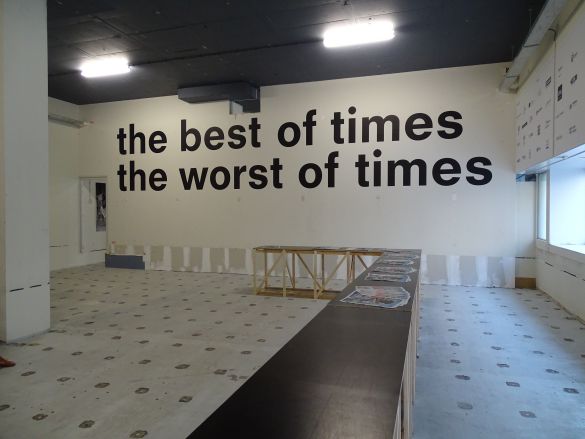
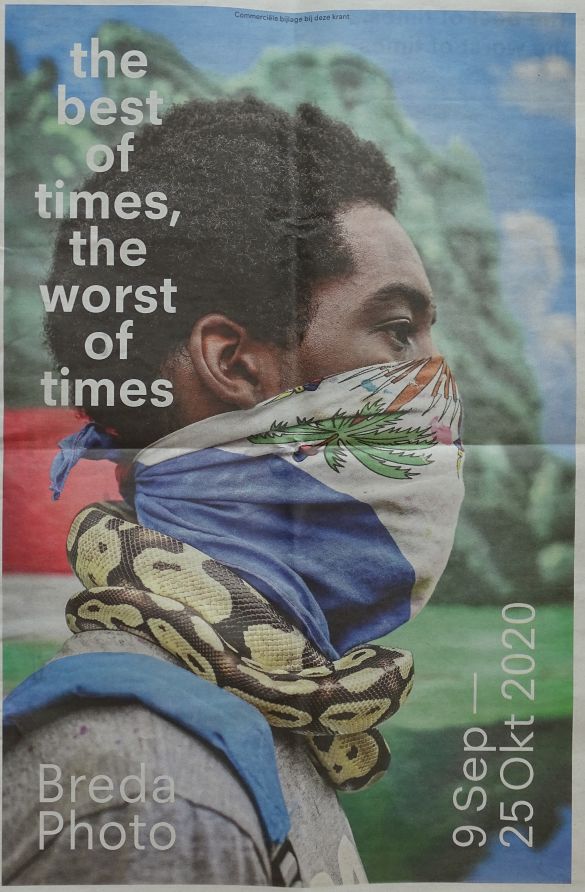
DSC03020BredaPhotoTheBestOfTimesTheWorstOfTimes

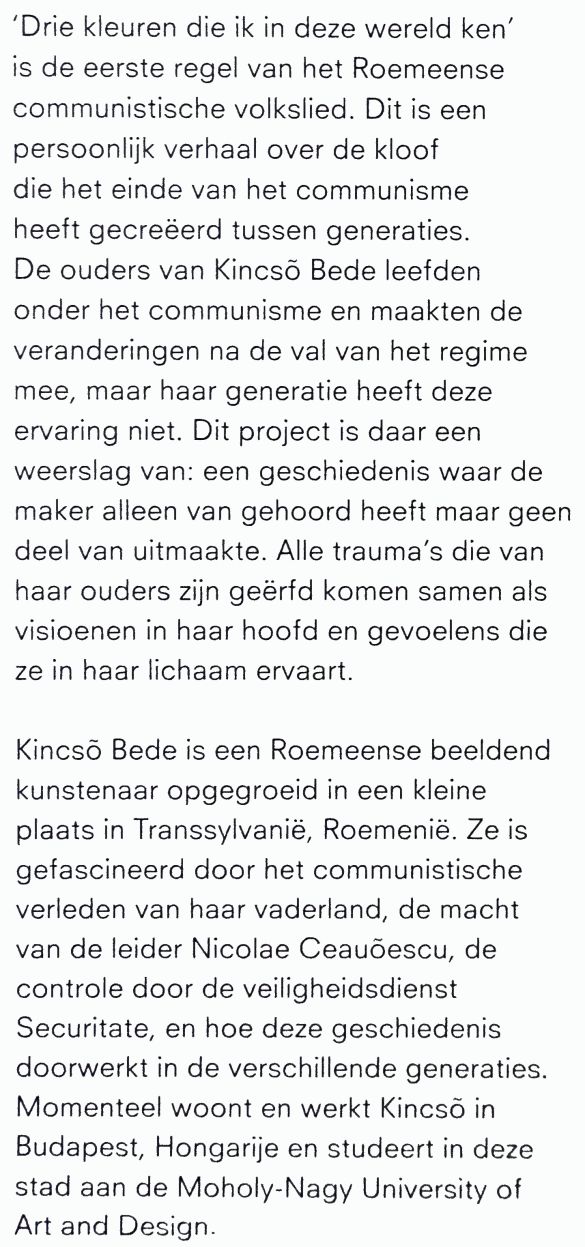
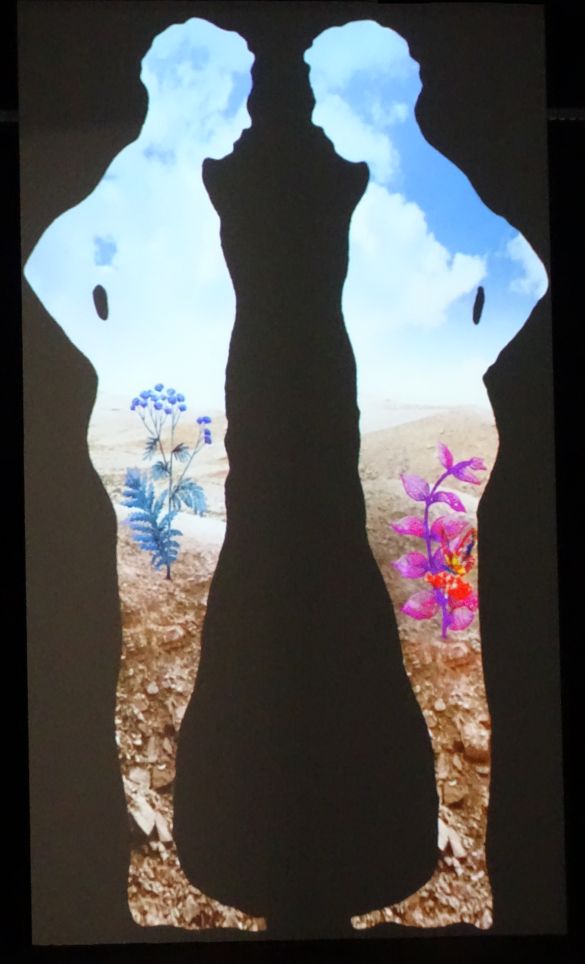
DSC03022KincsõBedeThreeColorsIKnowInTheWorld HeaderDSC03022KincsõBedeThreeColorsIKnowInTheWorld Text


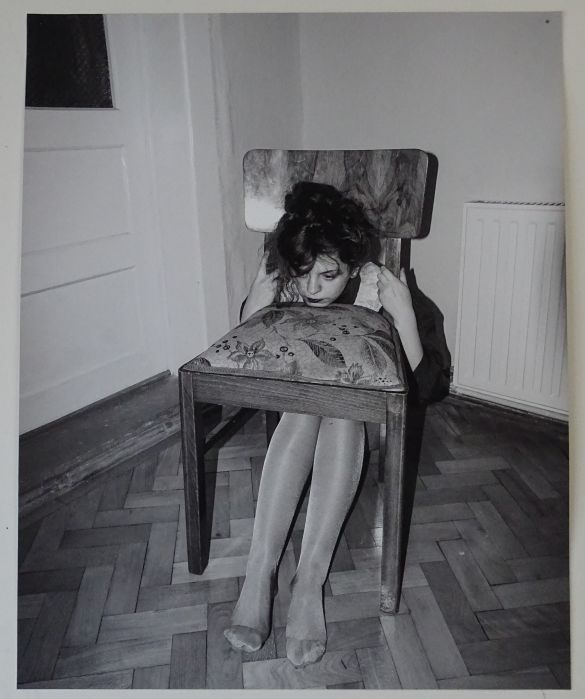
DSC03021KincsõBedeThreeColorsIKnowInTheWorld

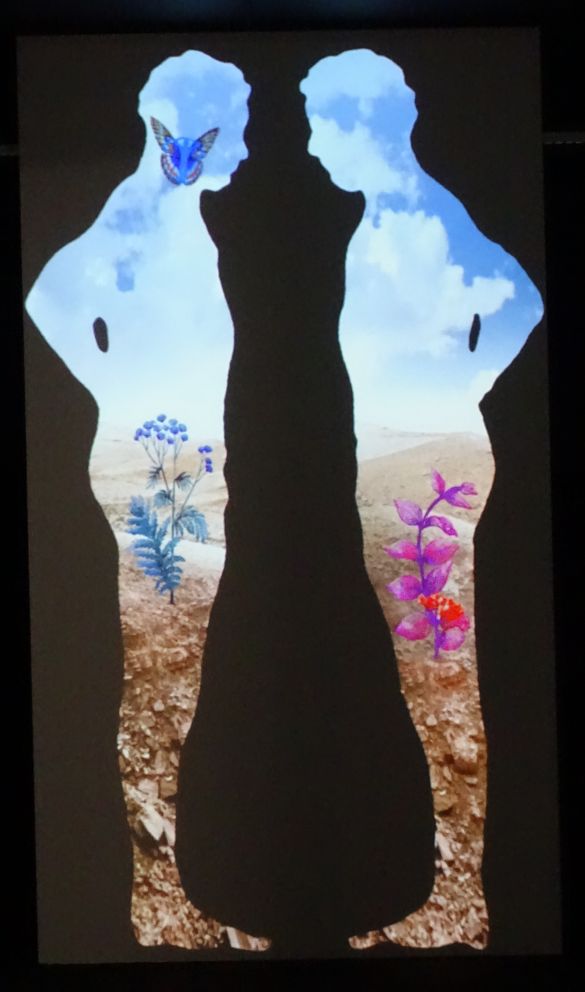
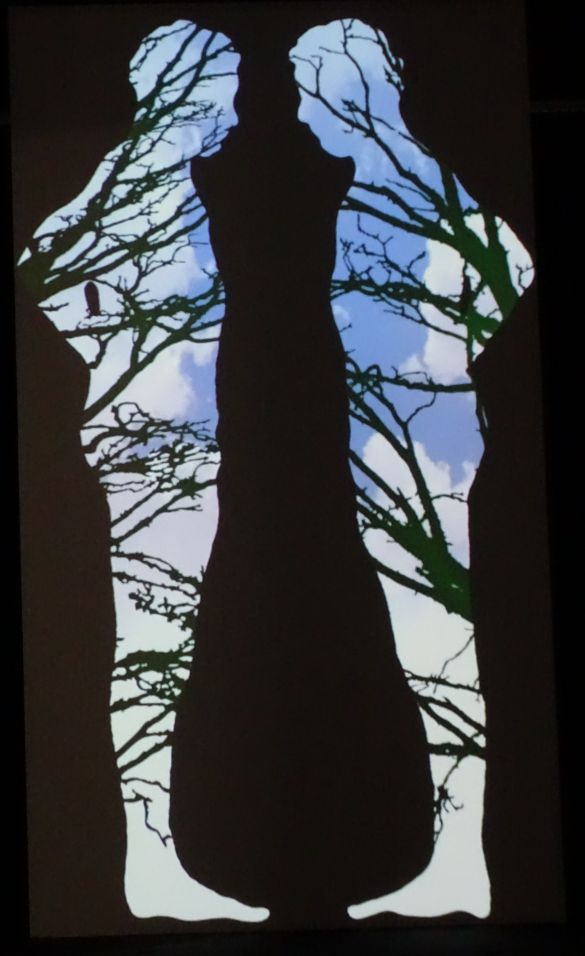
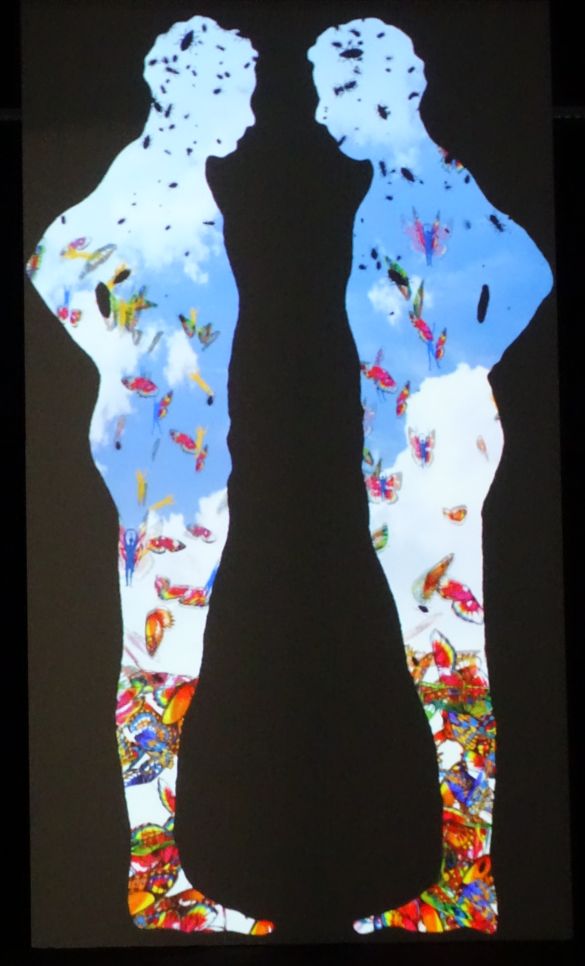
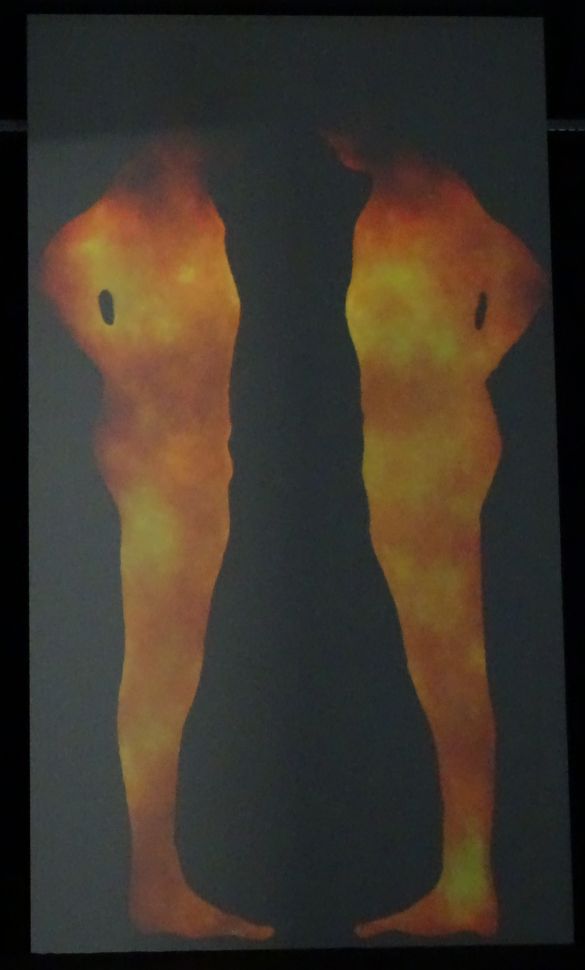
Bij de beoordeling van de werken tellen de teksten eigenlijk niet. Meestal lees ik ze pas thuis, als ik mijn blog samenstel. De foto’s van Kincsõ Bede, uit de serie: ‘Three colors I know in the world’ spraken mij erg aan.


DSC03023KincsõBedeThreeColorsIKnowInTheWorld

Kincsõ Bede, Three colors I know in the world.


DSC03025AlexanderRossaTomb HeaderDSC03025AlexanderRossaTomb Text


DSC03024AlexanderRossaTomb

Vanwege de techniek sprak me dit meteen aan: Alexander Rossa, Tomb (Runit Dome op de Marshalleilanden, een opslagplaats voor plutonium in verval).


DSC03026AlexanderRossaTomb

Alexander Rossa, Tomb.


DSC03027AlexanderRossaTomb

Alexander Rossa, Tomb.


DSC03029ZadokBenDavidConversationPeace HeaderDSC03029ZadokBenDavidConversationPeace Text


DSC03028ZadokBenDavidConversationPeace

De animatie van Zadok Ben-David, Conversation Peace.


DSC03030ZadokBenDavidConversationPeaceDSC03031ZadokBenDavidConversationPeaceDSC03032ZadokBenDavidConversationPeaceDSC03033ZadokBenDavidConversationPeace


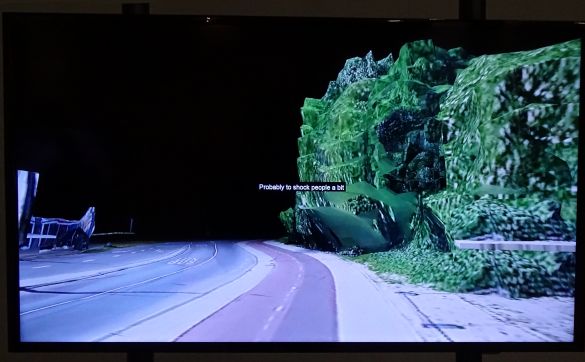
DSC03038SamTenThijTheRoadToSchool HeaderDSC03038SamTenThijTheRoadToSchool Text


DSC03037SamTenThijTheRoadToSchool

Sam ten Thij, The road to school.


DSC03039SamTenThijTheRoadToSchool InstallatieOverzicht

Installatie-overzicht van Sam ten Thij, The road to school.


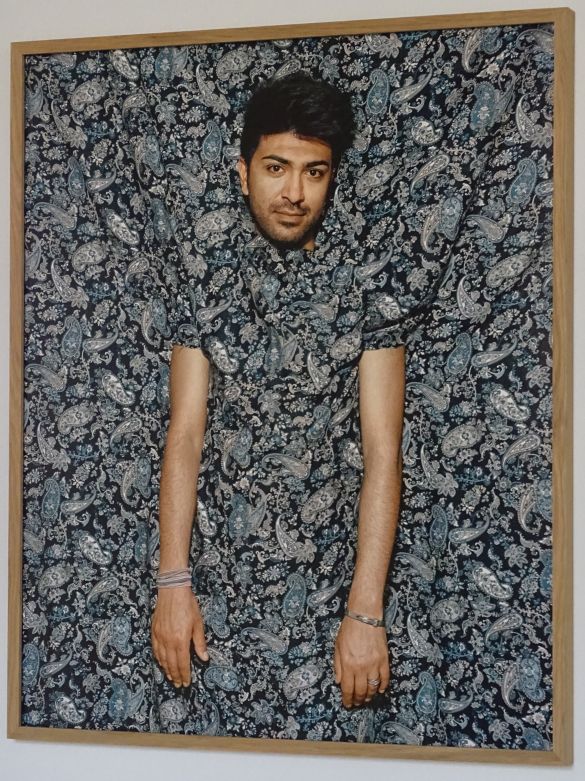
DSC03042LaurenceRastiInIranThereAreNoHomosexuals HeaderDSC03042LaurenceRastiInIranThereAreNoHomosexuals Text


DSC03043LaurenceRastiInIranThereAreNoHomosexuals

Volgens de Iraanse president Mahmoud Ahmadinejad, bestaan er in 2007 geen homoseksuelen. Laurence Rasti, In Iran there are no homosexuals.


DSC03053BredaPhotoTheBestOfTimesTheWorstOfTimes

Breda Photo, The Best of times, the worst of times.


India 2012 – 2013: deel 6


Op 9 december waren we in Hyderabad.
Hyderabad is een grote stad in centraal India.
De stad heeft een rijke geschiedenis en daarvan
bezochten we drie plaatsen:
de oude binnenstad, het Golconda fort en
de koninklijke graven.

Het is deze necropolis die het onderwerp is van deze blog.

Het was eigenlijk al te laat.
De zon ging al onder.
De grafmonumenten liggen verspreid in een soort park.
Heel af en toe staan er borden die vertellen wie er begraven ligt.
Maar meestal staat er niets bij.

 photo DSC_0092.jpg

 photo DSC_0093.jpg

Het graf van Fatima Sultana. Op de voorgrond, rechts van de traptreden is een tekst te zien. Die kan men ook hieronder lezen.

Tomb of Fatima Sultana

The tomb on the left side of the gateway is popularly known as Tomb of Fatima Sultana, daughter of prince Mohammed Amin and sister of Mohammed Qutb shah (1612 – 1626).
It contains two graves.
One grave contains an inscribed sarcophagus which gives the name of Fatima Sultana besides verses from Holy Quran. The other grave devoid of any name.
It is a small tomb square on plan built over a platform. A shapely dome is built over a square hall.
Two entrance ways are provided for entry into the hall from southern and eastern sides.
Exterior walls of the tomb are decorated with three recessed arches on each side and decorated with creepers and medallions.
Parapet is built over the roof having minarets at the corners.

 photo DSC_0095.jpg

 photo DSC_0096.jpg

 photo DSC_0097.jpg

Qutb Shahi Tombs / de graven van de Qutb Shahi dynastie

Hieronder de tekst over deze graven zoals die
op de Engelstalige Wikipedia site te vinden is.
Gevolgd door een korte Nederlandse vertaling/samenvatting.

The tombs of the Qutb Shahi sultans lie about one kilometer north of Golkonda’s outer wall. These structures are made of beautifully carved stonework, and surrounded by landscaped gardens. All except the last of the Qutb Shahi sultans lie buried here. The galleries of the smaller tombs are of a single storey while the larger ones are two storied. In the centre of each tomb is a sarcophagus which overlies the actual burial vault in a crypt below. The domes were originally overlaid with blue and green tiles, of which only a few pieces now remain. The tombs form a large cluster and stand on a raised platform. The tombs are domed structures built on a square base surrounded by pointed arches, a distinctive style that blends Persian, Pashtun and Hindu forms. The tombs are structures with intricately carved stonework and are surrounded by landscaped gardens.

The tombs were once furnished with carpets, chandeliers and velvet canopies on silver poles. Copies of the Quran were kept on pedestals and readers recited verses from the holy book at regular intervals. Golden spires were fitted over the tombs of the sultans to distinguish their tombs from those of other members of the royal family. Sultan Quli Qutub ul Mulk’s tomb, the style of which sets the example for the tombs of his descendants, is on an elevated terrace measuring 30 meters in each direction. The tomb chamber proper is octagonal, with each side measuring around 10 meters. The entire structure is crowned by a circular dome. There are three graves in this tomb chamber and twenty-one laid out on the surrounding terrace, all of which lack inscription except for the main tomb. The inscription on Sultan Quli’s tomb is in three bands, in the Naskh and Tauq scripts. The inscription refers to Sultan Quli as Bade Malik (Great Master) — the endearing term by which all people of the Deccan used for him. The tomb was built in 1543 A.D. by the Sultan, during his lifetime, as was the custom.

Near the tomb of Sultan Quli is that of his son, Jamsheed, the second in the line of Qutub Shahi sultans. Built in 1550 A.D., this is the only Qutub Shahi tomb which has not been fashioned from shining black basalt. Its appearance, too, is quite unlike the other tombs in the garden — it rises gracefully in two stories, unlike the squat tombs of the other kings. Jamsheed and his son, Subhan’s tomb also does not have any inscriptions. Subhan Quli Qutub Shah ruled for a short time. Subhan’s tomb stands mid-way between the tombs of his father and grandfather. Sultan Ibrahim Quli Qutub Shah’s tomb, built in 1580, after his death, is slightly larger than Sultan Quli’s tomb. Traces of the enameled tiles, which once adorned this mausoleum, can still be seen on the southern wall. The tomb has two graves in the main chamber and 16 on the terrace; some of them probably are those of his six sons and three daughters. There are inscriptions in the Thulth script on all faces of the sarcophagus. The three famous calligraphists — Isphalan, Ismail and Taqiuddin Muhammad Salih — who left a store of Naskh, Tulth and Nastaliq inscriptions on the many Qutub Shahi edifices in the city, were contemporaries of Ibrahim Shah.

Sultan Muhammed Quli Qutub Shah’s mausoleum is considered the grandest of the Qutub Shahi tombs. Built in 1602 A.D., the tomb is on a terrace of 65m square and 4m high. A flight of steps leads to the mausoleum proper, which is 22 m square on the outside and 11 m square on the inside. There are entrances on the southern and eastern sides. The tomb is in a vault below the terrace. Inscriptions in Persian and the Naskh scripts decorate it.

Another grand mausoleum is that of the sixth sultan, Muhammed Qutub Shah. The facade of this tomb was once decorated with enameled tiles; only traces are now evident. There are six graves with inscriptions in Tulth and Naskh. The mausoleum was built in 1626. Sultan Abdullah Qutub Shah’s tomb is the last of the royal tombs, as Abul Hasan Qutub Shah (Tana Shah), the last Qutub Shahi Sultan, was a prisoner in the fortress of Daulatabad, near Aurangabad, where he died.

While the tombs of those who ruled dominate the area, interspersed are many other monuments, most of them tombs of other members of the royal family. The tomb of Fatima Sultan, with its bulbous dome, is near the entrance to the tomb-garden. Fatima was the sister of Muhammed Qutub Shah. Her tomb houses several graves, two with inscriptions. The mausoleum which Abdul Hasan, the last Qutub Shahi Sultan, began building for himself, actually houses the grave of Mir Ahmed, the son of Sultan Abdullah’s son-in-law and the sister of Abbas II Safair, the Shah of Persia. The tomb of Fadma Khanum, one of Sultan Abdullah’s daughters, stands near the mausoleum of her husband, Mir Ahmed. Hers is the only Qutub Shahi tomb not surmounted by a dome.

To the west of the tombs lies the dargah of Hazrat Hussain Shah Wali, the revered Sufi saint. He is most affectionately remembered by people as the builder of Hussain Sagar in 1562. Among other monuments in the garden that are not tombs, the most important are the mortuary bath and the Masjid of Hayat Bakshi Begum.

The mortuary bath, which stands opposite the tomb of Muhammad Quli, was built by Sultan Quli to facilitate the ritual washing of the bodies of the dead kings and others of the royal family before they were carried to their final resting place. The bath is one of the finest existing specimens of ancient Persian or Turkish baths. The Qutub Shahis built a number of masjids all over Golkonda and Hyderabad, and almost every tomb has a masjid adjacent. The biggest and the grandest such masjid is by the mausoleum of Hayat Bakshi Begum. Popularly known as the great masjid of the Golkonda tombs, it was built in 1666 A.D. Fifteen cupolas decorate the roof and the prayer-hall is flanked by two lofty minarets. The impression, as a whole, is one of majesty and splendour. The inscriptions in the masjid are in calligraphic art. The tomb-garden of the sultans of Golkonda was known as Lagar-e-Faiz Athar (a place for bountiful entertainment) in the days of the Qutub Shahi rulers.

Nederlandse samenvatting:
De grafmonumenten van de Qutb Shahi sultans liggen op ongeveer een kilometer van de noordelijke buitenmuur van het Golkonda fort. De Qutb Shahi sultans regeerde een gebied in centraal India van 1518 – 1689. Hun thuisbasis was Golkonda en Hyderabad.

De zeven sultans waren:
Sultan Quli Qutb-ul-Mulk (1518–1543)
Jamsheed Quli Qutb Shah (1543–1550)
Subhan Quli Qutb Shah (1550)
Ibrahim Quli Qutb Shah (1550–1580)
Muhammad Quli Qutb Shah (1580–1612)
Sultan Muhammad Qutb Shah (1612–1626)
Abdullah Qutb Shah (1626–1672)
Abul Hasan Qutb Shah (1672–1689)

Alle sultans liggen hier begraven behalve de laatste. Die stierf in gevangenschap in het Daulatabad fort.
Kleine grafmonumenten bestaan uit een enkele verdieping terwijl de grote grafmonumenten uit twee verdiepingen bestaan met daarboven een grote koepel. De monumenten staan op een platform. De gebouwen zijn soms rijk versierd en bevatten puntige boogconstructies waarin Perzische, Pashtun en Hindoe-invloeden te herkennen zijn. In het midden van het monument staat een sarcofaag die boven de werkelijke begraafplaats staat. De werkelijke begraafplaats is in de crypte onder het gebouw.
De koepels waren origineel bedekt met groen en blauw geglazuurde tegels.

In de tijd dat de monumenten werden aangelegd waren de monumenten voorzien van tapijten, kroonluchters en fluwelen luifels op zilveren tentstokken. Kopieën van de Koran werden er bewaard op sokkels en lezers lazen er verzen uit voor op gezette tijden. Gouden torens werden aangebracht op de graven van de sultans om hun graven te onderscheiden van die van andere leden van de koninklijke familie.

Het monument voor Sultan Quli Qutub ul Mulk is het voorbeeld voor de monumenten die daarna gebouwd worden. De inscriptie op het graf van Sultan Quli is in drie delen, in de Naskh en Tauq taal/schrift. De inscriptie verwijst naar Sultan Quli als Bade Malik (Grote Meester) – de vertederende aanspreektitel voor alle inwoners van de Deccan. Het graf werd gebouwd in 1543 AD door de sultan, tijdens zijn leven, zoals de gewoonte was.

Sultan Muhammed Quli Qutub Sjah’s mausoleum wordt beschouwd als de grootste van de Qutub Shahi grafmonumenten. Het is gebouwd in 1602 na Christus. Het grafmonument is gebouwd op een terras van 65m vierkante meter dat 4 meter hoog is. Een trap leidt naar het mausoleum. Het feitelijke graf is in een kluis onder het terras.

Het mortuarium bad, dat staat tegenover het graf van Mohammed Quli, werd gebouwd door Sultan Quli om het ritueel wassen van de lichamen van de doden koningen en anderen van de koninklijke familie te vergemakkelijken voordat ze werden meegenomen naar hun laatste rustplaats. Het bad is een van de mooiste, nog bestaande exemplaren van oude Perzische en Turkse baden.

 photo DSC_0098.jpg

Big Well (Badi Bowti)

This well is altogether remarkable structure amnd has the usual slpings platform for the traffic of bull oks when drawing water on which there are number of stone pillars over which grapevines were trained making a cover to the platform.
The well is built in square shape with steps leading down to a corridor extending all around the well about 30 feet from the top of the wall. Below this again, there is a another flight of steps leading down to a bathing stage.
The depth of water in the well is about 100 feet.
During Qutb Shahi and Asaf Jahi period water was supplied to the adjacent garden through open channels and cisterns located in the corner of the chaman and lawns. There are 5 wells in total are existing in the premises:
1. Nawab Bowli
2. Doodh Bowli
3. Idgah Bowli
4. Kunwan Bowli
5. Badi Bowli (Bigg well)
The source of permanent water supply to this historical garden, located in Jubilee Hills known as “Durg Tank” through open channel 7 km in length. The water was supplied to these wells and distributed through small channels in the garden by gravity.

 photo DSC_0100.jpg

Vrij vertaald: Verboden te zwemmen in de bron. Het is er erg gevaarlijk en diep.

 photo DSC_0101.jpg

 photo DSC_0102.jpg

 photo DSC_0103.jpg

 photo DSC_0104.jpg

 photo DSC_0105.jpg

 photo DSC_0106.jpg

 photo DSC_0107.jpg

 photo DSC_0108.jpg

 photo DSC_0109.jpg

 photo DSC_0111.jpg

 photo DSC_0112.jpg

 photo DSC_0113.jpg

The Great Mosque

This splendid mosque was built by Hayat Baksh Begum in 1077 A.H. (1666 AD) during the reign of Abdoullah Qutb Shah.
The prayer hall (76 Ft x 51 Ft.) is three bays deep and has a five arched façade flanked by two tall minars the shapely pointed arches with the ogle point placed on substantial columns, the shapely minarets and restrained stucco decoration are chief architectural features.
The inscription in the prayer niche is carved in the best thulth (? Wikipedia: Thuluth is a script variety of Islamic calligraphy invented by the Persian Ibn Muqlah Shirazi, which made its first appearance in the 11th century CE) and tauqi style.
Translation of two inscription on facade hasten to say our prayers:

Lest ye miss them and hasten to repent
Lest ye perish

Dept. of Archaeology and museums, Govt of A.P.

 photo DSC_0114SyedAliAsgarBilgramiLandmarksOfTheDeccanAComprehensiveGuideToTheArchaeologicalRemainsOfTheCityAndSuburbsOfHyderabad.jpg

Fragment, hetzelfde als beschreven in bovenstaande Engelse tekst,
uit een boek van Syed Ali Asgar Bilgrami:
Landmarks of the Deccan, a comprehensive guide to the archaeological remains
of the city and suburbs of Hyderabad.

 photo DSC_0115.jpg

De gebouwen zijn prachtig.
Zeker met het zacht zonlicht met rood/oranje tonen.
We zullen in deze vakantie nog meer grafmonumenten zien.
Mij is de ontwikkeling in die gebouwen nog niet helemaal duidelijk.
Wel is het zo dat de leden van de koniklijke familie
al tijdens hun leven begonnen aan de bouw en aanleg van de graven
en de moskee die daarbij hoorde.
Bijzonder was hier voor mij een gebouw dat bedoeld was als wasruimte.
Wasruimte voor het dode lichaam.
Water is iets dat veel moeite kost om aan te komen, vandaar
het systeem van kanalen om water vanuit de bergen naar
de bronnen hier bij het fort en de begraafplaats te brengen.

 photo DSC_0116.jpg

 photo DSC_0117.jpg

 photo DSC_0118.jpg