Palazzo Vecchio

IMG_8808PalazzoVecchioTheHallOffGeographicalMapsIMG_8807PalazzoVecchioTheHallOffGeographicalMapsOmvangRestauratieDSC05068PalazzoVecchioTheHallOffGeographicalMapsTXT

Een van de grootste verrassingen van het bezoek aan Florence. Palazzo Vecchio, The hall of geographical maps. Cosimo had het plan geval een ruimte helemaal te wijden aan de aarde en de sterrenhemel. De cosmos. De ruimte zou een instrument van studie en interesse maar ook van politiek worden.


DSC05069PalazzoVecchioTheHallOffGeographicalMapsIndiaDSC05070PatagonieEnVuurland

India, Patagonië en Vuurland.


DSC05072PalazzoVecchioTheHallOffGeographicalMapsDSC05073PalazzoVecchioTheHallOffGeographicalMaps

Een restauratie was in volle gang.


IMG_8806PalazzoVecchioTheHallOffGeographicalMapsIMG_8803PalazzoVecchioTheHallOffGeographicalMapsLaGermaniaEnNederland

Ik kon mijn ogen niet geloven. Wat een werk, wat een kennis. Niet al die kennis kwam uit Italië. Zo zou werk van Ortelius geruikt zijn. Op de laatste foto Germania met links het gebied dat we nu Nederland noemen.


Ik vond achter een betaalmuur een artikel over de kaarten:

CHARISMATIC COSMOGRAPHY IN LATE CINQUECENTO FLORENCE (2009)
MARK ROSEN
University of Texas at Dallas
Arts & Humanities

One of the most significant projects of the Renaissance involving cosmographical decoration was the remarkably ambitious (and only partly completed) Guardaroba of Duke Cosimo I de’ Medici, begun in 1563. It is located in the Florentine ducal home and center of authority, the Palazzo Vecchio, and was described in contemporary correspondence as being the “cosmography of Duke Cosimo” – a lavishly decorated chamber expressing the duke’s interpretation of the physical universe. In creating a new state room to house the Medici collection of artworks and precious objects, Cosimo and his primary artistic advisor, Giorgio Vasari, assembled a team of artists, artisans, humanists, geographers, and scientists to give concrete shape to Cosimo’s cosmos (a pun which was widely acknowledged in his day). The ostensible aim of this room was to re-create the structure of the known universe in miniature, placing maps and astrological imagery at the center of its complex program. In its intended form, the Guardaroba was probably the most significant attempt in sixteenth-century Italy to visualize and demonstrate on a grand visual scale a sovereign’s cosmography.

The initial plans for the Guardaroba were only partly followed and ultimately were greatly scaled back after Cosimo died in 1574. A much abbreviated form of the room was completed by Cosimo’s two successors, his sons Francesco I (ruled 1574-1587) and Ferdinando I (ruled 1587-1609).

It was intended as a collecting area, with cabinets circling the four walls of the room; on those cabinets were to be painted 57 maps of the regions of the world, broken down according to the ancient Ptolemaic divisions as well as updated with more recently explored areas. The objects of the Medici collection would then be placed behind those maps inside the cabinets, according either to place of origin or perhaps according to type of object; in either case, a system designed to give order to the collection was keyed to the maps. Further fleshing out the program were antique portrait busts placed atop the cabinets, three hundred uniformly sized portraits of great leaders of recent centuries, images of plant and animal life, a preexisting planetary clock made in the early sixteenth century by Lorenzo della Volpaia, and, painted on the ceiling, a great astrological chart showing all the currently known constellations. Also planned for the room were two globes, one terrestrial and the other celestial, which would sit hidden in a compartment above the painted constellations until the duke or a courtier pulled a switch to open a panel in the ceiling that would then let the two globes slowly descend to the floor – clearly the most theatrical effect of the ensemble.
The fabrication of the space, however, encountered a number of setbacks primarily owing to changes in patronage.

IMG_1289PalazzoVecchioTheHallOffGeographicalMaps

De tekst in dit boekje sluit grotendeels aan op bovenstaande tekst van Mark Rosen.

IMG_1290PalazzoVecchioIMG_1291PalazzoVecchioDSC05075PalazzoVecchioTheHallOffGeographicalMapsOverview

De laatste foto geeft een overzicht van alle kaarten.


IMG_8804PalazzoVecchioTheHallOffGeographicalMaps


De volgende foto’s kun je rekenen bij de ruimte met de kaarten
maar ook bij een andere ruimte. Het gaat me om de deuren.

IMG_8800PalazzoVecchioGiulianoDaMaianoFrancescoDeGiovanniFrancioneDesignSandroBotticelli1480

De deuren zijn prachtig ingelegd om zo afbeeldingen te maken. Zo zie je hier een soort van raam in de deur.


IMG_8801PalazzoVecchioDanteGiulianoDaMaianoFrancescoDeGiovanniFrancioneDesignSandroBotticelli1480

Zoals deze Dante door Giuliano da Maiano en Francesco de Giovanni ook Francione genoemd. Het ontwerp is van Sandro Botticelli, 1480.

IMG_8802 01 PalazzoVecchioDanteAlighieriInfernoNelMezzoDelCamminDiNostraVitaGiulianoDaMaianoFrancescoDeGiovanniFrancioneDesignSandroBotticelli1480IMG_8802 02 PalazzoVecchioDanteAlighieriInfernoNelMezzoDelCamminDiNostraVitaGiulianoDaMaianoFrancescoDeGiovanniFrancioneDesignSandroBotticelli1480

De tekst is: ‘Nel mezzo del cammin di nostra vita (In het midden van onze levensweg)’, de beginregel van Inferno, het eerste deel uit de Goddelijke komedie.

5996: Johan Cruijff en kunst?

Dit is mijn 5996-ste blogpost in 15 jaar.
Sinds maart 2005 blog ik.
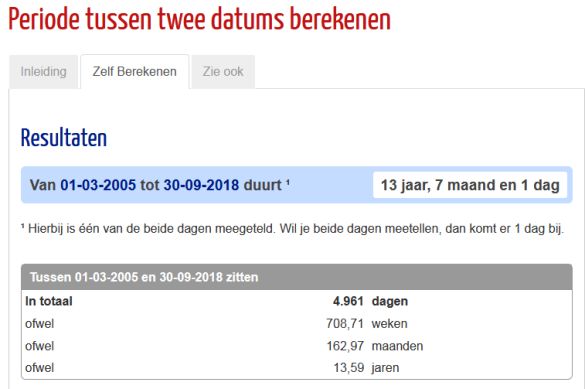
Ik heb even op internet gezocht hoeveel dagen dat ongeveer zijn:

PeriodeTussenTweeDatumsBerekenen

Voor alles zijn er tegenwoordig websites. Dus van 1 maart 2005 tot 30 september 2018 zijn 4961 dagen. Dat brengt mijn blog (als ik deze maand de 6000-ste maak) gemiddelde op ongeveer 1,2 posts per dag.


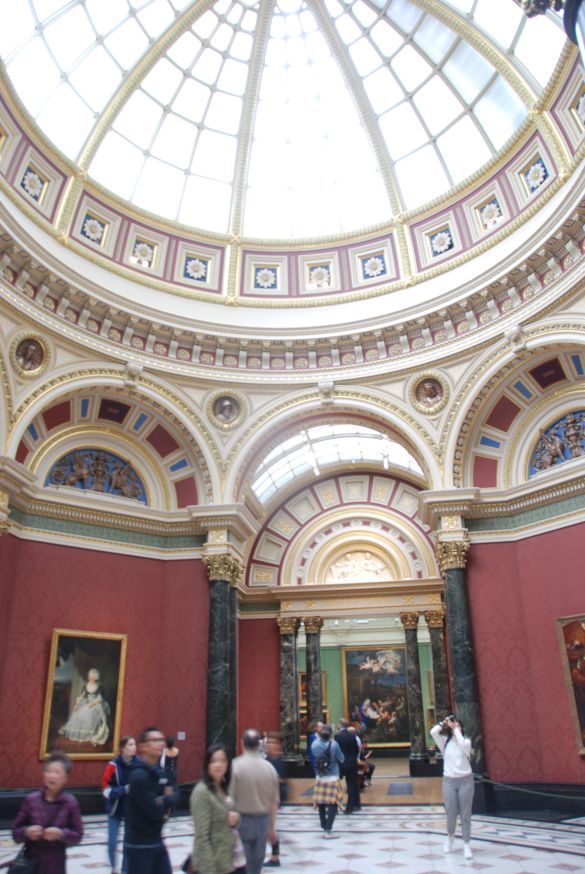
Deze blog post gaat over de National Gallery in Londen.
Ik nam me voor er niet langer dan 1 uur te blijven.
Het werd natuurlijk anderhalf uur.
Wat een fantastische collectie.
Zomaar een paar Turners op een rij.
Prachtige middeleeuwse en renaissance werken.
Ik heb een paar foto’s gemaakt van wat me opviel.

050 WP_20180907_13_13_56_ProWorkshopOfDomenicoGhirlandaioPortraitOfAGirlCirca1490

Dit werk en de volgende foto, deze twee werken hingen naast elkaar. Prachtig. Workshop of Domenico Ghirlandaio, Portrait of a girl, circa 1490.


051 WP_20180907_13_14_19_ProSandroBotticelloPortraitOfAYoungManCirca1490-1495

Sandro Botticelli, Portrait of a young man, circa 1490 – 1495. Waarom bij dit portret sprake is van een ‘young man’ (een jonge man) en bij het vorige van ‘a girl’ (een meisje), weet ik niet. Ze lijken me ongeveer even oud.


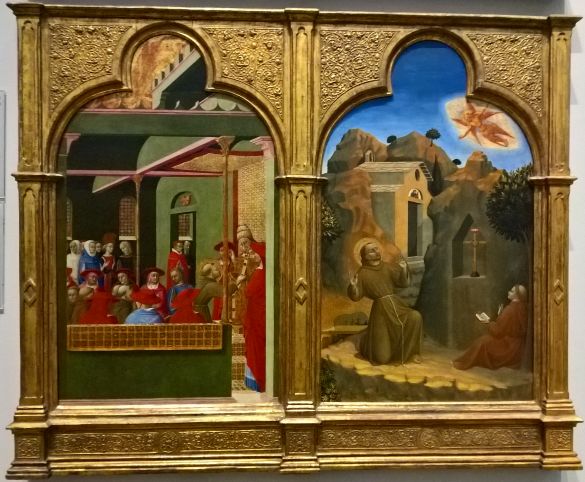
052 WP_20180907_13_21_26_ProSassettaSaintFrancisBeforeThePopeTheStigmatisationOfSaintFrancis1437-1444 01

Ik liep zomaar een paar zalen door en plotseling zag ik een aantal werken die samen een altaarstuk of iets dergelijks zijn geweest. In het kader van de tentoonstelling een paar jaar terug over St. Franciscus in Utrecht heb ik toen dit werk of gezien of er over gelezen. Sassetta (Stefano di Giovanni Sasseta), Saint Francis before the Pope Honorius III / The stigmatisation of Saint Francis, 1437 – 1444. Dit is onderdeel van het San Sepolcro Altarpiece.


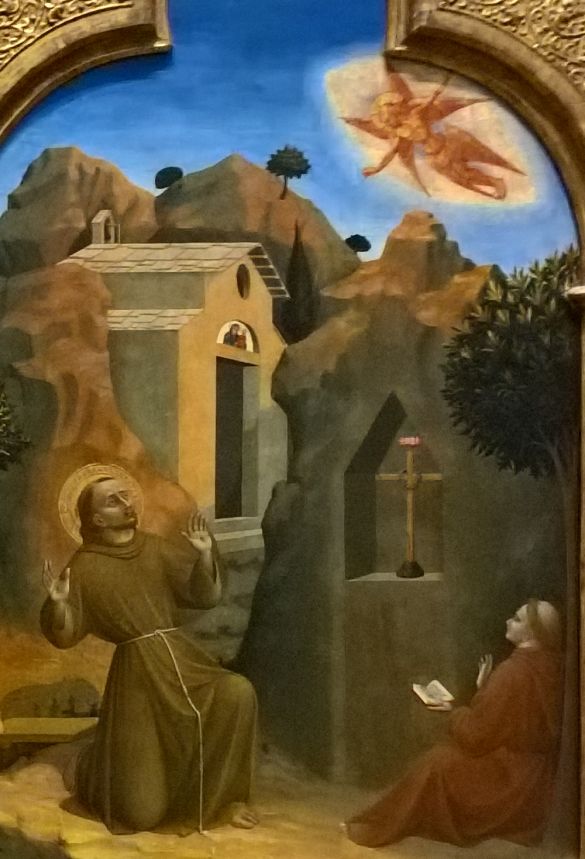
052 WP_20180907_13_21_26_ProSassettaSaintFrancisBeforeThePopeTheStigmatisationOfSaintFrancis1437-1444 02

Sassetta (Stefano di Giovanni Sasseta), The stigmatisation of Saint Francis, 1437 – 1444. Die engel die de stigmata aanbrengt komt bij mij altijd over als een soort drone die in de lucht hangt.


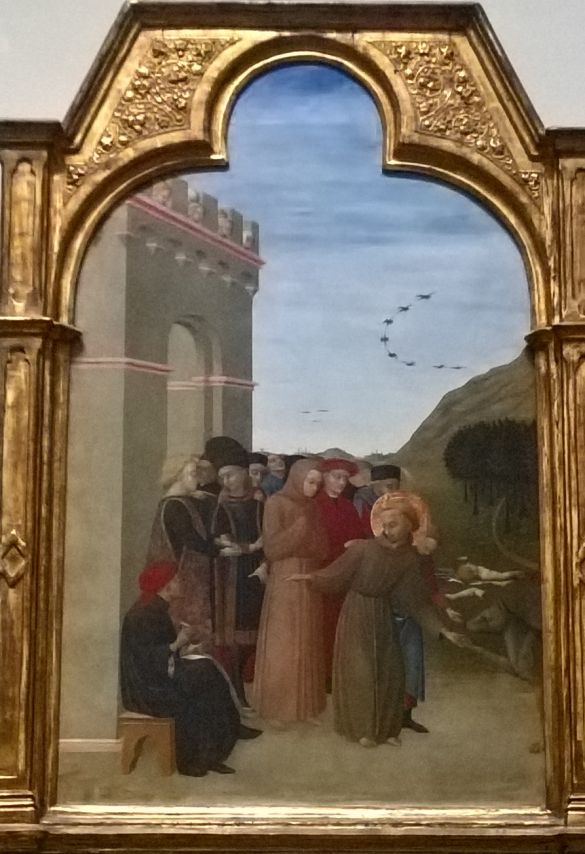
054 WP_20180907_13_23_28_ProSassettaTheWolfOfGubio1437-1444

Sassetta, The wolf of Gubbio, 1437 – 1444. Let ook op de halve cirkel met vogels in de lucht.


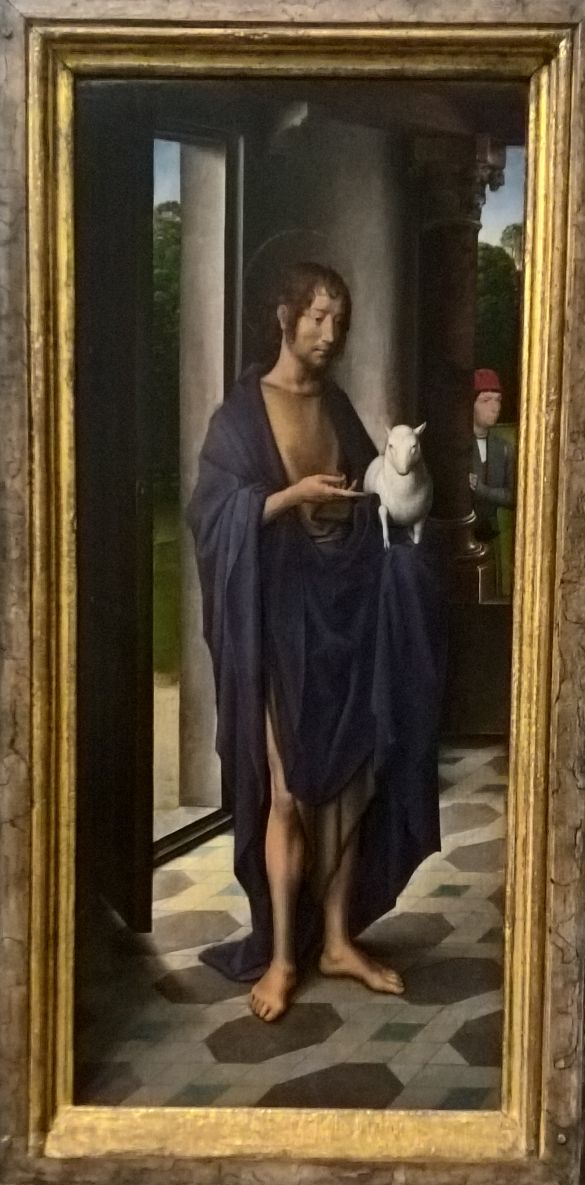
056 WP_20180907_13_27_46_ProHansMemlingTheDonneTriptychAbout1478SaintJohnTheBaptist

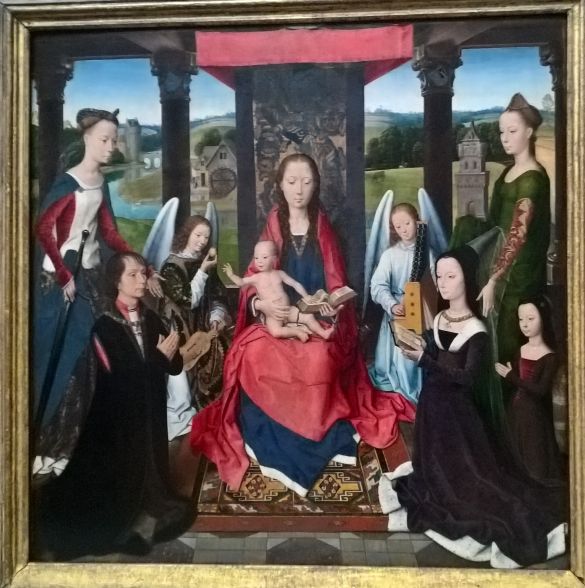
Dit schilderij en de volgende twee foto’s vormen samen een drieluik: Hans Memling, The Donne triptych, about 1478, Saint John the Baptist. Johannes de Doper.


057 WP_20180907_13_27_54_PrHaonsMemlingTheDonneTriptychAbout1478SirJohnDonneKneelsInAdorationVirginAndChild

Het centrale paneel. De aanbidding van de Maagd en het Kind, Hans Memling, Sir John Donne kneels in adoration before the Virgin and Child.


058 WP_20180907_13_28_02_ProHansMemlingTheDonneTriptychAbout1478SaintJohnTheEvangelist

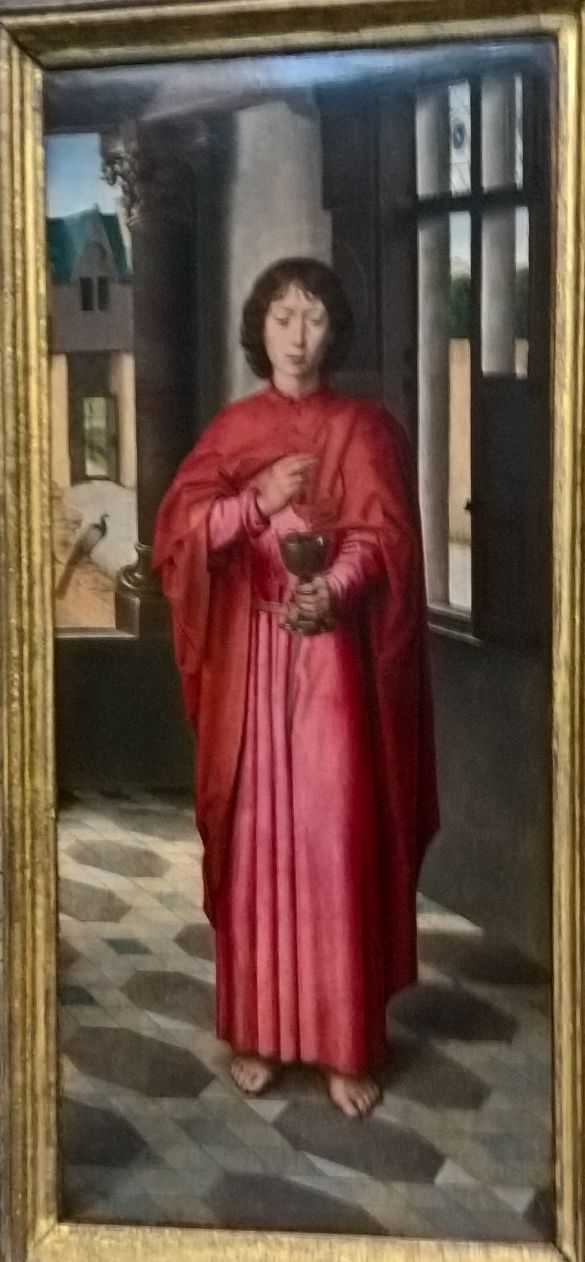
Het rechterpaneel: Hans Memling, Saint John the Evangelist. Johannes de Evangelist. Alle drie de delen hebben zo’n prachtige vloer. Het centrale deel met een tapijt erop. Schitterend.


060 WP_20180907_13_29_30_ProRogierVanDerWeydenTheMagdalenReadingBefore1438

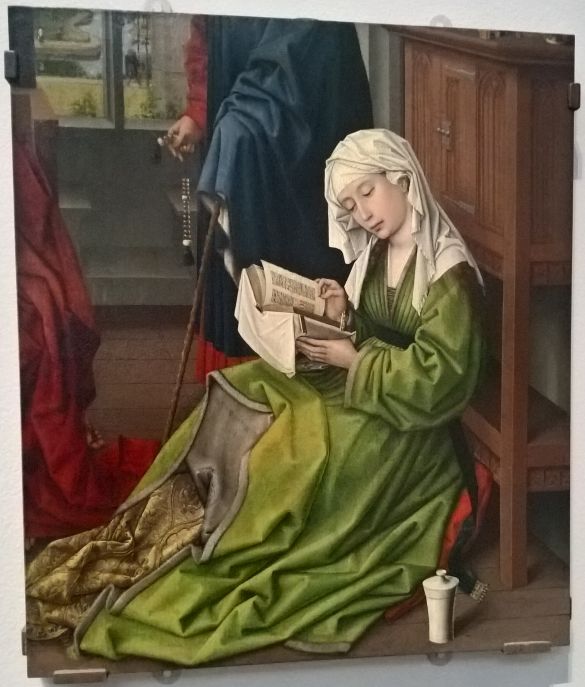
Dit vond ik super om te zien. Rogier van der Weyden gebruikte het beeld van Magdalena meerdere malen. En steeds heeft het kleed van de vrouw, dezelfde vouwen. “Je gaat het pas zien als je het door hebt.” zei Johan Cruijff, en als je het eenmaal gezien hebt, zie je dat iedere keer opnieuw. Rogier van der Weyden, The Magdalen Reading, before 1438.


062 WP_20180907_14_06_49_ProClaudeMonetIresesAbout1914-1917

Claude Monet, Irises, about 1914 – 1917.


064 DSC_4248LondenNationalGalleryLeonardoDaVinci

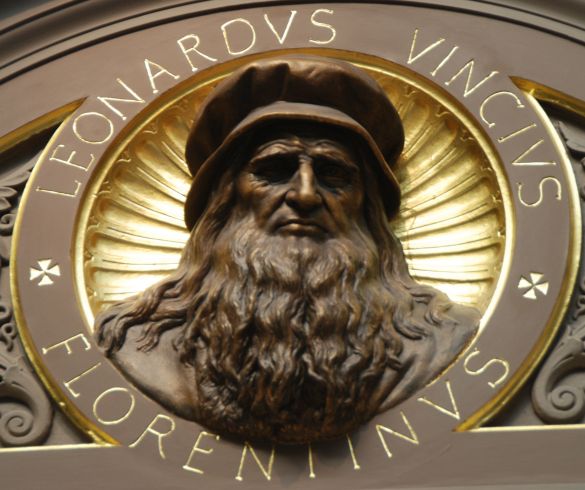
Leonardo da Vinci aks onderdeel van een deurpartij.


065 DSC_4249LondenNationalGalleryRembrandt

Rembrandt was daar ook te zien.


DSC_4250LondenNationalGallery

The National Gallery.


Kunstvaria

AnetaRegelDuo2017OrangeAndGreenStonewarePorcelainVolcanicRockComponentsGlazeSlipsResin

Aneta Regel, Duo, 2017, orange and green stoneware, porcelain, volcanic rock components, glaze, slips, resin.


AdriaenVanOstadeDerTanzImWirtshaus1650–1655

Adriaen van Ostade, Der Tanz im Wirtshaus, 1650 – 1655.


AlessandroDiMarianoFilipepiCalledSandroBotticelliAnAngelHeadAndShouldersOilOnPanelTransferredToCanvas1495-1500

Alessandro di Mariano Filipepi, called Sandro Botticelli, An angel, head and shoulders, oil on panel transferred to canvas, 1495 – 1500.


NicoleEisenmanLongDistance2015OilOnCanvas

Nicole Eisenman, Long distance, 2015, oil on canvas.


Kunstvaria

 photo AlbertoGiacomettiChariotFoundryMarkAlexisRudierFondeurParisNumbered2Of6PaintedBronzeOnWoodenBase.jpg

Alberto Giacometti, Chariot (Foundry mark Alexis Rudier, fondeur, Paris), numbered 2/6, painted bronze on wooden base.


 photo AmedeoModiglianiTecircteStoneCarved1911-1912.jpg

Amedeo Modigliani, Tete (hoofd), stone, carved 1911 – 1912.


 photo AttributedToMahmudMuzahhi16th-centuryCopyOfSarsquodirsquosGulistanTheCapturedArabRobbersBeforeTheKing.jpg

Miniatuur toegeschreven aan Mahmud Muzahhi uit een boek, een kopie van Gulistan (de rozentuin). Attributed to Mahmud Muzahhi, from a 16th-century copy of Sa’di’s Gulistan, the captured Arab robbers before the King.


 photo HochzeitVonZephyrosUndChlorisWandfreskoDetail.jpg

Hochzeit von Zephyros und Chloris, wandfresko, detail. Pompeii.


 photo IrmaSternTigerLilies1932.jpg

Irma Stern, Tiger lilies, 1932.

Vergelijk deze eens met het voorlaatste werk in deze Kunstvaria.


 photo JamieWyethNureyevmdashDonQuixotemdashWhiteBackground2001MixedMedia.jpg

Jamie Wyeth, Nureyev in Don Quixote – white background, 2001, mixed media.


 photo PhotographicSelf-portraitByEdgarDegasGelatinSilverPrint.jpg

Selfie door Edgar Degas (Photographic self-portrait by Edgar Degas, gelatin silver print).


 photo RoyLichtensteinTakkaTakka1962Leinwand.jpg

Roy Lichtenstein, Takka Takka, 1962, leinwand.


 photo SadequainUntitlted1959.jpg

Sadequain, Untitlted, 1959.


 photo SandroBotticelliAndPossiblyAssistantTheAnnunciationCa1490ndash1495.jpg

Sandro Botticelli (and possibly assistant), The Annunciation, circa 1490 – 1495.


 photo VincentVanGoghStillLifeVaseWithDaisiesAndPoppiesOilOnLinenJune16-171890.jpg

Vincent van Gogh, Still life: vase with daisies and poppies, oil on linen, june 16 – 17, 1890.


 photo WimWendersStreetCornerInButteMontanaC-print.jpg

Wim Wenders, Street corner in Butte, Montana, C-print.