Lille/Rijssel: weekend weg!

Lille of Rijssel ligt net over de Belgische grens in Noord Frankrijk.
Een onverwacht leuke en mooie stad.
Je treft er oude gebouwen aan zoals het beursgebouw aan de markt:

En je hebt er leuke vergezichten, zoals onderstaande foto van de Kamer van Koophandel.

De kamer van koophandel is die grote toren op de achtergrond. Niet mis, he ?
Vooral het oude Lille is prettig om door te wandelen.
Er is veel gerestaureerd aan gebouwen in on-Vlaamse of on-Franse kleuren.
Rijk versierde gevels, kleine smalle straten met goede restaurants, leuke winkels.
En als een Vlaamse stad veel kroegen en terassen met veel soorten
voornamelijk Belgisch bier.

Heel typisch vond ik de vele ‘echte’ bakkers.
Dat zijn dan niet zoals in Nederland van die bakkers die de producten
van de fabriek nog even afbakken.
Maar echte bakkers met vele, hele mooie producten.

Lille heeft ook een modern gezicht.
Naast een traditioneel station kent het ook een station voor de TGV.
Dat gebouw en het daarbij gelegen moderne winkelcomplex EuraLille
geven een erg modern beeld.
Dat zie je ook bij de Place de la Republique.
Dit traditionele plein heeft aan de ene kant de hoofdzetel
van het provinciebestuur en aan de andere kant het Museum van schone kunsten.
Een erg mooi museum.
Ruim van opzet met een mooie collectie.
Afgelopen weekend is er een tentoonstelling ‘Vlaamse primitieven’ begonnen.
De ondergrondse ruimtes waarin deze tentoonstelling te zien is
zijn het bekijken alleen al waard.

Jammer is alleen dat alle toelichtingen in het Frans zijn
(geen Engels of Nederlands) en dat geldt ook voor de catalogus
van de tentoonstelling. Jammer.

Achter het museum heeft men een modern gebouw gezet met daarin het restaurant
en een aantal kantoren van het museum.
De wand van dit moderne gebouw weerspiegelt het museum:

Hier is dan de bouwstijl in de buurt van het TGV-station.

Vandaag (en gisteren) gehoord 11-12/05/2005

Van Morrison: ‘A night in San Francisco’, ‘Moondance’, ‘Too long in exile’ en ‘Veedon Fleece’.

Daarnaast nog een paar nummers van mijn playlist ‘Boom’, het duet met Sinead O’Conner op ‘Live on Letterman’: Have I told you lately en ‘Crazy Love’ het duet met Ray Charles van ‘Genius loves company’.

Prachtig toch die Van ! Vooral ‘A night in San Francisco’. Ik kan niet wachten op de nieuwe CD.

U2: ‘All that you can’t leave behind’, ‘America: Tribute to heroes’, ‘How to dismantle an atomic bomb’, ‘Red Hot + Blue: A tribute to Cole Porter’ mooie uitvoering van Night and Day, ‘The best of 1980 – 1990’.

Ter voorbereiding van het concert later dit jaar.

Arrogantie Zalm

12 Mei 2005 06:51

Zalm kritisch over DNB-directeur

HILVERSUM Minister Zalm van Financixc3xabn is niet gelukkig met uitspraken van directeur Brouwer van De Nederlandsche Bank. Die zei onlangs dat de gulden bij de omschakeling naar de euro vijf tot tien procent te laag is gewaardeerd.

Zalm zei in Barend Van Dorp dat ten onrechte de indruk is gewekt dat Nederlanders zijn bestolen bij de overgang naar de euro. Door een duurdere munt zouden Nederlandse bedrijven ook minder goed hebben kunnen concurreren.

Zalm vindt de omrekeningsfactor niet zo van belang. Omdat prijzen, lonen en schulden door hetzelfde bedrag gedeeld worden, veranderen de verhoudingen niet.


Natuurlijk maakt de omrekenfactor Gulden/Euro niet uit in de verhouding tussen mijn salaris en dat van minister Zalm. Daar gaat het ook niet om.

Het gaat er om dat Nederlanders voor de ingang van de Euro een bepaald bezit hadden in guldens (cash, spaargeld, pensioen, huis, aandelen, salaris, verzekeringen enz). Door de omrekenfactor hebben we daarvoor Euro’s gekregen. Dan maakt het natuurlijk wel wat uit of je voor 100 gulden 50 Euro krijgt (omrekenfactor 2) of 45.45 Euro (omrekenfactor 2.2).

Tel daar dan nog eens bij dat prijzen enorm zijn gestegen.
(Anekdote: loop afgelopen weekend over de Grote Markt in Breda: Jazz festival. Staat er aangekondigd dat een consumptie “slechts” 1.60 Euro kost. Zegt iemand, “Nou dat valt mee dat is niet duur voor een biertje.” Omgerekend is 1.60 Euro Fl 3.52.)

Tel daar nog eens bij dat andere Europese landen een redelijke omrekeningsfactor hebben bedongen voor hun burgers waardoor zij hun bezit wel normaal hebben kunnen omzetten in Euro’s.

Dan is de terechte conclusie dat hier iets grondig mis is gegaan.

KunstRai

De KunstRAI is hxc3xa9t podium voor hedendaagse kunst in Nederland. Ruim honderd galeriexc3xabn presenteren er de nieuwste ontwikkelingen in de actuele kunst. Met vijftien buitenlandse galeriexc3xabn uit Belgixc3xab, Duitsland en Frankrijk en werk van een toenemend aantal internationale kunstenaars ontwikkelt de KunstRAI zich steeds meer tot een internationaal platform. Naast hedendaagse kunst zijn de beste kunsthandels uit Nederland aanwezig met werken van na 1945.

G A A T H E T Z I E N !!!

400 jaar Don Quichote

PabloPicassoDonQuichot1955

Pablo Picasso, Don Quichot, 1955.


Bij deze afbeelding kwam ik het volgende artikel tegen over deze Spaanse held:

Don Quixote at 400: Still Conquering Hearts

By ILAN STAVANS

The Knight of the Sorrowful Countenance is turning 400. By some accounts, the first part of Don Quixote, Miguel de Cervantes’s masterpiece, was available in Valladolid by Christmas Eve 1604, although Madrid didn’t get copies until January 1605. Thus came to life the “ingenious gentleman” who, ill equipped with antiquated armor “stained with rust and covered with mildew,” with an improvised helmet, atop an ancient nag “with more cracks than his master’s pate,” went out into a decaying world where there were plenty of “evils to undo, wrongs to right, injustices to correct, abuses to ameliorate, and offenses to rectify.”

Cervantes catches a glimpse of the down-and-out hidalgo at around 50, the prime of one’s life by today’s standards but a synonym of decrepitude during what was considered Spain’s “Golden Age,” an appellation Cervantes complicates. The protagonist, we are told, is weathered, his flesh scrawny, and his face gaunt. We know nothing of his childhood and adolescence and only a modicum about his affairs, including that too little sleep and too many chivalry novels have addled his brain.

Almost 1,000 pages later, Don Quixote (or Alonso Quixada or Quexada, some names Cervantes gives to the hidalgo) lies on his deathbed. Finally, well into the second book, issued in 1615, Don Quixote dies — but only after an impostor, Alonso Fernxc3xa1ndez de Avellaneda, impatient that Cervantes kept procrastinating, brought out an unofficial second part that pushed the author to complete his work. Cervantes may also have been sensing that his own demise, which came in April 1616, was close.

About to die the exemplary death, Don Quixote is nevertheless consumed by the grief of countless defeats and frustrated in his impossible mission to see his beloved Dulcinea of Toboso. Is he wiser? Disenchanted? Does he die of melancholia? The limits of age?

“Don Quixote’s end,” we are told, “came after he had received all the sacraments and had execrated books of chivalry with many effective words. The scribe happened to be present, and he said he had never read in any book of chivalry of a knight errant dying in his bed in so tranquil and Christian a manner as Don Quixote, who, surrounded by the sympathy and tears of those present, gave up the ghost, I mean to say, he died.”

Don Quixote might be dead, but his ever-ambiguous ghost lives on. His admirers — and, in unequal measure, detractors — are legion. Operas, musicals, theatrical and film adaptations, as well as fictional recreations keep piling up: Laurence Sterne was inspired by Don Quixote’s misadventures when writing Tristram Shandy; Gustave Flaubert paid homage to him in Madame Bovary, as did Fyodor Dostoyevsky in The Idiot. Isaac Bashevis Singer’s “Gimpel the Fool” can be read as a reimagining of the knight’s simplicity. And so on.

Then there are the multilayered interpretations of Don Quixote’s pursuit. Anybody that is somebody has put forth an opinion, from Miguel de Unamuno, Josxc3xa9 Ortega y Gasset, Salvador de Madariaga y Rojo, and Amxc3xa9rico Castro, to name a handful of Iberians first, to Samuel Johnson, Denis Diderot, Franz Kafka, Thomas Mann, Lionel Trilling, and Vladimir Nabokov. Over the years, Don Quixote has been a template of the times: The 18th century believed the knight to be a lunatic, lost to reason; the Victorians approached him as a romantic dreamer, trapped, just like artists and prophets, in his own fantasy; the modernists applauded his quest for an inner language; the postmodernists adore his dislocated identity. Psychiatrists have seen him as a case study in schizophrenia. Communists have turned him into a victim of market forces. Intellectual historians have portrayed him as a portent of Spain’s decline into intellectual obscurantism.

Some scholars call Don Quixote the first modern novel, a bildungsroman that traces the arch of its protagonist’s life and the inner transformation to which it gives room. In the spirit of Erasmus of Rotterdam’s In Praise of Folly, parody reinforces the divide between the life of the mind and the strictures of society. Others stress the novel’s irony, the multiple voices and blurring of fiction and reality — the latter an aspect that Gabriel Garcxc3xada Mxc3xa1rquez would pay tribute to in One Hundred Years of Solitude. Don Quixote is one of the first characters to comment on his own readers (“for me alone was Don Quixote born,” Cervantes writes in the second book, in response to the publication of the sham version); he is caught at the turning point of the Enlightenment, between the secular and the religious, reason and belief. Detractors argue that Cervantes is a careless stylist and a clumsy plot-builder, pointing out the fractured nature of the novel, the endless repetitions.

No doubt all that would have come as a surprise to Cervantes himself, a tax collector with a tarnished reputation, a soldier whose old battleground glories and often pathetic dreams of literary success kept him alive. He envied Lope de Vega, the dramaturge of 1,000 comedias, and was looked down upon by the snobbish literary figures of his day. In short, Cervantes was an outcast. Indeed, in spite of all the hoopla, he remains one in Spain, perhaps because Spaniards today still don’t know what to make of him. In Madrid the house of de Vega has been turned into a museum; the one nearby where Cervantes wrote has been sold time and again, commemorated by a miserable plaque.

One wonders: Would Don Quixote pass the test and be published in New York today? I frankly doubt it. It would be deemed what editors call “a trouble manuscript”: too long, the story line problematic, the plot stuffed with too many adventures that do too little to advance the narrative and too many characters whose fate the reader gets attached to but who suddenly disappear. And that awkward conceit of a character finding a book about himself! The style! Those careless sentences that twist and turn!

The first part of Cervantes’s manuscript was sent (possibly under the title of El ingenioso hidalgo Don Quixote de la Mancha) to the Counsel of Castilla for permission to print it. It then went to the Inquisitorial censors for approval. Around August 1604, Cervantes tried in vain to enlist a celebrity to compose a poem eulogizing his protagonist, as it was the custom of the time to include such praise at the outset of a novel. He failed, his narrative considered too lowbrow, and composed his own poems.

For all that, the first part of the novel was successful early on. The initial printing of some 1,800 copies was quickly insufficient, and new editions were issued (including one in English in 1612). By the time the second part was released in 1615, Don Quixote was a best seller. The parodic quality of the novel, the way it pokes fun at erudition and paints love as the only redemption for the heart, enchanted readers. As did Cervantes’s digressions on his country’s delusions of grandeur.

In my personal library, I have some 80 different versions, including ones produced for children, as well as translations into Yiddish, Korean, Urdu, and part of the novel that I translated into Spanglish. I guess my collection is proof of my passion. I can’t think of a book that better illustrates the tension between private and public life, one that speaks louder to the power of the imagination in such an ingenious, unsettling fashion. If ever I wanted to live my life like a literary character, it would be as Cervantes’s sublime creation.

As the forerunner of antiheroes and superheroes, Don Quixote, with his flawed aspirations, may n
ot subdue giants or imaginary enemies like the Knight of the Wood, but he continues to conquer hearts, precisely because he is so ridiculous, inhabiting a universe of his own concoction. He is the ultimate symbol of freedom, a self-made man championing his beliefs against all odds. His is also a story about reaching beyond one’s own confinements, a lesson on how to turn poverty and the imagination into assets, and a romance that reaches beyond class and faith.

Some authors are so influential that their names have been turned into adjectives: Dantean, Proustian, Hemingway-esque. But how many literary characters have undergone a similar fate? “Quixotic,” “quixotism,” and “quixotry,” according to the Oxford English Dictionary, are all related to “Quixote,” “an enthusiastic visionary person like Don Quixote, inspired by lofty and chivalrous but false or unrealizable ideals.”

To be an underdog, to be a fool content with one’s delusions, is that what modernity is about? Or is it the impulse to pursue those delusions into action? Undoubtedly we will continue asking ourselves those questions as the enthusiastic visionary starts his fifth century, still as vibrant and mischievous, as resourceful and controversial as ever.
Ilan Stavans is a professor of Latin American and Latino culture at Amherst College.

Meer van dit moois kom je tegen op de volgende site: http://aldaily.com/

PabloPicassoDonQuichot1947

Pablo Picasso, Don Quichot, 1947. Welke van afbeeldingen in dit bericht is echt van Picasso? Misschien beide?


Rusland

Dit is een foto van het Solovetskii Monastery (View of the Solovetskii Monastery from the land, 1915, Sergei Mikhailovich Prokudin-Gorskii).

De fotograaf heeft in opdracht van de Tsaar een aantal tochten door Rusland gemaakt en gebouwen, mensen, vervoersmiddelen, landschappen en fabrieken vastgelegd.

Dit is een klooster in het noorden van Rusland, in dat deel van Rusland dat grenst aan Finland.
Het klooster heeft in de vorige eeuw gediend als een van de eerste kampen van de Goelag Archipel.

De foto is afkomstig uit een collectie in de Library of Congress in de Verenigde Staten.
Het is een voorbeeld van een foto die origineel in zwart/wit is gemaakt op een glasplaat maar die bedoeld was om in kleur te worden uitgevoerd. De Library of Congress heeft deze collectie in het verleden gekocht en om laten zetten naar kleurafbeeldingen met behulp van een moderne digitale techniek. Dit terwijl er geprobeerd is de oorspronkelijke techniek te benaderen.

Dit en andere resultaten zijn te zien op de volgende site: http://www.loc.gov/exhibits/empire/

Een ander prachtig voorbeeld is de volgende foto:

Dit is de Emir van Bukhara. De Man heette Alim Khan (1880-1944). Hij is de absolute vorst van de autonome stadstaat. Met de komst van het Communisme is 1920 is hij gevlucht naar Afganistan waar hij in 1944 is overleden.

Vandaag gehoord 10/05/2005

Al di Meola: ‘Tirami Su’, ‘Flesh on Flesh’ en ‘Soaring through a dream’

Mijn favoriet blijft ‘Beijing Demons’

Al Jarreau: ‘Tomorrow Today’

Ludwig van Beethoven/Alfred Brendel: ‘Piano Sonata No. 23 in F Minor, Op. 57, “Appassionata”‘

Wolfgang Amadeus Mozart/Alfred Brendel: ‘Piano Concerto No 5 in D, K. 175: Allegro’

Wat een prachtig stuk muziek !

Ludwig van Beethoven/Alfred Brendel, Simon Rattle & Wiener Philharmoniker: ‘Piano Concerto No. 5 in E Flat Major Op. 73, “Emperor” ‘

Geweldig !

Holocaust monumenten

Vandaag wordt in Berlijn een groot monument (19.000m2) door de Joodse slachtoffers van het nazi-regiem onthuld. Hieronder een maquette:

Een groot overzicht op internet van allerlei monumenten van de holocoast kun je vinden als je de volgende link volgt: http://fcit.coedu.usf.edu/holocaust/default.htm

De ontwerper van het Berlijnse monument is Peter Eisenman. Een eerste beschrijving van zijn motieven:

Eisenman has been grouped with the proponents of a postmodernist sensibility, and symptomatic of this literary movement, his designs and buildings have been considered as texts. As postmodernist strategies, or the strategies of deconstruction, destructuralism, or poststructuralism, promote the decay or fragmentation of existing symbolism and structure but promise no ultimate replacement, neither does Eisenman offer us a new absolute. Rather, he suggests a psychological void which provokes individual and cultural anxiety and dislocation. By inducing destabilization and rupture in the very structures so long associated with comfort and shelter, such as the single family home, Eisenman has raised the postmodernist stakes by creating an architecture that some suggest borders on nihilism. Yet classifying Eisenman’s oeuvre, which is by no means complete, is to miss the essential thrust of his process. His designs, like society itself, seem to be in a state of constant emergence or movement. Based on an predilection towards a polemical flow of opposition, interaction, and redefinition, Eisenman’s design constitutes a formal or structural examination that by definition is constitutionally unable to achieve closure.

Er is een stichting die de informatievoorziening rond dit monument verzorgd en ondermeer de volgende internet site beheert: http://www.holocaust-mahnmal.de/en?PHPSESSID=1739b3f88697b775148ccff150c5ee2e

De nieuwe Starwars is in aantocht !

http://www.starwars.com/
http://www.theforce.net/

Vanaf deze laatste link zijn een aantal advertentiecampagnes te zien.

Ik vond de volgende erg leuk maar er staan er verschillende:
http://www.starwars.com/episode-iii/release/promo/orange.html

International Criminal Tribunal for the former …

De volledige naam is International Criminal Tribunal for the former Yugoslavia.

Op dit moment ben ik Shoah aan het bekijken. Dat is het negen uur durende televisieprogramma dat Claude Lanzmann in 1985 publiek maakte. Het is een serie intervieuws met overlevenden, daders en betrokkenen van de jodenvervolging en -vernietiging tijdens de tweede wereldoorlog. Naar verwachting kom ik daar in komende logs nog verder op terug. De site van het Internationaal Joegoslavie Tribunaal in Den Haag stelt je onder andere in staat om de gerechtelijke zittingen te volgen en relevante documenten te lezen. De site is in meerdere talen, de basis is het Engels. De site kun je bereiken door op de volgende link te klikken: http://www.un.org/icty/index.html

Jazz-festival loopt ten einde

Het 35ste jazz festival loopt ten einde.
Het karakter van het festival is in de loop der jaren erg veranderd maar ook dit jaar het ik een paar concerten gezien die zeer de moeite waard waren.

Het concert van Carlo De Wijs en zijn band KayJay viel erg tegen.
De zangeres zong bij tijd en wijle vals.
De inbreng van twee VJ’s bleef voor mij volledig verborgen.
De drummer was goed, maar Carlo kwam zelf niet echt goed los in de eerste set.

De Supersessie in Zeezicht donderdagavond was werkelijk super.

Het concert van in het Hijgend Hert zaterdagavond was erg goed !

Leuk artikel in 'de Bode'

In De Bredase Bode staat een leuk artikel over het stadsarchief dat de internetopties heeft uitgebreid.
Zo staan er heel veel foto’s over Breda op de site.

Hier een klein voorbeeld:

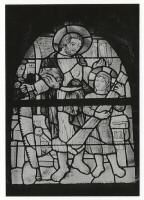
Dit is een foto van het glas-in-lood raam van het Jozef altaar van de Theresiakerk. Deze kerk is jaren geleden al afgebroken en stond aan de Tramsingel in Breda.
Het stadsarchief heeft er veel foto’s van.

Denk nu niet dat er alleen maar oude foto’s of teksten te vinden zijn.
Zo is er een hele serie foto’s van jongeren. De beschrijving:

Jongerenproject Breda Photo; foto’s gemaakt door jongeren uit verschillende bevolkingslagen van Breda voor een tentoonstelling waarin het tijdsbeeld van wat jongeren anno 2003 bezighoudt, centraal staat. Foto’s van jongeren, hun omgeving, hun bezigheden, hun favoriete plaatsen, hun vrienden, familie en huisdieren.

Voorbeeld:

Wil je zelf eens struinen door de geschiedenis van Breda ?
Volg dan de volgende link: http://www.stadsarchief.breda.nl/

Vreemd fruit (3)

Vandaag heeft de groenteman me verteld dat de vrucht (zie foto) een NISPERO is.
Deze log samen gemaakt met mijn vader !

De groenteman heeft voor mij, voor de zekerheid, de naam nog even opgeschreven:

Voor degene die niet weten over welke vrucht dit gaat:

Nieuwe bands of films ontdekken ?

Er komt zoveel muziek uit, hoe kun je dat bijhouden.
Hoe weet je of die nieuwe zanger of zangeres in jouw ‘plaatje’ past ?

Kijk eens op de volgende web site:

http://www.musicplasma.com/

Door een muzikant te kiezen (laten we zeggen Neil Young) wordt zijn wereld voor je in kaart gebracht. Al zijn muzikale vrienden en vriendinnen bij elkaar:

Die wereld zal voor jou bekende en minder bekende muzikanten in beeld brengen. Natuurlijk kun je van al die mensen direct muziek kopen.

Voor film werkt het net zo:

Zo ziet een deel van de wereld van Jack Nichelson eruit.

Leuk hoor !

Paverpollen in Sluis.

Ja dat was een erg leuk weekend.
Twee dagen creatief zijn met allerlei materialen en nieuwe technieken.
In een groep van 15-20 mensen. Erg veel plezier.
Deze web log heeft er zijn naam aan te danken.

Maar dat ik dan 3 keer geflitst moet worden in dat weekend is natuurlijk iets minder.

Privacy ?!?

Vandaag kwam ik op ZabaSearch terecht.
Jammer is het dat deze zoek engine de Verenigde Staten van Amerika als de hele wereld beschouwt. Immers als je gaat zoeken kun je ‘alleen’ zoeken met behulp van de staten van de US. Er is dus geen informatie over mensen in Europa of andere werelddelen te vinden.

Het idee dat de wereld ophoudt bij de Amerikaanse grens leeft jammer genoeg meer in dat werelddeel.

Deze zoekmachine richt zich op het opzoeken van persoonlijke gegevens van mensen.
Je hebt een achternaam, misschien een leeftijd of plaatsnaam ?
Kijk dan maar eens wat je daarmee allemaal kunt achterhalen:

http://www.zabasearch.com/

Al deze informatie is publiek beschikbaar. Het enige wat deze zoek engine doet is de bronnen bij elkaar brengen bij het beantwoorden van een vraag.

Van een aantal mensen kon ik helaas niet veel vinden (George W. Bush, John F. Kennedy, Norma Jean Mortenson (Marilyn Monroe)) van andere kwam ik van het de bizarre site op de andere. Zo trof ik onder meer de volgende grafsteen aan: